
Matemáticas y Lógica SAT - Aritmética y Estadísticas
Aquí aprenderás algunas palabras en inglés relacionadas con la aritmética y la estadística, como "divisible", "rango", "mediana", etc., que necesitarás para aprobar tus SATs.
Revisión
Tarjetas de memoria
Ortografía
Cuestionario

a combination of a whole number and a proper fraction

número mixto, fracción mixta
En las recetas de repostería, es común encontrar números mixtos al medir ingredientes como harina o azúcar.
a number greater than 1 with only two devisors which can be itself or 1
número primo
El número 15 no es un número primo (divisible por 3 y 5).
a number that can be written as a fraction, where both the top and bottom are whole numbers, and the bottom is not zero
número racional
2/3 es un número racional ya que representa la división de dos enteros, -2 y 3, y el resultado es un valor finito.
a number incapable of being expressed as a ratio of two integers
número irracional
Los números irracionales no pueden escribirse como fracciones simples.
a number that has both a real part and a part involving a unit that, when squared, gives a negative result
número complejo, complejo
Los números complejos se utilizan ampliamente en ingeniería eléctrica para analizar circuitos de CA.
any number that can be found on the number line, including both positive and negative numbers, zero, and fractions
número real, real
En matemáticas, el conjunto de los números reales a menudo se denota con el símbolo R.
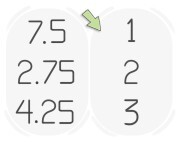
any positive number without fractions or decimals, including zero
número entero, entero natural
La edad de una persona generalmente se expresa como un número entero.
any number without fractions or decimals, including positive numbers, negative numbers, and zero
entero
El conjunto de los enteros incluye tanto valores positivos como negativos, así como cero.
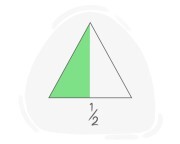
a number expressed as one quantity divided by another, especially one written with a numerator and denominator
fracción, quebrado
(mathematics) a number less than one, called a fraction, that is represented as a period followed by the number of tenths, hundredths, etc.
decimal
El sistema decimal, basado en potencias de diez, se utiliza ampliamente en la aritmética cotidiana y los cálculos financieros.
a fraction where the the top number is greater than or equal to the equal to the bottom number
fracción impropia
En algunos problemas matemáticos, trabajar con fracciones impropias es más sencillo que usar números mixtos.
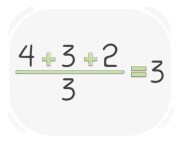
(mathematics) the average value of a set of quantities calculated by adding them, and dividing them by the total number of the quantities
medio
a value that, when multiplied by itself a specified number of times, results in the given number
raíz, radical
the difference between the highest and lowest values in a set of numbers
rango, amplitud
(mathematics) the product of a number multiplied by itself
cuadrado
calculated by adding a set of numbers together and dividing this amount by the total number of amounts in that set
medio, promedio
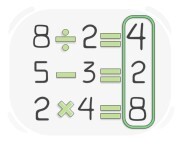
a correct answer to a problem in mathematics or a puzzle
solución
the result of multiplying two or more numbers or quantities together
producto, resultado de la multiplicación
the result obtained by dividing one quantity or number by another, expressed as the outcome of a division operation
cociente
Al dividir 15 entre 3, el cociente es 5.
(mathematics) one of the numbers that another number can be divided by
factor
(mathematics) an amount that is shown by a sign or letter
valor
a mathematical statement showing that one quantity or expression is greater or less than another
desigualdad, inecuación
(mathematics) a statement indicating the equality between two values
ecuación
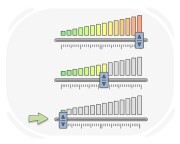
the lowest amount, degree, or extent there is or is possible, allowed or required
mínimo
a mathematical expression where a number is multiplied by itself a certain number of times determined by a variable
exponencial, función exponencial
Los analistas financieros utilizan exponenciales para calcular el interés compuesto.
related to equations that create straight lines when graphed, indicating a constant rate of change
lineal
La clase de álgebra se centró en resolver ecuaciones lineales que representaban líneas rectas en una gráfica.
the constant ratio between consecutive terms
razón común, relación común
Una razón común de 1 da como resultado una secuencia constante, donde todos los términos son iguales.
a number that is a multiple of two or more given numbers
múltiplo común, común múltiplo
Al resolver problemas que involucran fracciones, a menudo es útil encontrar un múltiplo común de los denominadores.
a number that divides exactly into two or more given numbers without leaving a remainder
factor común, divisor común
Para simplificar una expresión, busca el factor común de los términos.
(mathematics) a shared multiple of the bottom numbers of two or more fractions
común denominador
the smallest positive integer that is a common multiple of the denominators of two or more fractions
mínimo común denominador, denominador común más pequeño
Para sumar las fracciones 1/4 y 1/6, primero encontramos el mínimo común denominador, que es 12.

a mathematical measure of how likely an event is to occur, expressed as a number between zero and one
probabilidad

to guess the value, number, quantity, size, etc. of something without exact calculation
estimar
a sequence of numbers in which the difference between any two consecutive terms is constant
secuencia aritmética, sucesión aritmética
En una secuencia aritmética, la diferencia entre términos consecutivos es siempre la misma, independientemente de la posición de los términos.
the number of times a particular event occurs within a specific period or among a set of observations
frecuencia
(statistics) an arrangement of values of a variable showing how often each occurs, either observed or theoretical
distribución, reparto
a statistical measure that represents the middle value of a data set when the values are arranged in ascending or descending order
mediana, valor mediano
En una lista de calificaciones de exámenes {85, 90, 92, 78, 95}, la mediana es 90, la calificación del medio cuando están ordenadas.
the value that appears most frequently in a data set
moda, valor modal
having or involving two distinct modes, peaks, or most frequent values
bimodal, con dos modas
El conjunto de datos era claramente bimodal, con picos tanto en 10 como en 20.
a measure of how much the values in a set typically differ from the average
desviación estándar, desviación típica
En finanzas, una desviación estándar alta de los rendimientos sugiere una mayor volatilidad.
the range within which the true value is expected to fall, accounting for potential inaccuracies in measurement or sampling
margen de error, intervalo de error
Un margen de error más pequeño sugiere más confianza en la precisión de los resultados.
occurring in such a way that each possible outcome has a certain probability of occurring, but the specific outcome cannot be predicted with certainty
aleatorio, azaroso
Las técnicas de muestreo aleatorio ayudan a los estadísticos a hacer inferencias sobre una población basándose en datos recopilados de un subconjunto más pequeño.
a straight line drawn through a set of data points on a graph to represent the general direction or pattern of the data
línea de tendencia, recta de tendencia
Los analistas utilizan líneas de tendencia para identificar tendencias del mercado y tomar decisiones de inversión.
a type of statistical chart consisting of dots that represent individual data points
diagrama de puntos, gráfico de puntos
Crear un diagrama de puntos nos ayudó a visualizar la frecuencia de diferentes categorías en nuestra pequeña muestra de encuesta.
a mathematical representation that describes the relationship between two or more variables using a linear equation
modelo lineal, modelo de regresión lineal
Los ingenieros a menudo utilizan modelos lineales para aproximar el comportamiento de sistemas complejos dentro de un cierto rango.
