pattern

Matematika a Logika SAT - Aritmetika a Statistika

Zde se naučíte některá anglická slova související s aritmetikou a statistikou, jako jsou "dělitelný", "rozsah", "medián" atd., která budete potřebovat k úspěšnému složení vašich SATs.

Revize

Kartičky

tvary

Pravopis

Kvíz

Začněte se učit
SAT Vocabulary for Math and Logic
mixed number
mixed number
[Podstatné jméno]

a combination of a whole number and a proper fraction

smíšené číslo, smíšený zlomek

smíšené číslo, smíšený zlomek

Ex: When comparing mixed numbers, we can convert them to improper fractions and then compare the resulting fractions .

Při porovnávání smíšených čísel je můžeme převést na nepravé zlomky a poté porovnat výsledné zlomky.

prime number
prime number
[Podstatné jméno]

a number greater than 1 with only two devisors which can be itself or 1

prvočíslo

prvočíslo

Ex: The largest known prime number ( as of 2023 ) has over 24 million digits .

Největší známé prvočíslo (k roku 2023) má přes 24 milionů číslic.

rational number
rational number
[Podstatné jméno]

a number that can be written as a fraction, where both the top and bottom are whole numbers, and the bottom is not zero

racionální číslo, racionální zlomek

racionální číslo, racionální zlomek

Ex: 7/8 is a rational number because it can be expressed as the fraction of two integers .

7/8 je racionální číslo, protože může být vyjádřeno jako zlomek dvou celých čísel.

irrational number
irrational number
[Podstatné jméno]

a number incapable of being expressed as a ratio of two integers

iracionální číslo, nesouměřitelné číslo

iracionální číslo, nesouměřitelné číslo

Ex: The square root of 3 is an irrational number because it can not be written as a fraction .

Druhá odmocnina ze 3 je iracionální číslo, protože ji nelze zapsat jako zlomek.

complex number
complex number
[Podstatné jméno]

a number that has both a real part and a part involving a unit that, when squared, gives a negative result

komplexní číslo, komplexní

komplexní číslo, komplexní

Ex: Graphically , complex numbers can be represented on the complex plane with the x-axis as the real part and the y-axis as the imaginary part .

Graficky lze komplexní čísla znázornit na komplexní rovině s osou x jako reálnou částí a osou y jako imaginární částí.

real number
real number
[Podstatné jméno]

any number that can be found on the number line, including both positive and negative numbers, zero, and fractions

reálné číslo, reálné

reálné číslo, reálné

Ex: Every point on the number line corresponds to a real number.

Každý bod na číselné ose odpovídá reálnému číslu.
whole number
whole number
[Podstatné jméno]

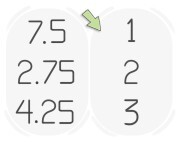
any positive number without fractions or decimals, including zero

celé číslo, přirozené číslo

celé číslo, přirozené číslo

Ex: The sum of any two whole numbers is always a whole number.

Součet dvou celých čísel je vždy celé číslo.

integer
integer
[Podstatné jméno]

any number without fractions or decimals, including positive numbers, negative numbers, and zero

celé číslo

celé číslo

Ex: Multiplying two integers together will always yield an integer.

Násobení dvou celých čísel vždy dá celé číslo.
fraction
fraction
[Podstatné jméno]

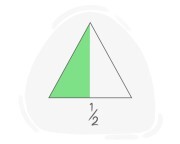
a number obtained by dividing one integer or rational number by another, typically written in the form a/b

zlomek, obyčejný zlomek

zlomek, obyčejný zlomek

Ex: In the recipe, use three-quarters (3/4) of a cup of sugar.

V receptu použijte zlomek tří čtvrtin (3/4) šálku cukru.

decimal
decimal
[Podstatné jméno]

(mathematics) a number less than one, called a fraction, that is represented as a period followed by the number of tenths, hundredths, etc.

desetinné číslo, desetinný zlomek

desetinné číslo, desetinný zlomek

Ex: Understanding decimal places is essential when dealing with percentages and financial figures in business contexts.

Pochopení desetinných míst je nezbytné při práci s procenty a finančními údaji v obchodních souvislostech.

improper fraction
improper fraction
[Podstatné jméno]

a fraction where the the top number is greater than or equal to the equal to the bottom number

nepravý zlomek

nepravý zlomek

Ex: An improper fraction can be expressed as a combination of a whole number and a proper fraction .

Nepravý zlomek může být vyjádřen jako kombinace celého čísla a pravého zlomku.

mean
mean
[Podstatné jméno]

(mathematics) the average value of a set of quantities calculated by adding them, and dividing them by the total number of the quantities

průměr, aritmetický průměr

průměr, aritmetický průměr

Ex: The mean of the test results was used to assess overall student achievement .

Průměr výsledků testů byl použit k hodnocení celkového výkonu studentů.

divisible
divisible
[Přídavné jméno]

having the quality of being divided, especially by a number

dělitelný

dělitelný

root
root
[Podstatné jméno]

a value that, when multiplied by itself a specified number of times, results in the given number

kořen, radikál

kořen, radikál

Ex: Finding the cube root of 27 involves determining the number that, when multiplied by itself three times, equals 27.

Nalezení krychlového kořene z 27 zahrnuje určení čísla, které, když je vynásobeno samo sebou třikrát, se rovná 27.

range
range
[Podstatné jméno]

the difference between the highest and lowest values in a set of numbers

rozsah, rozpětí

rozsah, rozpětí

Ex: The range of the dataset { 5 , 8 , 12 , 16 , 22 } is 17 .

Rozsah datové sady {5, 8, 12, 16, 22} je 17.

square
square
[Podstatné jméno]

the second exponent of any given number produced when multiplied by itself

čtverec, druhá mocnina

čtverec, druhá mocnina

average
average
[Přídavné jméno]

calculated by adding a set of numbers together and dividing this amount by the total number of amounts in that set

průměrný
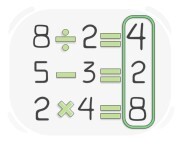
průměrný

Ex: The average number of hours worked per week was 40 .

Průměrný počet odpracovaných hodin týdně byl 40.

solution
solution
[Podstatné jméno]

a correct answer to a problem in mathematics or a puzzle

řešení, odpověď

řešení, odpověď

Ex: The mathematician 's groundbreaking research led to the discovery of a solution to a long-standing mathematical problem .

Průlomový výzkum matematika vedl k objevení řešení dlouho trvajícího matematického problému.

product
product
[Podstatné jméno]

the result of multiplying two or more numbers or quantities together

součin, výsledek násobení

součin, výsledek násobení

Ex: Understanding how to calculate the product of numbers is a fundamental math skill .

Pochopení, jak vypočítat součin čísel, je základní matematická dovednost.

quotient
quotient
[Podstatné jméno]

the result obtained by dividing one quantity or number by another, expressed as the outcome of a division operation

podíl

podíl

Ex: The quotient of 50 and 10 is 5 , reflecting the result of their division .

Podíl 50 a 10 je 5, což odráží výsledek jejich dělení.

factor
factor
[Podstatné jméno]

(mathematics) one of the numbers that another number can be divided by

činitel

činitel

Ex: Identifying factor pairs of a number involves listing pairs of integers whose product equals that number .

Identifikace dvojic faktorů čísla zahrnuje výčet dvojic celých čísel, jejichž součin se rovná tomuto číslu.

value
value
[Podstatné jméno]

(mathematics) an amount that is shown by a sign or letter

hodnota, množství

hodnota, množství

Ex: The absolute value of a number is its distance from zero on a number line, represented by |x| for a given number x.

Absolutní hodnota čísla je jeho vzdálenost od nuly na číselné ose, reprezentovaná |x| pro dané číslo x.

inequality
inequality
[Podstatné jméno]

a statement that compares two quantities, expressions, or values and indicates their relative sizes

nerovnost

nerovnost

Ex: In calculus , inequalities are used to express conditions for the convergence or divergence of series and sequences .

V kalkulu se nerovnosti používají k vyjádření podmínek konvergence nebo divergence řad a posloupností.

equation
equation
[Podstatné jméno]

(mathematics) a statement indicating the equality between two values

rovnice
rovnice

Ex: Economists analyze supply and demand equations to forecast market trends and price changes .

Ekonomové analyzují rovnice nabídky a poptávky, aby předpověděli tržní trendy a cenové změny.

minimum
minimum
[Podstatné jméno]

the lowest amount, degree, or extent there is or is possible, allowed or required

minimum, nejnižší

minimum, nejnižší

Ex: The hotel charges a minimum stay of two nights during the holiday season.

Hotel účtuje minimální pobyt dvou nocí během sváteční sezóny.

exponential
exponential
[Podstatné jméno]

a mathematical expression where a number is multiplied by itself a certain number of times determined by a variable

exponenciála, exponenciální funkce

exponenciála, exponenciální funkce

Ex: When modeling the spread of a virus , researchers often use exponentials.

Při modelování šíření viru vědci často používají exponenciály.

linear
linear
[Přídavné jméno]

related to equations that create straight lines when graphed, indicating a constant rate of change

lineární

lineární

Ex: Linear functions are a fundamental concept in high school mathematics, crucial for understanding more complex topics.

Lineární funkce jsou základním pojmem ve středoškolské matematice, klíčové pro pochopení složitějších témat.

common ratio
common ratio
[Podstatné jméno]

the constant ratio between consecutive terms

společný poměr, konstantní poměr

společný poměr, konstantní poměr

Ex: When studying exponential functions in algebra , students learn to identify the common ratio in geometric sequences .

Při studiu exponenciálních funkcí v algebře se studenti učí identifikovat společný poměr v geometrických posloupnostech.

common multiple
common multiple
[Podstatné jméno]

a number that is a multiple of two or more given numbers

společný násobek, společný násobitel

společný násobek, společný násobitel

Ex: The concept of common multiples is essential for adding and subtracting fractions .

Koncept společných násobků je nezbytný pro sčítání a odčítání zlomků.

common factor
common factor
[Podstatné jméno]

a number that divides exactly into two or more given numbers without leaving a remainder

společný činitel, společný dělitel

společný činitel, společný dělitel

Ex: Finding common factors is crucial in reducing fractions to their simplest form .

Nalezení společných činitelů je klíčové pro zjednodušení zlomků do jejich nejjednodušší podoby.

common denominator
common denominator
[Podstatné jméno]

(mathematics) a number divisible by all the numbers that are below the line in a set of fractions

společný jmenovatel, jmenovatel společný

společný jmenovatel, jmenovatel společný

least common denominator
[Podstatné jméno]

the smallest positive integer that is a common multiple of the denominators of two or more fractions

nejmenší společný jmenovatel, nejmenší společný dělitel

nejmenší společný jmenovatel, nejmenší společný dělitel

Ex: The least common denominator of the fractions 2/3 and 5/9 is 9 , allowing us to add them easily .

Nejmenší společný jmenovatel zlomků 2/3 a 5/9 je 9, což nám umožňuje je snadno sečíst.

probability
probability
[Podstatné jméno]

(mathematics) a number representing the chances of something specific happening

pravděpodobnost

pravděpodobnost

Ex: The probability of rolling a six on a fair die is one out of six .

Pravděpodobnost hození šestky na spravedlivé kostce je jedna ku šesti.

to estimate
to estimate
[sloveso]

to guess the value, number, quantity, size, etc. of something without exact calculation

odhadnout, posoudit

odhadnout, posoudit

Ex: We need to estimate the total expenses for the event before planning the budget .

Před plánováním rozpočtu musíme odhadnout celkové výdaje na akci.

arithmetic sequence
arithmetic sequence
[Podstatné jméno]

a sequence of numbers in which the difference between any two consecutive terms is constant

aritmetická posloupnost, aritmetická sekvence

aritmetická posloupnost, aritmetická sekvence

Ex: Arithmetic sequences are fundamental in mathematics and have applications in various fields .

Aritmetické posloupnosti jsou základem v matematice a mají aplikace v různých oborech.

frequency
frequency
[Podstatné jméno]

the number of times a particular event occurs within a specific period or among a set of observations

frekvence

frekvence

Ex: The frequency of heads in 100 coin flips was 52 .

Frekvence hlav při 100 hodech mincí byla 52.

distribution
distribution
[Podstatné jméno]

(statistics) an arrangement of values of a variable showing how often each occurs, either observed or theoretical

rozdělení, distribuce

rozdělení, distribuce

Ex: Probability theory explains the expected distribution of outcomes .

Teorie pravděpodobnosti vysvětluje očekávané rozdělení výsledků.

median
median
[Podstatné jméno]

a statistical measure that represents the middle value of a data set when the values are arranged in ascending or descending order

medián, střední hodnota

medián, střední hodnota

Ex: For the series { 20 , 25 , 30 , 35 , 40 , 45 } , the median is 32.5 , calculated as the average of 30 and 35 .

Pro řadu {20, 25, 30, 35, 40, 45} je medián 32.5, vypočtený jako průměr 30 a 35.

mode
mode
[Podstatné jméno]

the value that appears most frequently in a data set

modus, modální hodnota

modus, modální hodnota

bimodal
bimodal
[Přídavné jméno]

having or involving two distinct modes, peaks, or most frequent values

bimodální, s dvěma režimy

bimodální, s dvěma režimy

Ex: A bimodal curve on the graph suggests the presence of two dominant traits in the population .

Bimodální křivka na grafu naznačuje přítomnost dvou dominantních rysů v populaci.

standard deviation
standard deviation
[Podstatné jméno]

a measure of how much the values in a set typically differ from the average

směrodatná odchylka, standardní odchylka

směrodatná odchylka, standardní odchylka

Ex: A standard deviation of zero means all the values are identical .

Směrodatná odchylka nula znamená, že všechny hodnoty jsou shodné.

margin of error
margin of error
[Podstatné jméno]

the range within which the true value is expected to fall, accounting for potential inaccuracies in measurement or sampling

míra chyby, rozpětí chyby

míra chyby, rozpětí chyby

Ex: Understanding the margin of error helps in interpreting the precision of statistical findings .

Pochopení míry chyby pomáhá při interpretaci přesnosti statistických zjištění.

random
random
[Přídavné jméno]

occurring in such a way that each possible outcome has a certain probability of occurring, but the specific outcome cannot be predicted with certainty

náhodný, libovolný

náhodný, libovolný

Ex: To ensure unbiased results , the participants in the study were assigned to treatment groups using a random assignment method .

Pro zajištění nezaujatých výsledků byli účastníci studie přiřazeni k léčebným skupinám pomocí metody náhodného přiřazení.

trend line
trend line
[Podstatné jméno]

a straight line drawn through a set of data points on a graph to represent the general direction or pattern of the data

trendová čára, čára tendence

trendová čára, čára tendence

Ex: The trend line in the time series data pointed to a seasonal pattern in sales .

Trendová čára v časových řadách ukazovala na sezónní vzorec v prodeji.

dot plot
dot plot
[Podstatné jméno]

a type of statistical chart consisting of dots that represent individual data points

bodový graf, tečkový diagram

bodový graf, tečkový diagram

Ex: We used a dot plot to compare the daily temperatures recorded over a week , allowing us to see variations at a glance .

Použili jsme bodový graf k porovnání denních teplot zaznamenaných během týdne, což nám umožnilo vidět změny na první pohled.

linear model
linear model
[Podstatné jméno]

a mathematical representation that describes the relationship between two or more variables using a linear equation

lineární model, model lineární regrese

lineární model, model lineární regrese

Ex: A simple linear model was used to estimate the impact of advertising expenditure on sales revenue .

K odhadu dopadu reklamních výdajů na tržby z prodeje byl použit jednoduchý lineární model.

LanGeek
Stáhnout aplikaci LanGeek