
pattern

Advanced Vocabulary for the GRE - Artsy Endeavors

Here you will learn some English words about art, such as "artifact", "epigram", "phony", etc. that are needed for the GRE exam.

Review

Flashcards

Spelling

Quiz
Start learning
Advanced Words Needed for the GRE
apothegm
apothegm
[noun]

a clever and concise expression that contains a general truth or principle

Ex: The wise old teacher often used an apothegm to convey profound lessons in just a few words.Ā 
Close
Sign in
anachronism

something occurring at a time when it could not have existed or happened

Ex: The speech referenced events that hadn't yet occurred—an unintentional anachronism.Ā 
Close
Sign in
artifact
artifact
[noun]

a man-made object, tool, weapon, etc. that was created in the past and holds historical or cultural significance

Ex: Artifacts of early tool-making like stone knives and projectile points show the ingenuity and resourcefulness of Paleolithic humans.Ā 
Close
Sign in
buttress
buttress
[noun]

a protruding structure that supports a building or wall and is made out of bricks or stones
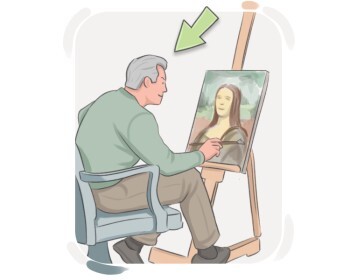
Ex: The Gothic cathedral's towering buttresses provided essential structural support, allowing for the construction of soaring vaulted ceilings.Ā 
Close
Sign in
connoisseur

an individual who is an expert of art, food, music, etc. and can judge its quality

Ex: As a wine connoisseur, he could discern subtle nuances in aroma and flavor, effortlessly identifying the region and vintage of each bottle.Ā 
Close
Sign in
counterpoint

a musical composition in which two or more independent melodies are played or sung simultaneously, creating harmony and interplay

Ex: Bach's fugues are masterpieces of counterpoint.Ā 
Close
Sign in
denouement

the last section of a literary or dramatic piece where the plot is concluded and all the matters of the work is explained

Ex: The denouement of the play revealed the true motives behind the protagonist’s actions.Ā 
Close
Sign in
epigram
epigram
[noun]

a saying that coveys an idea in a manner that is short and witty

Close
Sign in
eulogy
eulogy
[noun]

a text or speech that offers high praise for a person or thing, not necessarily linked to the deceased

Ex: The book launch began with a eulogy of the author's previous works and his contribution to literature.Ā 
Close
Sign in
prolixity
prolixity
[noun]

the fact of having an excessive number of words that results in being tedious

Ex: The professor's lecture was criticized for its prolixity, as many students found the excessive detail and lengthy explanations overwhelming and tedious.Ā 
Close
Sign in
raconteur
raconteur
[noun]

an individual who has the skill of telling stories in a way that is entertaining

Ex: At the party, he proved himself to be a master raconteur with his engaging tales of travel.Ā 
Close
Sign in
rhetoric
rhetoric
[noun]

the study of techniques and principles for using language effectively, especially in public speaking

Ex: She studied rhetoric to improve her debate skills.Ā 
Close
Sign in
to inform
to inform
[Verb]

to characterize or influence a style, behavior, opinion, etc.

Ex: The cultural heritage of the region informs the architecture of its buildings.Ā 
Close
Sign in
canonical
canonical
[Adjective]

according to the rules that are broadly accepted or are official
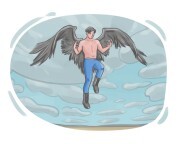
Ex: The text is considered canonical in the study of classical literature, adhering to accepted scholarly standards.Ā 
Close
Sign in
fanciful
fanciful
[Adjective]

coming from the imagination rather than facts
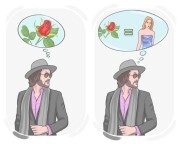
Ex: The fanciful tales of dragons and wizards delighted the children gathered around the storyteller.Ā 
Close
Sign in
figurative
figurative
[Adjective]

using language in a way that words don't have their actual meaning, but an imaginative meaning instead

Ex: The poet’s use of figurative language painted vivid images in the reader’s mind.Ā 
Close
Sign in
hackneyed
hackneyed
[Adjective]

(of phrases, words, ideas, etc.) used so much that it has lost its effect, interest, or originality

Ex: The film's plot was criticized for relying on hackneyed tropes that lacked creativity.Ā 
Close
Sign in
kafkaesque
kafkaesque
[Adjective]

resembling Franz Kafka's works in being extremely nightmarish, bizarre, and confusing

Ex: Her dream was so kafkaesque that she woke up unsure of what was real and what was imagined.Ā 
Close
Sign in
limpid
limpid
[Adjective]

(of language or music) clear and easy to understand

Ex: The speaker’s limpid prose made complex ideas accessible to everyone in the audience.Ā 
Close
Sign in
macabre
macabre
[Adjective]

disturbing and fear inducing due to its connection with death, murder, violence, etc.

Ex: The film's macabre scenes of violence left a lasting impact on its audience.Ā 
Close
Sign in
mellifluous
mellifluous
[Adjective]

(of sounds) smooth, pleasant, and sweet to the ear

Ex: The mellifluous tones of the cello filled the concert hall with warmth and emotion.Ā 
Close
Sign in
objective
objective
[Adjective]

having an existence that is independent of personal perception or interpretation

Ex: Philosophers question whether objective reality exists.Ā 
Close
Sign in
phantasmagorical
phantasmagorical
[Adjective]

seeming unreal, confusing, and dream-like
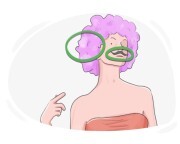
Ex: Her dream was so phantasmagorical that it felt like stepping into a world where logic had no place.Ā 
Close
Sign in
phony
phony
[Adjective]

not based on honesty or truth and intended to mislead others
Ex: The phony psychic claimed to have special powers but was exposed as a fraud.Ā 
Close
Sign in
posthumous
posthumous
[Adjective]

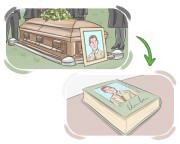
referring to something that happens, is published, or is awarded after the death of the person to whom it relates

Ex: The author's posthumous novel was published a year after her death, becoming a bestseller.Ā 
Close
Sign in
subjective
subjective
[Adjective]

existing within one's mind and dependent on one's perspective rather than reality

Ex: Reality can feel subjective, shaped by individual consciousness.Ā 
Close
Sign in
LanGeek
Download LanGeek app
