

SAT Word Skills 2 - Lesson 2

review-disable

review

flashcard-disable

flashcard

spelling-disable

spelling

quiz-disable

quiz

start-learning
SAT Word Skills 2
faun [noun]

a legendary forest god or spirit that is part human and part goat
Ex: The children 's book took young readers on a magical adventure through an enchanted forest , where they met talking animals and friendly fauns .
fauna [noun]

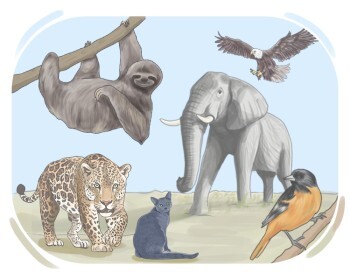
the animals of a particular geological period or region
Ex: The African savanna boasts a diverse fauna , including lions , elephants , and giraffes .
lethargic [adjective]

having no energy or interest in doing anything

Ex: The illness left him feeling weak and lethargic , unable to carry out his usual daily activities .
lethargy [noun]

a state of unusual sleepiness or absence of alertness

Ex: The medication prescribed to manage his condition had a notable side effect of causing lethargy , leaving him feeling sluggish and drowsy .
unconscionable [adjective]

excessively unreasonable or unfair and therefore unacceptable

Ex: His unconscionable behavior during the negotiation left everyone feeling insulted .

the part of the mind that is not currently in focused awareness, but still influences thoughts, feelings, and behavior, often through automatic or involuntary processes

Ex: Dreams are often influenced by the subconscious .
peerage [noun]

the members of a country's nobility as a class

Ex: Being born into the peerage , he inherited a noble title and became part of the esteemed aristocratic class .
peerless [adjective]

incapable of being compared to others due to superior quality or excellence

Ex: Through years of dedicated practice and unwavering commitment , he became a peerless expert in his chosen craft .

(biochemistry) interaction between two or more substances where one of them stops or reduces the effect of others

Ex: The antagonism between histamine and antihistamine drugs is utilized to counteract each other , lessening allergic reactions and diminishing symptoms like itching and inflammation .
antagonistic [adjective]

showing that one actively dislikes or disagrees with something or someone

Ex: Expecting an antagonistic response , the speaker prepared themselves for a heated exchange of opposing views from the audience .
fallacious [adjective]

deliberately designed to mislead

Ex: She presented fallacious statistics to support her proposal .
fallacy [noun]

a false idea or belief based on invalid arguments, often one that many people think is true

Ex: The belief that all members of a particular ethnic group are universally untrustworthy is a fallacy built on stereotypes and can lead to discrimination and prejudice .
fallible [adjective]

likely to be wrong or mistaken

Ex: The accuracy of eyewitness testimony is fallible , as memory can be influenced by various factors such as time , stress , and suggestibility .
syllabic [adjective]

relating to or based on a part of a word that consists of a vowel with or without a consonant

Ex: Haiku is a form of poetry that follows a strict syllabic structure of 5-7-5 syllables .

the act of dividing words into syllables

Ex: The syllabication of the word ' elephant ' reveals that it is divided into three syllables : ' el-e-phant ' .

a line or verse that is made of ten syllables

Ex: The song 's lyrics were written in decasyllables , adding a poetic touch to the music .

a word that is made of two syllables

Ex: In the English language , many common words are disyllables , such as ' table , ' ' apple , ' and ' paper ' .
debility [noun]

physical weakness that is caused by a disease or aging
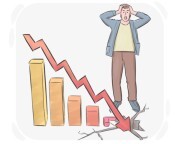
Ex: The disease progressed , leading to increasing debility and a decline in overall physical functioning .

to make someone or something weaker or less effective

Ex: Malnutrition can debilitate a child 's growth and development , leading to long-term health issues .
debilitative [adjective]

causing a decrease in physical or mental strength

Ex: Discrimination based on ability can have debilitative effects on individuals ' self-esteem and opportunities .