
SAT Word Skills 3 - Lesson 16

review-disable

review

flashcard-disable

flashcard

spelling-disable

spelling

quiz-disable

quiz

start-learning
SAT Word Skills 3
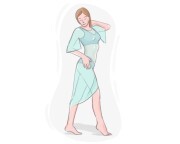
diaphanous [adjective]

extremely light, delicate, and often see-through

Ex: The curtains were made of a diaphanous material that let in soft , filtered light .
diatomic [adjective]

(of molecules) having two atoms with the same or different elements

diatribe [noun]

a harsh and severe criticism or verbal attack that is aimed toward a person or thing
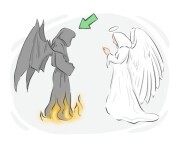
Ex: The critic ’s review read more like a diatribe than an objective analysis .
diabolic [adjective]

related to evil characteristics such as cruelty

incongruous [adjective]

peculiar and not like what is considered suitable or appropriate for a situation
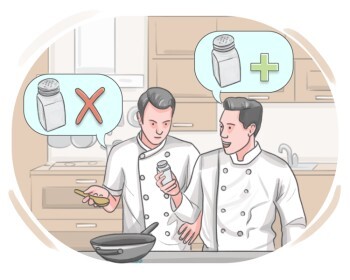
Ex: Her humorous remarks were incongruous with the serious nature of the board meeting .
inconsequential [adjective]

lacking significance or importance

Ex: The delay caused by the traffic jam was inconsequential ; they still arrived on time .
inconspicuous [adjective]

not easily seen, noticed, or attracting attention

Ex: The spy chose an inconspicuous car for surveillance .

someone who verbally changes the words of a language into another
Ex: He worked with an interpreter to facilitate a conversation with a non-English-speaking client .

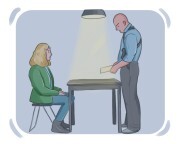
to question someone in an aggressive way for a long time in order to get information

Ex: The prosecutor sought permission to interrogate the key witness to strengthen the case .

to force someone to do something through threats or manipulation

Ex: The bully tried to coerce his classmates into giving him their lunch money through threats .
coercion [noun]

the act of compelling someone to act against their will by using force or threats
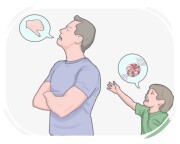
Ex: The regime used coercion to silence dissent .
to mar [verb]

to ruin the perfection of something

marred [adjective]

flawed because of a damage or excessive use

refusal [noun]

the act of rejecting or saying no to something that has been offered or requested

Ex: She faced consequences for her refusal to follow the rules .

to reject or deny a statement or accusation by using an argument or evidence

Ex: He refuted the accusation , insisting that he had followed the rules .

the act of showing that someone or something is wrong by using an argument or evidence

the use of similar vowels close to each other in nonrhyming syllables as a literary device

Ex: Assonance can enhance the mood of a poem when used effectively .
assonant [adjective]

having an identical vowel combined with different consonants in words, often for poetic purposes

to have a close similarity in sounds, particularly vowels