pattern

Total English - Advanced - Unit 8 - Vocabulary

Here you will find the words from Unit 8 - Vocabulary in the Total English Advanced coursebook, such as "imply", "in particular", "infer", etc.

Review

Flashcards

Forms

Spelling

Quiz
Start learning
Total English - Advanced
nevertheless
nevertheless
[Adverb]

used to introduce an opposing statement

Ex: The plan was risky; they proceeded nevertheless. 
Close
Sign in
on the other (hand|)

used to introduce a contrasting aspect of a situation, especially when comparing it to a previous point
Ex: The job pays well; on the other hand, the hours are extremely long. 
Close
Sign in
yet
yet
[Adverb]

up until the current or given time

Ex: She has been studying for hours, and she isn't finished yet. 
Close
Sign in
however
however
[Adverb]

used to add a statement that contradicts what was just mentioned

Ex: The weather forecast predicted rain; however, the sun is shining brightly. 
Close
Sign in
in addition to
in addition to
[preposition]

used to add extra or supplementary information

Ex: In addition to his degree in engineering, he also has a diploma in music. 
Close
Sign in
to highlight

to bring attention to something by making it more visible or important
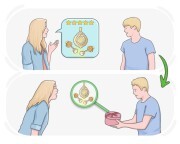
Ex: The artist used vibrant colors to highlight the focal point of the painting. 
Close
Sign in
to hint
to hint
[Verb]

to indirectly suggest something

Ex: The teacher hinted at the upcoming exam by discussing the importance of consistent studying. 
Close
Sign in
to imply
to imply
[Verb]

to suggest without explicitly stating
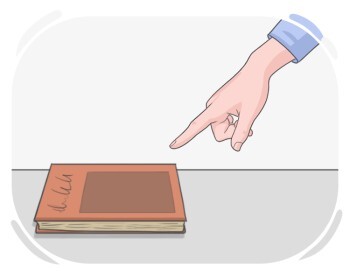
Ex: The politician's statement seemed to imply that there was more to the story than what was being revealed. 
Close
Sign in
to point out

to show something to someone by pointing one's finger toward it

Ex: He pointed out the star constellation to his children. 
Close
Sign in
to emphasize

to highlight something and make it easier to notice by drawing attention toward it
Ex: The bold belt emphasized the waistline of the dress, creating an hourglass silhouette. 
Close
Sign in
to infer
to infer
[Verb]

to reach an opinion or decision based on available evidence and one's understanding of the matter
Ex: After observing the pattern of behavior, the detective could infer that the suspect was familiar with the victim. 
Close
Sign in
to stress
to stress
[Verb]

to emphasize a particular point or aspect

Ex: The teacher stressed the need for thorough preparation before the exam. 
Close
Sign in
to underline

to emphasize the importance of something by making it seem more noticeable

Ex: In the memo, the manager underlined the urgency of completing the project by the end of the week. 
Close
Sign in
to focus on

to direct one's attention, energy, or efforts toward a particular goal, task, or objective

Ex: The students were focusing on their final exams this past month. 
Close
Sign in
to suggest

to mention an idea, proposition, plan, etc. for further consideration or possible action
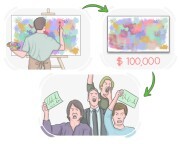
Ex: The committee suggested changes to improve the efficiency of the process. 
Close
Sign in
to generate

to cause or give rise to something

Ex: The artist's provocative work generated controversy and debate, challenging societal norms and perceptions. 
Close
Sign in
to assess
to assess
[Verb]

to form a judgment on the quality, worth, nature, ability or importance of something, someone, or a situation

Ex: The manager assesses employees' performance during quarterly reviews. 
Close
Sign in
to construct

to create something by organizing and combining ideas or components in a logical and coherent way

Ex: The author constructed a compelling narrative by carefully weaving together multiple plotlines and character arcs. 
Close
Sign in
to evaluate

to calculate or judge the quality, value, significance, or effectiveness of something or someone

Ex: The teacher evaluates students' performance through tests and assignments. 
Close
Sign in
to appraise

to carefully examine something and judge its value, often in terms of money or quality
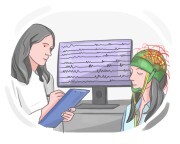
Ex: The real estate agent will appraise the house to determine its market value. 
Close
Sign in
to formulate

to thoughtfully prepare or create something, paying close attention to its details

Ex: The scientist spent months formulating a precise hypothesis for the experiment. 
Close
Sign in
notably
notably
[Adverb]

used to introduce the most important part of what is being said

Ex: The city is known for its rich history, notably its ancient architecture. 
Close
Sign in
namely
namely
[Adverb]

used to give more specific information or examples regarding what has just been mentioned

Ex: She had several hobbies, namely painting, gardening, and playing the piano. 
Close
Sign in
in particular

used to specify or emphasize a particular aspect or detail within a broader context

Ex: The study found several benefits of the new technology, in particular, its impact on productivity and cost savings. 
Close
Sign in
to be precise

used to indicate that the speaker or writer is providing an exact or accurate version of something, often to clarify, specify, or emphasize a particular point

Ex: The distance between the two cities is 50 miles, to be precise. 
Close
Sign in
furthermore
furthermore
[Adverb]

used to introduce additional information

Ex: The research findings supported the hypothesis, and furthermore, they provided valuable insights into potential applications. 
Close
Sign in
LanGeek
Download LanGeek app