
Clothes and Fashion - Historical Clothes
Here you will learn some English words related to historical clothes such as "armor", "toga" and "tabard".
Review
Flashcards
Spelling
Quiz

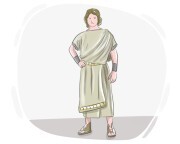
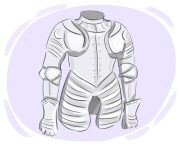
a protective metal clothing used by soldiers in the past in order not to be harmed or injured during battles



a cloth that covers the genital area, typically worn by men as a part of their clothing during the 15th and 16th centuries

a long, narrow piece of clothing worn around the neck, often used as a decorative accessory

a framework or padding used to create a fuller rear silhouette in skirts or dresses, popular in 19th-century fashion


a type of armor made of small metal rings linked together in a pattern to form a protective mesh-like garment

a loose, sleeveless outer garment that was worn over the armor typically by knights during the medieval period

a man's snug-fitting jacket, originating in the 14th century, that is worn over a shirt and underneath a coat

a man's long coat with a fitted waist and a flared skirt that was popular in the 19th century
a type of armor made of interlocking metal rings or plates, traditionally worn to protect the body from weapons
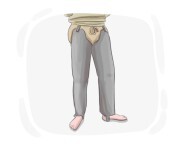
a type of leg armor worn in medieval times, consisted of fitted fabric or mail leggings that protected the lower legs and feet

a quilted padded garment worn as protective padding underneath armor during medieval times for impact absorption and body protection in combat
a type of long tunic made of interlocking metal rings, worn as body armor during the Middle Ages
a short, close-fitting jacket or sleeveless shirt, typically made of leather and worn as a protective garment
a sleeveless, fitted tunic or overdress, often worn by women in medieval times over a skirt or under a gown for layering or modesty
a circular band of cloth worn by high-ranking clergy over their chasuble as a symbol of their authority
a fabric or lace collar worn by women in medieval times, often over the neckline of a gown or dress for coverage or adornment
a type of men's clothing in the 16th century that were close-fitting garments covering the hips and thighs, often filled out to create a puffed, rounded appearance
a style of men's long, close-fitting overcoat worn for outdoor activities such as hunting or horse riding

a simple tunic garment made of a single piece of fabric, draped over the body and fastened at the shoulders, worn by ancient Greek men and women
a style of women's clothing that was worn for horseback riding and includes a tailored jacket, a long skirt, and a shirt or blouse
| Clothes and Fashion | |||
|---|---|---|---|
| Describing Clothes | The World of Fashion | Making Clothes | Traditional Clothes |
| Historical Clothes | Taking Care of Clothes | Nouns Relating to Clothing | Verbs Relating to Clothing |
