
Επιστήμες ACT - Βιοχημεία και κυτταρική δομή
Μάθετε το επιστημονικό λεξιλόγιο ACT για τη βιοχημεία και τη δομή του κυττάρου, συμπεριλαμβανομένων πρωτεϊνών, ενζύμων, μεμβρανών, οργανιδίων, μεταβολισμού και κυτταρικών διεργασιών.
Ανασκόπηση
Κάρτες
Ορθογραφία
Κουίζ


a substance found in the cell walls of plants, providing structure and making up dietary fiber

κυτταρίνη, διαιτητική ίνα
Το φιλικό προς το περιβάλλον υλικό συσκευασίας είναι κατασκευασμένο από ανακυκλωμένες ίνες κυτταρίνης.
a natural sugar found in fruits and honey, often used to sweeten foods and drinks
φρουκτόζη, ζάχαρη φρούτων
Πάρα πολλή φρουκτόζη σε επεξεργασμένα τρόφιμα μπορεί να έχει επιπτώσεις στην υγεία.
(biochemistry) a simple sugar that is the main source of energy for cells in the body
γλυκόζη, σταφυλοσάκχαρο
a short chain of amino acids linked together, which can function as a building block for proteins or act as a signaling molecule in the body
πεπτίδιο, μικρή αλυσίδα αμινοξέων
Οι ερευνητές εξετάζουν τα εμβόλια πεπτιδίων ως μια υποσχόμενη προσέγγιση για την καταπολέμηση των λοιμωδών ασθενειών.
a type of pigment found in plants, algae, and some bacteria, responsible for bright red, yellow, and orange colors and important for photosynthesis and antioxidant activity
καροτενοειδές, χρωστική καροτενοειδούς
Οι επιστήμονες μελετούν τις καροτενοειδείς για να κατανοήσουν τον ρόλο τους στη διατροφή του ανθρώπου και την πρόληψη ασθενειών.
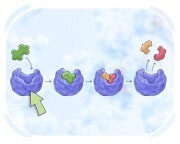
a biological molecule, usually a protein, that speeds up a specific chemical reaction without being consumed in the process
ένζυμο, ζυμωτικό
the entire set of proteins expressed by a cell, tissue, or organism at a specific time under defined conditions
πρωτέωμα, ολόκληρο το σύνολο των πρωτεϊνών
Η ανάλυση του πρωτεώματος παρέχει πληροφορίες για τις κυτταρικές λειτουργίες, τις οδούς σηματοδότησης και τις αλληλεπιδράσεις μεταξύ πρωτεϊνών.
a molecule that forms the basic building block of DNA and RNA, consisting of a sugar, a phosphate group, and a nitrogenous base
νουκλεοτίδιο
Οι μεταλλάξεις μπορεί να συμβούν όταν αλλάζει η αλληλουχία των νουκλεοτιδίων στο DNA.
a simple sugar molecule, the most basic form of carbohydrates that cannot be further hydrolyzed
μονοσακχαρίτης
Το μονοσακχαρίτη, όπως η γλυκόζη, είναι ένα βασικό σάκχαρο στους υδατάνθρακες.
a fundamental compound derived from glutamic acid, integral to biological functions and known for its role as a neurotransmitter in the central nervous system
γλουταμινικό, μια θεμελιώδης ένωση που προέρχεται από το γλουταμινικό οξύ
Οι ερευνητές μελετούν τον ρόλο της γλουταμίνης στην υγεία και την ασθένεια, συμπεριλαμβανομένης της επίδρασής της σε νευρολογικές παθήσεις όπως η νόσος Alzheimer.
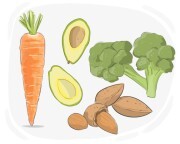
a substance, such as vitamin E, that helps clean the body of harmful substances
αντιοξειδωτικό
Τα καρύδια ήταν μια καλή πηγή αντιοξειδωτικών, κάνοντάς τα μια καλή επιλογή για σνακ που είναι καλό για την καρδιά.
(biochemistry) an oily or fatty molecule that does not dissolve in water and is a key building block of cell membranes
λιπίδιο, λιπίδια
relating to or characteristic of mitochondria, which are organelles found in cells responsible for energy production
μιτοχονδριακός, σχετικός με τα μιτοχόνδρια
Η μιτοχονδριακή βιογένεση αναφέρεται στη διαδικασία δημιουργίας νέων μιτοχονδρίων στα κύτταρα για να ανταποκριθεί στις ενεργειακές απαιτήσεις.
the gel-like, semifluid substance within a cell that surrounds the organelles, providing a medium for cellular activities, including metabolism, transport of substances, and support for cellular structures
κυτταρόπλασμα, κυτταροπλασματική ουσία
Πολλά ένζυμα που είναι υπεύθυνα για μεταβολικές αντιδράσεις βρίσκονται στο κυτταρόπλασμα.
a green pigment found in all green plants and cyanobacteria that is responsible for the absorption of the sunlight needed for the photosynthesis process
χλωροφύλλη, πράσινο χρωστική
Οι φύκιες και οι κυανοβακτήρια περιέχουν επίσης χλωροφύλλη, επιτρέποντάς τους να πραγματοποιούν οξυγονική φωτοσύνθεση.
a thin layer of living tissue that covers, lines, connects, or separates parts of an organism
μεμβράνη, υμένας
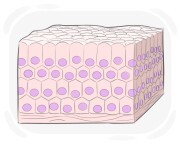
a group of similar cells that work together to form a particular part of a human, animal, or plant
a cellular organelle involved in the processing, packaging, and distribution of proteins and lipids within the cell, consisting of a stack of flattened membrane sacs called cisternae
Σωμάτιο Golgi, Συγκρότημα Golgi
Ο συσκευή Golgi εμπλέκεται στον σχηματισμό κυστιδίων που μεταφέρουν υλικά μέσα στο κύτταρο ή στην κυτταρική μεμβράνη.
a tiny structure within cells that assembles proteins by reading the genetic instructions carried by messenger RNA
ριβόσωμα
Η διαδικασία της μετάφρασης, όπου οι γενετικές οδηγίες στο mRNA μετατρέπονται σε πρωτεΐνες, συμβαίνει στα ριβοσώματα.
a small, enzyme-filled sac in a cell that breaks down waste materials and unwanted substances
λυσόσωμα, μικρή θύλακα γεμάτη ένζυμα
Κατά την απόπτωση (προγραμματισμένο κυτταρικό θάνατο), τα λυσόσωμα απελευθερώνουν ένζυμα που συμβάλλουν στην αποσύνθεση των κυτταρικών συστατικών.
a cell organelle in plants, fungi, and some protists that stores nutrients, manages waste, and helps maintain cell pressure
κενότροφο, κυστίδιο
Το μέγεθος και τα περιεχόμενα των κενόσωμων μπορούν να αλλάξουν δυναμικά ως απάντηση στις κυτταρικές ανάγκες και τις περιβαλλοντικές συνθήκες.
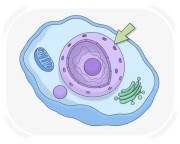
(biology) the part of a cell that contains most of the genetic information
πυρήνας, νουκλεός
a plant cell organelle that uses sunlight to produce energy and make glucose through photosynthesis
χλωροπλάστης, φωτοσυνθετικό οργανίδιο
Η μοναδική DNA μέσα στα χλωροπλάστια υποστηρίζει την ιδέα ότι προέρχονται από αρχαία συμβιωτικά βακτήρια που σχημάτισαν μια αμοιβαία ωφέλιμη σχέση με τους προγόνους των φυτών.
a network of protein fibers in a cell that gives it shape, supports its structure, and aids in movement
κυτταροσκελετός, σκελετός του κυττάρου
Το κυτταροσκελετικό είναι κρίσιμο για τη διατήρηση της κυτταρικής πόλωσης, διασφαλίζοντας τη σωστή οργάνωση και λειτουργία.
a branch of biology concerning the scientific study of the form and structure of an organism including plants and animals
μορφολογία, επιστημονική μελέτη της μορφής και της δομής των οργανισμών
a specialized, membrane-bound structure within a cell that performs specific functions, contributing to the cell's overall structure and function
οργανίδιο, οργανέλλα
Οι κενοτόποι, τα οργανίδια αποθήκευσης, διατηρούν θρεπτικά συστατικά, αποβλήτα ή χρωστικές ουσίες στα φυτικά κύτταρα.
a layer of actively dividing cells in plants, responsible for secondary growth by producing new xylem and phloem tissues
κάμβιο, γεννητικός ιστός
Οι βοτανολόγοι μελετούν την ανάπτυξη του καμβίου για να κατανοήσουν πώς τα φυτά προσαρμόζονται στις μεταβαλλόμενες κλιματικές και οικολογικές συνθήκες.
