
Vetenskap ACT - Biokemi och cellstruktur
Lär dig ACT-vetenskapsvokabulär för biokemi och cellstruktur, inklusive proteiner, enzymer, membran, organeller, metabolism och cellulära processer.
Recension
Flashcards
Stavning
Quiz

a substance found in the cell walls of plants, providing structure and making up dietary fiber

cellulosa, kostfiber
Dietisten rekommenderar att konsumera livsmedel rika på cellulosa för extra kostfiber.
a natural sugar found in fruits and honey, often used to sweeten foods and drinks
fruktos, fruktsocker
Kroppen bearbetar fruktos annorlunda än andra sockerarter som glukos.
(biochemistry) a simple sugar that is the main source of energy for cells in the body
glukos, druvsocker
a short chain of amino acids linked together, which can function as a building block for proteins or act as a signaling molecule in the body
peptid, kort kedja av aminosyror
Vissa peptider fungerar som hormoner och påverkar olika fysiologiska processer i kroppen.
a type of pigment found in plants, algae, and some bacteria, responsible for bright red, yellow, and orange colors and important for photosynthesis and antioxidant activity
karotenoid, karotenoidpigment
Tomater är rika på lykopen, en karotenoid känd för sina potentiella hälsofördelar.
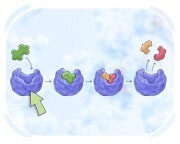
a biological molecule, usually a protein, that speeds up a specific chemical reaction without being consumed in the process
enzym, ferment
the entire set of proteins expressed by a cell, tissue, or organism at a specific time under defined conditions
proteom, hela uppsättningen av proteiner
Framsteg inom proteomik har gjort det möjligt för forskare att kartlägga det mänskliga proteomet mer omfattande.
a molecule that forms the basic building block of DNA and RNA, consisting of a sugar, a phosphate group, and a nitrogenous base
nukleotid
Cellernas energivaluta, ATP, är en nukleotid med tre fosfatgrupper.
a simple sugar molecule, the most basic form of carbohydrates that cannot be further hydrolyzed
monosackarid
Celler använder monosackarider som en primär energikälla.
a fundamental compound derived from glutamic acid, integral to biological functions and known for its role as a neurotransmitter in the central nervous system
glutamat, en grundläggande förening härledd från glutaminsyra
Glutamatreceptorer på nervceller spelar en betydande roll i inlärnings- och minnesprocesser.
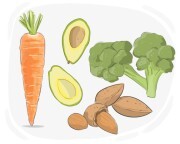
a substance, such as vitamin E, that helps clean the body of harmful substances
antioxidant
Valnötterna var en bra källa till antioxidanter, vilket gjorde dem till ett hjärtvänligt mellanmål.
(biochemistry) an oily or fatty molecule that does not dissolve in water and is a key building block of cell membranes
lipid, fett
relating to or characteristic of mitochondria, which are organelles found in cells responsible for energy production
mitokondriell, som rör mitokondrier
Mitokondriell transplantation är en medicinsk procedur som syftar till att ersätta dysfunktionella mitokondrier med friska.
the gel-like, semifluid substance within a cell that surrounds the organelles, providing a medium for cellular activities, including metabolism, transport of substances, and support for cellular structures
cytoplasma, cytoplasmatisk substans
Cellulär andning, en vital energiproducerande process, sker i cytoplasman.
a green pigment found in all green plants and cyanobacteria that is responsible for the absorption of the sunlight needed for the photosynthesis process
klorofyll, grönt pigment
Studiet av klorofyll och dess varianter bidrar till vår förståelse av de molekylära mekanismerna bakom fotosyntesen.
a thin layer of living tissue that covers, lines, connects, or separates parts of an organism
membran, hinna
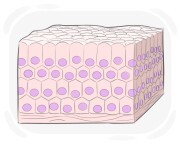
a group of similar cells that work together to form a particular part of a human, animal, or plant
vävnad, biologisk vävnad
a cellular organelle involved in the processing, packaging, and distribution of proteins and lipids within the cell, consisting of a stack of flattened membrane sacs called cisternae
Golgiapparaten, Golgikomplexet
Växtceller använder Golgi-apparaten för att producera cellväggskomponenter och andra väsentliga biomolekyler.
a tiny structure within cells that assembles proteins by reading the genetic instructions carried by messenger RNA
ribosom
Antibiotika som tetracyklin och streptomycin riktar in sig på bakteriella ribosomer, vilket hämmar proteinsyntesen.
a small, enzyme-filled sac in a cell that breaks down waste materials and unwanted substances
lysosom, enzymfylld vesikel
Den sura miljön inuti lysosomer bidrar till deras matsmältningsenzymer optimala funktion.
a cell organelle in plants, fungi, and some protists that stores nutrients, manages waste, and helps maintain cell pressure
vakuol, vesikel
I vissa vävnader hos växter lagrar vakuoler giftiga ämnen för att avskräcka herbivorer.
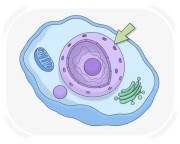
(biology) the part of a cell that contains most of the genetic information
cellkärna, nucleus
a plant cell organelle that uses sunlight to produce energy and make glucose through photosynthesis
kloroplast, fotosyntetiskt organell
Kloroplaster spelar en avgörande roll för att upprätthålla balansen mellan syre och koldioxid i atmosfären.
a network of protein fibers in a cell that gives it shape, supports its structure, and aids in movement
cytoskelett, cellskelett
Under cellmigration hjälper cytoskelettet celler att röra sig och ändra form genom att sträcka ut utskott.
a branch of biology concerning the scientific study of the form and structure of an organism including plants and animals
morfologi, vetenskaplig studie av organismernas form och struktur
a specialized, membrane-bound structure within a cell that performs specific functions, contributing to the cell's overall structure and function
organell, cellorganell
Plasmamembranet, även om det inte alltid kallas organell, är en vital cellulär gräns.
a layer of actively dividing cells in plants, responsible for secondary growth by producing new xylem and phloem tissues
kambium, bildningsvävnad
Aktiviteten i kambium-skiktet gör att fleråriga växter kan öka i omkrets och motstå miljöstress.
