
pattern

Livro Headway - Avançado - A Última Palavra (Unidade 2)

Aqui você encontrará o vocabulário da Unidade 2 The Last Word no livro didático Headway Advanced, como "contração", "apóstrofo", "revisar", etc.

Revisar

Flashcards

Ortografia

Quiz

Começar a aprender
Headway - Advanced
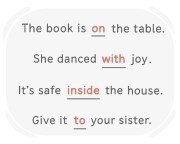
preposition
preposition
[substantivo]

(grammar) a word that comes before a noun or pronoun to indicate location, direction, time, manner, or the relationship between two objects

preposição, palavra de relação

preposição, palavra de relação

Ex: He used a list of common prepositions to help correct his grammar mistakes in the essay. 
Fechar
Entrar
split infinitive
split infinitive
[substantivo]

a construction in which an adverb or adverbial phrase is placed between the particle "to" and the base form of a verb

infinitivo partido, infinitivo separado

infinitivo partido, infinitivo separado

Ex: "To carefully consider the options" is an example of a split infinitive. 
Fechar
Entrar
contraction
contraction
[substantivo]

a short form of a word or a group of words used instead of the full form

contração, forma contraída

contração, forma contraída

Ex: In casual speech, contractions like "don't" and "didn't" are frequently used. 
Fechar
Entrar
conjunction
conjunction
[substantivo]

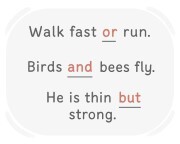
(grammar) a word such as and, because, but, and or that connects phrases, sentences, or words

conjunção, palavra de ligação

conjunção, palavra de ligação

Ex: In compound sentences, conjunctions are essential for linking ideas and creating coherence. 
Fechar
Entrar
passive voice
passive voice
[substantivo]

(in grammar) the form of a verb used when the grammatical subject is affected by the action of the verb, rather than performing it

voz passiva, forma passiva

voz passiva, forma passiva

Ex: Passive voice is often used when the doer of the action is unknown or unimportant. 
Fechar
Entrar
rhetorical question
rhetorical question
[substantivo]

a question that is not meant to be answered, but is instead used to make a point or to create emphasis or effect

pergunta retórica, interrogação retórica

pergunta retórica, interrogação retórica

Ex: He asked a rhetorical question to emphasize his point about fairness. 
Fechar
Entrar
apostrophe
apostrophe
[substantivo]

the symbol ' used in writing to show possession or omission of letters or numbers

apóstrofo, símbolo do apóstrofo

apóstrofo, símbolo do apóstrofo

Ex: The apostrophe in "can't" indicates the omission of the letter "o." 
Fechar
Entrar
to proofread

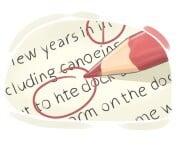
to read and correct the mistakes of a written or printed text

revisar, corrigir

revisar, corrigir

Ex: Before submitting her essay, she asked her friend to proofread it for any typos or grammatical errors. 
Fechar
Entrar
subject pronoun
subject pronoun
[substantivo]

a type of pronoun that replaces a noun as the subject of a sentence

pronome sujeito, pronome pessoal sujeito

pronome sujeito, pronome pessoal sujeito

Ex: A subject pronoun like "I" or "he" replaces the subject noun in a sentence. 
Fechar
Entrar
to agree
to agree
[verbo]

(grammar) to have the same grammatical number, gender, case or person

concordar, coincidir

concordar, coincidir

Ex: The subject and verb must agree in number. 
Fechar
Entrar
adverb
adverb
[substantivo]

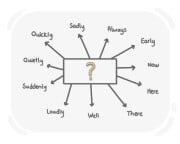
a word that gives more information about a verb, adjective, or another adverb

advérbio, uma palavra que dá mais informações sobre um verbo

advérbio, uma palavra que dá mais informações sobre um verbo

Ex: "Quickly" is an adverb that shows how fast something is done. 
Fechar
Entrar
auxiliary verb
auxiliary verb
[substantivo]

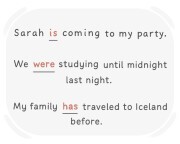
a verb that is used with other verbs to indicate tense, voice, etc., such as do, have, and be

verbo auxiliar

verbo auxiliar

Ex: The teacher explained that auxiliary verbs like 'have' and 'will' help to form different tenses and aspects. 
Fechar
Entrar
idiom
idiom
[substantivo]

a group of words or a phrase that has a meaning different from the literal interpretation of its individual words, often specific to a particular language or culture

expressão idiomática, idiomatismo

expressão idiomática, idiomatismo

Ex: The idiom 'kick the bucket' means to die, and its meaning is quite different from the literal interpretation of kicking a bucket. 
Fechar
Entrar
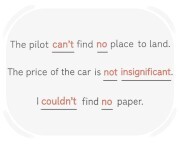
double negative
double negative
[substantivo]

a grammatical construction in which two negative elements are used within the same sentence, often resulting in a positive meaning

dupla negativa, negativa dupla

dupla negativa, negativa dupla

Ex: In standard grammar, a double negative can create confusion, as it often results in a positive meaning. 
Fechar
Entrar
LanGeek
Baixar o aplicativo LanGeek