
El libro Headway - Avanzado - La Última Palabra (Unidad 2)
Aquí encontrarás el vocabulario de la unidad 2 The Last Word del libro de curso Headway Advanced, como "contracción", "apóstrofe", "corregir", etc.
Revisión
Tarjetas de memoria
Ortografía
Cuestionario

(grammar) a word that comes before a noun or pronoun to indicate location, direction, time, manner, or the relationship between two objects

preposición
El profesor explicó que las preposiciones se utilizan para mostrar las relaciones entre los sustantivos y otras partes de la oración.

a construction in which an adverb or adverbial phrase is placed between the particle "to" and the base form of a verb
infinitivo partido, infinitivo separado
Algunos gramáticos argumentan que los infinitivos partidos deben evitarse, aunque son comúnmente utilizados en el inglés moderno.
a short form of a word or a group of words used instead of the full form
contracción
La contracción "we've" significa "we have".

a word or expression that connects words, phrases, or clauses
conjunción
(in grammar) the form of a verb used when the grammatical subject is affected by the action of the verb, rather than performing it
voz pasiva
La voz pasiva a veces puede hacer que las oraciones suenen más formales o impersonales.
a question that is not meant to be answered, but is instead used to make a point or to create emphasis or effect
pregunta retórica, interrogación retórica
Hacer una pregunta retórica puede hacer que un discurso sea más persuasivo.

the symbol ' used in writing to show possession or omission of letters or numbers
apóstrofo
El apóstrofe en "it's" lo distingue de "its", que es posesivo.
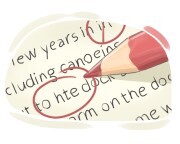
to read and correct the mistakes of a written or printed text
corregir las pruebas de, corregir
Él corrige sus publicaciones de blog varias veces antes de publicarlas en línea para asegurarse de que estén pulidas y libres de errores.
a type of pronoun that replaces a noun as the subject of a sentence
pronombre sujeto, pronombre personal sujeto
En lugar de repetir un nombre, usas un pronombre sujeto, como usar "él" en lugar de decir "Juan".
(grammar) to have the same grammatical number, gender, case or person
concordar, coincidir
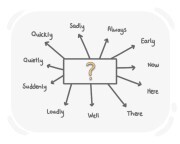
a word that gives more information about a verb, adjective, or another adverb
adverbio
Un error común en inglés es confundir los adjetivos con los adverbios.

a verb that is used with other verbs to indicate tense, voice, etc., such as do, have, and be
verbo auxiliar
Aprender a usar correctamente los verbos auxiliares puede mejorar en gran medida la capacidad de construir oraciones complejas.
a group of words or a phrase that has a meaning different from the literal interpretation of its individual words, often specific to a particular language or culture
modismo, giro
La frase 'spill the beans' es un modismo que significa revelar un secreto, en lugar de hacer caer frijoles literalmente.

a grammatical construction in which two negative elements are used within the same sentence, often resulting in a positive meaning
doble negación, múltiple negación
La frase "No hemos visto a nadie" usa una doble negación, lo que implica que han visto a alguien.
