
Cartea Headway - Avansat - Ultimul Cuvânt (Unitatea 2)
Aici veți găsi vocabularul din Unitatea 2 The Last Word din manualul Headway Advanced, cum ar fi "contracție", "apostrof", "corectare" etc.
Revizuire
Fișe de studiu
Ortografie
Chestionar

(grammar) a word that comes before a noun or pronoun to indicate location, direction, time, manner, or the relationship between two objects

prepoziție, cuvânt de relație
El a folosit o listă de prepoziții comune pentru a ajuta la corectarea greșelilor sale gramaticale din eseu.

a construction in which an adverb or adverbial phrase is placed between the particle "to" and the base form of a verb
infinitiv divizat, infinitiv separat
"A considera cu atenție opțiunile" este un exemplu de infinitiv divizat.
a short form of a word or a group of words used instead of the full form
contracție, formă contrasă
În vorbirea casuală, contracțiile cum ar fi "nu" și "nu a făcut" sunt frecvent utilizate.

a word or expression that connects words, phrases, or clauses
conjuncție
(in grammar) the form of a verb used when the grammatical subject is affected by the action of the verb, rather than performing it
diateză pasivă, formă pasivă
Diateza pasivă este adesea folosită atunci când autorul acțiunii este necunoscut sau neimportant.
a question that is not meant to be answered, but is instead used to make a point or to create emphasis or effect
întrebare retorică, interogație retorică
A pus o întrebare retorică pentru a-şi sublinia punctul de vedere privind corectitudinea.

the symbol ' used in writing to show possession or omission of letters or numbers
apostrof, simbolul apostrofului
Apostroful din "can't" indică omisiunea literei "o".
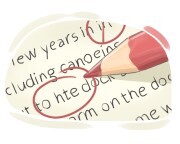
to read and correct the mistakes of a written or printed text
corecta, revizui
Înainte de a-și trimite eseuul, ea i-a cerut prietenului său să îl revizuiască pentru greșeli de tipar sau gramaticale.
a type of pronoun that replaces a noun as the subject of a sentence
pronume subiect, pronume personal subiect
Un pronume subiect cum ar fi «eu» sau «el» înlocuiește substantivul subiect într-o propoziție.
(grammar) to have the same grammatical number, gender, case or person
a fi de acord, a concorda
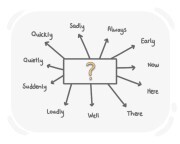
a word that gives more information about a verb, adjective, or another adverb
adverb, un cuvânt care oferă mai multe informații despre un verb
Adverb este un cuvânt care arată cât de repede se face ceva.

a verb that is used with other verbs to indicate tense, voice, etc., such as do, have, and be
verb auxiliar
Profesorul a explicat că verbele auxiliare precum 'a avea' și 'a voi' ajută la formarea diferitelor timpuri și aspecte.
a group of words or a phrase that has a meaning different from the literal interpretation of its individual words, often specific to a particular language or culture
idiom, expresie idiomatică
Idiomul 'kick the bucket' înseamnă a muri, iar sensul său este destul de diferit de interpretarea literală a lovirii unei găleți.

a grammatical construction in which two negative elements are used within the same sentence, often resulting in a positive meaning
dublă negație, negație dublă
În gramatica standard, o dublă negație poate crea confuzie, deoarece adesea are ca rezultat un sens pozitiv.
