
Headway - Advanced - The Last Word (Unit 2)
Here you will find the vocabulary from The Last Word Unit 2 in the Headway Advanced coursebook, such as "contraction", "apostrophe", "proofread", etc.
Review
Flashcards
Spelling
Quiz

(grammar) a word that comes before a noun or pronoun to indicate location, direction, time, manner, or the relationship between two objects

a construction in which an adverb or adverbial phrase is placed between the particle "to" and the base form of a verb
a short form of a word or a group of words used instead of the full form

a word or expression that connects words, phrases, or clauses
(in grammar) the form of a verb used when the grammatical subject is affected by the action of the verb, rather than performing it
a question that is not meant to be answered, but is instead used to make a point or to create emphasis or effect
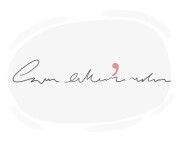
the symbol ' used in writing to show possession or omission of letters or numbers
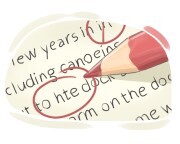
to read and correct the mistakes of a written or printed text
a type of pronoun that replaces a noun as the subject of a sentence
(grammar) to have the same grammatical number, gender, case or person
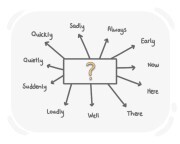
a word that gives more information about a verb, adjective, or another adverb

a verb that is used with other verbs to indicate tense, voice, etc., such as do, have, and be
a group of words or a phrase that has a meaning different from the literal interpretation of its individual words, often specific to a particular language or culture

a grammatical construction in which two negative elements are used within the same sentence, often resulting in a positive meaning
