
Βιβλίο Headway - Προχωρημένο - Η Τελευταία Λέξη (Μονάδα 2)
Εδώ θα βρείτε το λεξιλόγιο από την ενότητα 2 The Last Word στο βιβλίο μαθητή Headway Advanced, όπως "σύναψη", "απόστροφος", "διόρθωση" κ.λπ.
Ανασκόπηση
Κάρτες
Ορθογραφία
Κουίζ


(grammar) a word that comes before a noun or pronoun to indicate location, direction, time, manner, or the relationship between two objects

πρόθεση, σχέση λέξης
« Θα συναντηθούμε στις 5 μ.μ. » « Στις » είναι μια πρόθεση που δείχνει χρόνο.

a construction in which an adverb or adverbial phrase is placed between the particle "to" and the base form of a verb
διαχωρισμένη απαρέμφαση, σπασμένη απαρέμφαση
Το διαχωρισμένο απαρέμφατο "για να ολοκληρωθεί γρήγορα το έργο" δίνει έμφαση στην ταχύτητα ολοκλήρωσης της εργασίας.
a short form of a word or a group of words used instead of the full form
σύσπαση, συνεπτυγμένη μορφή
Συντομογραφίες χρησιμοποιούνται συχνά σε ανεπίσημη γραφή και ομιλία.

a word or expression that connects words, phrases, or clauses
σύνδεσμος
(in grammar) the form of a verb used when the grammatical subject is affected by the action of the verb, rather than performing it
παθητική φωνή, παθητική μορφή
Πολλά επιστημονικά άρθρα βασίζονται στην παθητική φωνή για να επικεντρωθούν στην έρευνα παρά στους ερευνητές.
a question that is not meant to be answered, but is instead used to make a point or to create emphasis or effect
ρητορική ερώτηση, ερώτηση για ρητορικό εφέ
« Ποιος δεν θέλει να πετύχει; » είναι μια ρητορική ερώτηση που χρησιμοποιείται για να κάνει όλους να σκέφτονται.

the symbol ' used in writing to show possession or omission of letters or numbers
απόστροφος, σύμβολο απόστροφος
Το δοκίμιό του είχε πολλαπλά λάθη στη χρήση των αποστρόφων.

to read and correct the mistakes of a written or printed text
διορθώνω, ελέγχω
Πριν από την εκτύπωση της τελικής έκδοσης του φυλλαδίου, ο σχεδιαστής το διόρθωσε προσεκτικά μια τελευταία φορά για να εντοπίσει τυχόν προβλήματα μορφοποίησης.
a type of pronoun that replaces a noun as the subject of a sentence
αντωνυμία υποκειμένου, προσωπική αντωνυμία υποκειμένου
Στην πρόταση "Πήγε στην αγορά", το "Αυτή" είναι μια υποκειμενική αντωνυμία.
(grammar) to have the same grammatical number, gender, case or person
συμφωνώ, ταιριάζω
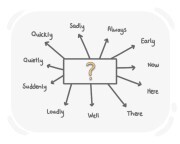
a word that gives more information about a verb, adjective, or another adverb
επίρρημα, μια λέξη που δίνει περισσότερες πληροφορίες για ένα ρήμα
Ο δάσκαλος ζήτησε από τους μαθητές να καταγράψουν δέκα επιρρήματα για εργασία στο σπίτι.

a verb that is used with other verbs to indicate tense, voice, etc., such as do, have, and be
βοηθητικό ρήμα
Στην ερώτηση "Do you understand?", η λέξη "do" είναι ένα βοηθητικό ρήμα.
a group of words or a phrase that has a meaning different from the literal interpretation of its individual words, often specific to a particular language or culture
ιδιωματισμός, ιδιωματική έκφραση
Η ιδιωματική έκφραση 'piece of cake' αναφέρεται σε κάτι που είναι πολύ εύκολο να γίνει, το οποίο δεν έχει καμία σχέση με ένα πραγματικό κομμάτι επιδόρπιο.

a grammatical construction in which two negative elements are used within the same sentence, often resulting in a positive meaning
διπλή άρνηση, άρνηση διπλή
Ο συντάκτης διόρθωσε τη διπλή άρνηση στο χειρόγραφο για να διασφαλίσει σαφήνεια και ακρίβεια.
