
Le livre Headway - Avancé - Le Dernier Mot (Unité 2)
Ici, vous trouverez le vocabulaire de l'unité 2 The Last Word du manuel Headway Advanced, comme "contraction", "apostrophe", "proofread", etc.
Réviser
Flashcards
Orthographe
Quiz

(grammar) a word that comes before a noun or pronoun to indicate location, direction, time, manner, or the relationship between two objects

préposition
Elle a eu du mal avec les prépositions en anglais parce qu'elles ne se traduisent souvent pas directement de sa langue maternelle.

a construction in which an adverb or adverbial phrase is placed between the particle "to" and the base form of a verb
infinitif scindé,infinitif séparé
La phrase "Elle a promis de toujours l'aimer" contient un infinitif scindé, avec "toujours" interrompant "aimer".
a short form of a word or a group of words used instead of the full form
contraction
Lorsqu'on écrit de manière informelle, les contractions rendent le langage plus détendu.

a word or expression that connects words, phrases, or clauses
conjonction
(in grammar) the form of a verb used when the grammatical subject is affected by the action of the verb, rather than performing it
voix passif
Lorsque vous utilisez la voix passive, l'objet de l'action devient le sujet de la phrase.
a question that is not meant to be answered, but is instead used to make a point or to create emphasis or effect
question rhétorique,interrogation rhétorique
L'orateur a posé une question rhétorique pour engager le public plus efficacement.

the symbol ' used in writing to show possession or omission of letters or numbers
apostrophe
Utilisez une apostrophe pour indiquer la possession, comme dans "le livre de Jessica".
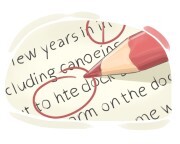
to read and correct the mistakes of a written or printed text
relire, revoir, corriger
Le rédacteur en chef du journal relit toujours les articles avant leur publication pour maintenir les normes élevées de précision de la publication.
a type of pronoun that replaces a noun as the subject of a sentence
pronom sujet,pronom personnel sujet
« You » est un pronom sujet utilisé pour désigner la personne ou les personnes à qui l'on s'adresse.
(grammar) to have the same grammatical number, gender, case or person
accorder,s'accorder
Le pronom "elle" s'accorde avec son antécédent "Alice" en genre et en nombre.
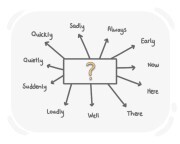
a word that gives more information about a verb, adjective, or another adverb
adverbe
En anglais, un adverbe modifie souvent un verbe pour nous donner plus d'informations sur l'action.

a verb that is used with other verbs to indicate tense, voice, etc., such as do, have, and be
verbe auxiliaire
Les verbes auxiliaires sont essentiels pour former les temps parfaits, comme dans 'Ils ont fini leurs devoirs'.
a group of words or a phrase that has a meaning different from the literal interpretation of its individual words, often specific to a particular language or culture
expression idiomatique
Quand quelqu'un dit 'il pleut des cordes,' il utilise une expression idiomatique pour décrire une pluie très forte, pas une véritable averse d'animaux.

a grammatical construction in which two negative elements are used within the same sentence, often resulting in a positive meaning
double négation
La phrase "Je ne sais rien à ce sujet" utilise une double négation, ce qui signifie en fait "Je sais quelque chose à ce sujet".
