pattern

Cambridge English: CPE (C2 Proficiency) - Cognition & Understanding

Review

Flashcards

Forms

Spelling

Quiz

Start learning
Cambridge English: CPE (C2 Proficiency)
conjecture

an idea that is based on guesswork and not facts

Ex: The detective's conjecture about the suspect's motives proved to be incorrect. 
Close
Sign in
to construe

to interpret a certain meaning from something

Ex: Lawyers often construe legal documents to understand their implications. 
Close
Sign in
contrivance

the ability to invent or solve problems through clever thinking
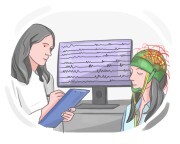
Ex: Her contrivance was evident in the way she solved the puzzle. 
Close
Sign in
to contrive

to cleverly come up with an idea, theory, or plan using creative thinking
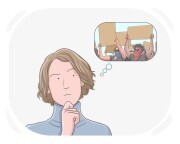
Ex: The detective contrived a clever plan to solve the mysterious case. 
Close
Sign in
to cogitate

to think carefully about something

Ex: During the meeting, she took a moment to cogitate before expressing her opinion. 
Close
Sign in
cognizance

awareness or understanding of something

Ex: She had full cognizance of the risks involved. 
Close
Sign in
conversant
conversant
[Adjective]

knowledgeable or experienced with something

Ex: She became conversant in several languages through her travels. 
Close
Sign in
introspective
introspective
[Adjective]

focusing on one's own thoughts, feelings, and experiences

Ex: Her introspective nature led her to keep a detailed journal of her personal growth. 
Close
Sign in
mnemonic
mnemonic
[Adjective]

serving to aid memory by using patterns, associations, or devices that make recall easier

Ex: She used a mnemonic rhyme to remember the planets in order. 
Close
Sign in
supposition

an idea accepted as true without proof, often used as a basis for reasoning

Ex: The theory rests on the supposition that all particles behave identically. 
Close
Sign in
syllogism
syllogism
[noun]

a form of deductive reasoning consisting of a major premise, a minor premise, and a conclusion that logically follows from them

Ex: The classic syllogism goes: All humans are mortal; Socrates is human; therefore, Socrates is mortal. 
Close
Sign in
tenet
tenet
[noun]

a fundamental belief or principle that is central to a system of thought, philosophy, or religion
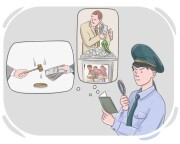
Ex: The tenet of democracy underscores the importance of representative governance and individual freedoms. 
Close
Sign in
to infer
to infer
[Verb]

to reach an opinion or decision based on available evidence and one's understanding of the matter

Ex: After observing the pattern of behavior, the detective could infer that the suspect was familiar with the victim. 
Close
Sign in
ken
ken
[noun]

the scope of what someone is aware of or is capable of grasping

Ex: Quantum physics is beyond my ken, but I admire those who master it. 
Close
Sign in
premise
premise
[noun]

a theory or statement that acts as the foundation of an argument

Ex: The entire debate was based on the premise that economic growth benefits all members of society. 
Close
Sign in
to ruminate

to think carefully and at length about something

Ex: She likes to ruminate on philosophical questions before bed. 
Close
Sign in
to perceive

to become aware or conscious of something

Ex: He didn't initially understand the implications, but soon perceived the gravity of the decision. 
Close
Sign in
to scrutinize

to examine something closely and carefully in order to find errors

Ex: Inspectors scrutinized the company's financial records to find any errors. 
Close
Sign in
cerebration

mental activity involving careful consideration or reasoning

Ex: After hours of cerebration, she finally solved the riddle. 
Close
Sign in
to disabuse

to help a person rid themselves of their misconceptions

Ex: The professor disabused the students of the myth about ancient civilizations. 
Close
Sign in
to plumb
to plumb
[Verb]

to explore or investigate something deeply and thoroughly, often to understand its full meaning or complexity

Ex: The novel plumbs the depths of human emotion. 
Close
Sign in
to peruse
to peruse
[Verb]

to consider or examine something while being very careful and attentive to detail
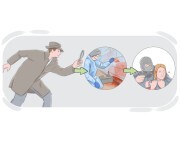
Ex: She decided to peruse the contract thoroughly before signing it. 
Close
Sign in
to delve
to delve
[Verb]

to search something to find or discover something

Ex: The historian delved into ancient texts and manuscripts, seeking to uncover lost secrets of the past. 
Close
Sign in
axiomatic
axiomatic
[Adjective]

clearly true and requiring no explanation

Ex: It's axiomatic that hard work leads to success. 
Close
Sign in
to ferret out

to actively and persistently search for and uncover a piece of information or a secret

Ex: The reporter diligently ferreted out the concealed aspects of the political controversy. 
Close
Sign in
credence
credence
[noun]

belief in the truth of something

Ex: His story gained credence after the witness confirmed it. 
Close
Sign in
certitude
certitude
[noun]

the feeling of complete certainty

Ex: She spoke with certitude about the accuracy of her research findings. 
Close
Sign in
reputed
reputed
[Adjective]

considered to be a certain way, though not necessarily confirmed

Ex: He is a reputed expert in ancient languages. 
Close
Sign in
to glean
to glean
[Verb]

to carefully collect small amounts of information, facts, or knowledge over time from different sources

Ex: She gleaned useful tips from the interview. 
Close
Sign in
minutiae
minutiae
[noun]

small details that are easily overlooked

Ex: During the detective's investigation, he paid attention to the minutiae of the crime scene, looking for tiny details that could provide crucial clues. 
Close
Sign in
LanGeek
Download LanGeek app