C2 Level Wordlist - Animals

Here you will learn all the essential words for talking about Animals, collected specifically for level C2 learners.

review-disable

review

flashcard-disable

flashcard

spelling-disable

spelling

quiz-disable

quiz

start-learning
C2 Level Wordlist
crepuscular [adjective]

(of an animal) active during the twilight hours of dawn and dusk

Ex: The zoo 's nocturnal exhibit featured crepuscular animals like the serval and the tamandua , showcasing their natural behaviors during the twilight hours .
oviparous [adjective]

producing eggs that develop and hatch outside the body

Ex: Fish exhibit a variety of reproductive strategies , with some being oviparous , releasing eggs into the water for external fertilization .
simian [adjective]

of or relating to monkeys or apes

Ex: His simian arms hung low as he walked , a trait reminiscent of our evolutionary ancestors .
arboreal [adjective]

(of animals) adapted to or living high in trees, rather than on the ground

Ex:
ectothermic [adjective]

relating to or denoting animals that regulate their body temperature by external sources, such as the surrounding environment

Ex: Lizards exhibit ectothermic behavior , seeking out warm surfaces to maintain their preferred body temperature .
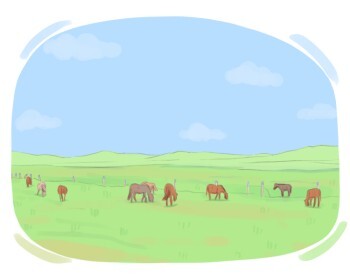
equine [adjective]

having characteristics, appearance, or behavior similar to a horse

Ex:
piscivorous [adjective]

feeding primarily on fish

Ex: The heron is a piscivorous wading bird , often seen hunting for fish along the water 's edge .
terrestrial [adjective]

related to or living on land, rather than in the sea or air

Ex: The terrestrial ecosystem of the Amazon rainforest supports a vast diversity of plant and animal species .
tame [adjective]

brought from a wild state under human control or accustomed to humans
Ex: The once-wild horse became tame after gentle training .
nocturnal [adjective]

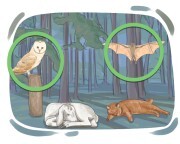
(of animals or organisms) primarily active during the night
Ex: Bats are nocturnal creatures , sleeping during the day and becoming active after sunset .
bovine [adjective]

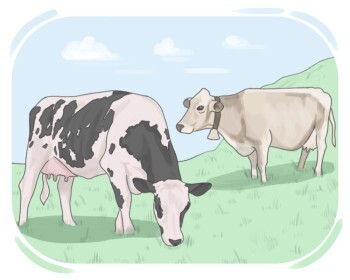
relating to or characteristic of cows or cattle

Ex: Bovine farming practices vary across regions , adapting to the unique needs of different cattle breeds .
avian [adjective]

relating to or characteristic of birds

Ex: Avian anatomy is adapted to flight , with features such as lightweight bones and feathers .
viviparous [adjective]

(of animals) giving birth to developed babies instead of laying eggs

Ex: The viviparous nature of certain reptiles , like the boa constrictor , allows them to give birth to live young in environments where egg-laying would be risky .
diurnal [adjective]

primarily active or occurring during the daytime

Ex: The biologist focused her research on diurnal species , observing their behaviors and interactions throughout the day .
ovoviviparous [adjective]

(of an animal) giving birth to live offspring that have developed from eggs inside the mother's body

Ex: Ovoviviparous species keep eggs inside the mother until they hatch .
insectivorous [adjective]

feeding on or adapted to a diet that consists primarily or exclusively of insects
Ex: Frogs and toads exhibit insectivorous behavior , capturing insects with their sticky tongues .
canine [noun]

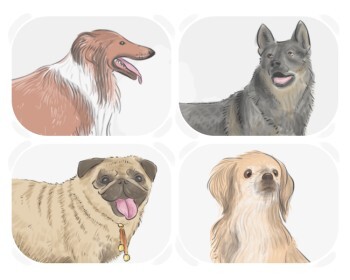
a member of the dog family, including domestic dogs, wolves, foxes, and related animals

Ex: Canine companions , such as Labrador Retrievers , are known for their friendly disposition and are often used as therapy dogs .

a summer hibernation for animals to conserve energy during hot and dry conditions
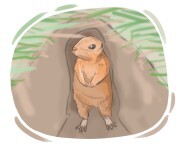
Ex: Bears find shelter and enter estivation to endure the scorching summer months .
burrow [noun]

a hole that an animal digs in the ground to use as a shelter
Ex: The fox emerged cautiously from its burrow at dusk , ready to begin its nightly hunt .
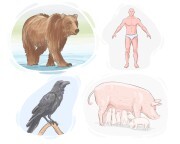
omnivore [noun]

an animal that eats both plant and animal matter
Ex: The raccoon is a nocturnal omnivore .
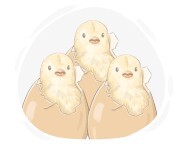
brood [noun]

all the young of a bird hatched at the same time, or the young of an animal cared for together
Ex: The spider guarded her brood carefully , ensuring each of her young emerged safely from their eggs .
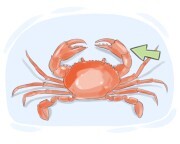
pincer [noun]

any of the sharp curved organs of an arthropod or insect, such as a crab, lobster, etc.
Ex: The scorpion raised its pincers menacingly , ready to defend itself from the approaching threat .
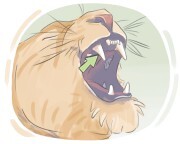
fang [noun]

a long, pointed tooth found in carnivorous animals, used for biting, gripping, and tearing flesh
Ex: The crocodile 's fangs are powerful tools for gripping slippery fish .
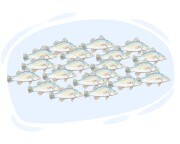
shoal [noun]

a large number of fish swimming together
Ex: The predator silently stalked the edge of the shoal , waiting for the opportune moment to strike and snatch its meal .
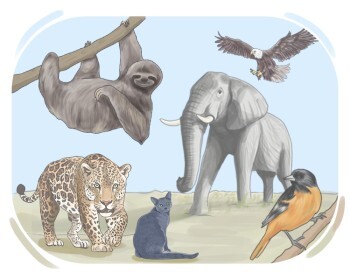
fauna [noun]

the animals of a particular geological period or region
Ex: The African savanna boasts a diverse fauna , including lions , elephants , and giraffes .

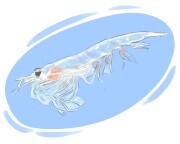
microscopic animals that float in bodies of water, serving as an important food source for many aquatic organisms
Ex: During the day , zooplankton inhabit deeper layers of the ocean to avoid predation , rising to the surface under the cover of darkness to feed on phytoplankton .
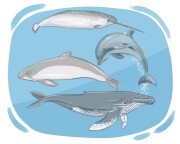
cetacean [noun]

a marine mammal that belongs to the group known as Cetacea, which comprises whales, dolphins, and porpoises
Ex:
to graze [verb]

(of sheep, cows, etc.) to feed on the grass in a field

Ex: Farmers rotate their livestock to different fields to ensure they have fresh areas to graze .
pelt [noun]

the skin of an animal with the fur, wool, or hair still covering it

Ex: