pattern

Education - Laboratory and Geographic Instruments

Here you will learn some English words related to laboratory and geographic instruments such as "beaker", "microscope", and "globe".

Review

Flashcards

Forms

Spelling

Quiz

Start learning
Words Related to Education
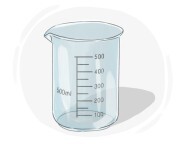
beaker
beaker
[noun]

a container usually made of glass or plastic used in chemistry and laboratory

Close
Sign in
beaker tongs

specialized laboratory tools used for safely handling hot beakers, glassware, or other objects during experiments or laboratory procedures

Ex: The chemistry student used beaker tongs to lift the hot glass beaker off the Bunsen burner after heating the solution. 
Close
Sign in
test tube
test tube
[noun]

a cylindrical glass or plastic tube used to hold, mix, or heat small amounts of liquids or gases in a laboratory setting

Ex: The scientist carefully added the solution to the test tube for the experiment. 
Close
Sign in
graduated cylinder

a cylindrical container with volume markings used to measure the volume of liquids

Ex: The chemistry student poured the liquid into the graduated cylinder to determine its volume. 
Close
Sign in
pipette
pipette
[noun]

a laboratory tool used to measure and transfer small volumes of liquid

Ex: She carefully calibrated the pipette before transferring the sample into the test tube. 
Close
Sign in
evaporating dish

a shallow, flat-bottomed vessel typically made of glass or porcelain, used in laboratory settings for evaporating liquids to concentrate solutions or to precipitate dissolved substances

Ex: The chemist transferred the solution into an evaporating dish and placed it on a hot plate to evaporate the solvent, leaving behind the desired solute. 
Close
Sign in
crucible
crucible
[noun]

a heat-resistant container used for melting or heating substances to high temperatures

Ex: The chemist placed the mixture into the crucible and heated it over the Bunsen burner. 
Close
Sign in
glass rod
glass rod
[noun]

a slender, cylindrical object made of glass, often used in scientific experiments, laboratory settings, or glassblowing
Ex: The chemist used a glass rod to stir the solution in the beaker, ensuring thorough mixing of the reactants. 
Close
Sign in
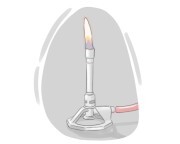
Bunsen burner

a piece of equipment used in a laboratory that can burn gas and create flames
Ex: The scientist used the Bunsen burner to heat the chemical mixture. 
Close
Sign in
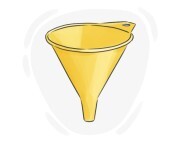
funnel
funnel
[noun]

a cone-shaped kitchen tool used for pouring liquids or powders into a container with a small opening without spilling

Close
Sign in
dropper
dropper
[noun]

a small tube with a tapered tip used to dispense small amounts of liquid in a controlled manner
Ex: The pharmacist used a dropper to measure and dispense medication into the patient's bottle. 
Close
Sign in
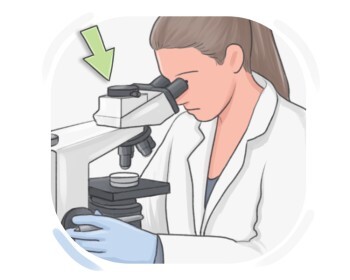
microscope

an instrument that makes looking at tiny objects or organisms possible by enlarging them which is useful in scientific studies

Ex: The scientist used a microscope to examine the structure of the bacteria in the sample. 
Close
Sign in
Erlenmeyer flask

a conical laboratory flask with a narrow neck, used for mixing, heating, and storing liquids

Ex: The chemist used an Erlenmeyer flask to prepare the chemical solution for the experiment. 
Close
Sign in
condenser
condenser
[noun]

a device that turns vapor into liquid by cooling it
Ex: The distillation setup included a condenser to collect liquid from the vapor. 
Close
Sign in
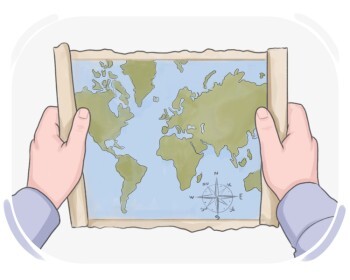
map
map
[noun]

an image that shows where things like countries, seas, cities, roads, etc. are in an area

Ex: He studied the map to plan the best route for his road trip. 
Close
Sign in
thematic map

a type of map that focuses on a specific theme or topic, such as population density, climate, or land use

Ex: The thematic map of average annual temperature revealed stark differences between coastal and inland regions. 
Close
Sign in
atlas
atlas
[noun]

a collection of maps, charts, and geographical information typically organized by region or topic

Ex: He opened the atlas to find the best route for the road trip. 
Close
Sign in
globe
globe
[noun]

a spherical representation of the Earth or celestial bodies
Ex: The geography teacher used a globe to teach students about continents and oceans. 
Close
Sign in
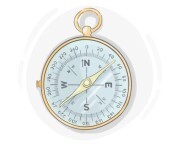
compass
compass
[noun]

a device with a needle that always points to the north, used to find direction
Ex: The hiker used a compass to navigate through the dense forest and stay on the right path. 
Close
Sign in
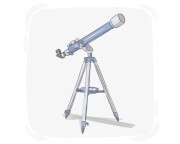
telescope
telescope
[noun]

a piece of equipment by which the far objects, particularly those in space, are made clearly visible

Ex: He used a telescope to observe the stars. 
Close
Sign in
geographic information system

a computer-based system designed to capture, store, manipulate, analyze, manage, and present spatial or geographic data

Ex: The city government used a GIS to map out the locations of public facilities such as schools, parks, and hospitals to better serve the community. 
Close
Sign in
LanGeek
Download LanGeek app