Cambridge IELTS 17 - Academic - Test 4 - Reading - Passage 1 (1)

Here you can find the vocabulary from Test 4 - Reading - Passage 1 (1) in the Cambridge IELTS 17 - Academic coursebook, to help you prepare for your IELTS exam.

review-disable

review

flashcard-disable

flashcard

spelling-disable

spelling

quiz-disable

quiz

start-learning
Cambridge IELTS 17 - Academic
relation [noun]

(usually plural) the mutual interactions or connections established between individuals or groups

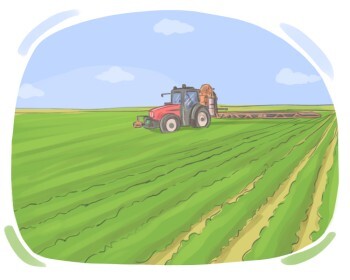
the business of using the land to grow and take care of crops and livestock

the protection of the natural environment and resources from wasteful human activities

Ex:
to fuel [verb]

to provide the energy or inspiration needed to drive or enhance a specific activity or process
Ex: The new research findings fueled the scientists ' curiosity .

the practice of preparing and using land for growing crops, especially on a large scale

Ex: Irrigation is essential for successful cultivation in arid regions .
staple [adjective]

used or consumed regularly by many people as a fundamental part of daily life

Ex: In Mediterranean cuisine , olive oil is a staple ingredient in many dishes .
pest [noun]

an insect or small animal that destroys or damages crops, food, etc.

a source for getting basic necessities in order to survive

an irrigated or flooded field where rice is grown

to destroy something completely

Ex: Economic downturns can devastate small businesses that rely on steady consumer spending .
insectivorous [adjective]

feeding on or adapted to a diet that consists primarily or exclusively of insects
Ex: Frogs and toads exhibit insectivorous behavior , capturing insects with their sticky tongues .

the existence of a range of different plants and animals in a natural environment

Ex: The loss of biodiversity due to deforestation has significant impacts on global climate patterns .

(of an animal, child, or plant) to grow with strength, health, or energy

Ex: The young lion thrived in the wild , becoming strong and majestic .

a possible consequence that something can bring about
Ex: The report highlighted the implications of climate change for future generations .

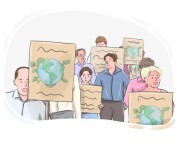
someone who makes efforts to protect the environment and wildlife from any type of harm

Ex: Conservationists advocate for sustainable practices to preserve natural resources for future generations .

a specialist in or student of the branch of science that deals with animals

passionate [adjective]

showing or having enthusiasm or strong emotions about something one care deeply about
Ex: The passionate chef poured her heart into creating innovative dishes that delighted diners .

the extensive removal of forests, typically causing environmental damage

Ex: Rapid deforestation has destroyed the habitats of countless wildlife species .
study [noun]

a detailed and careful consideration and examination
Ex: The study concluded that regular exercise significantly improves mental health and cognitive function .
vital [adjective]

absolutely necessary and of great importance

Ex: Oxygen is vital for sustaining life .
to feast [verb]

to eat and drink abundantly, often as part of a celebration or special occasion

Ex: After the victory , the team feasted on pizza and drinks to celebrate their championship .
plague [noun]

a large swarm of insects, especially locusts, that destroy crops or vegetation

Ex: The region suffered a second plague of insects that year .
to ease [verb]

to reduce the severity or seriousness of something unpleasant

Ex: He tried to ease tensions between the two rival factions by facilitating peace talks .
roughly [adverb]

without being exact

Ex: The cake should be baked at roughly 180 degrees Celsius .

to store information in a way that can be used in the future
Ex: He has recorded all the important details in his research journal .
region [noun]

a large area of land or of the world with specific characteristics, which is usually borderless
Ex: The Middle East is a geopolitically significant region , characterized by diverse cultures , religions , and political landscapes .
indigenous [adjective]

(of animals and plants) found and developed only in a particular place and not been brought from elsewhere

Ex: The bald eagle is an indigenous bird of prey in North America , symbolizing strength and freedom .

to make use of a situation, opportunity, or resource in a way that benefits oneself or achieves a desired outcome
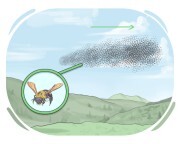
Ex: It 's essential to take advantage of your strengths when pursuing a career in a competitive field .
to swarm [verb]

to gather or travel to a place in large, dense groups

Ex: Locals swarmed to the market for fresh produce on Saturday morning .
biological [adjective]

relating to the science that explores living organisms and their functions

Ex: The biological classification system categorizes organisms into various groups based on their characteristics .
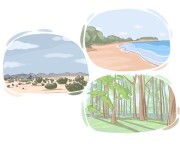
to prey [verb]

to hunt and kill another creature as food
Ex:

a community of living organisms together with their physical environment, interacting as a system

Ex: Human activities like deforestation can disrupt fragile ecosystems and lead to biodiversity loss .

to form a boundary around something

Ex: The fence bordered the property , marking the limits of the backyard .
state-of-the-art [adjective]

using or containing the most recent and developed methods, technology, materials, or ideas

Ex: Their research lab uses state-of-the-art equipment to conduct groundbreaking experiments .
ultrasonic [adjective]

involving or relating to sound waves with frequencies higher than the upper limit of human hearing

Ex: The device produced an ultrasonic sound that humans could not hear , but pets reacted to it .

determining the location of something by measuring the time it takes for an echo to return from it
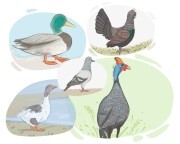
sequence [noun]

serial arrangement in which things follow in logical order or a recurrent pattern

prey [noun]

an animal that is hunted and eaten by another animal
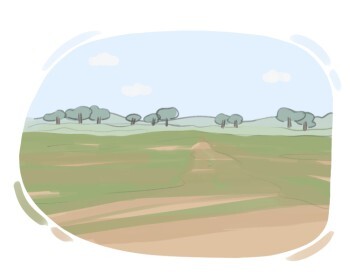
Ex: The spider spun a web to catch its prey .
site [noun]

an area of land on which something is, was, or will be constructed

Ex:

to find or discover something by searching for its features, characteristics, or details

Ex: She identified the song as soon as it started playing .
spot [noun]

a specific point or location identified relative to surrounding features in an area or region

Ex: We picked a spot under the tree for our picnic .

to put a special pattern of lines on something so a machine can read information about it

Ex: The manager will barcode the packages tomorrow .