pattern

Vocabulaire pour IELTS (Général) - Responsabilité

Ici, vous apprendrez quelques mots anglais sur le fait d'être en charge, tels que "contrôle", "tête", "gérer", etc., qui sont nécessaires pour l'examen IELTS.

Réviser

Flashcards

formes

Orthographe

Quiz
Commencer à apprendre
Words for General IELTS
to control
to control
[verbe]

to have power over a person, company, country, etc. and to decide how things should be done

contrôler, commander

contrôler, commander

Ex: The dictator aimed to control every aspect of the nation's governance. 

Le dictateur visait à contrôler chaque aspect de la gouvernance de la nation.

to govern
to govern
[verbe]

to regulate or control a person, course of action or event or the way something happens

régir, contrôler

régir, contrôler

Ex: Ethical principles govern the way scientists conduct their research, ensuring that it is honest and transparent. 

Les principes éthiques régissent la manière dont les scientifiques mènent leurs recherches, garantissant qu'elle est honnête et transparente.

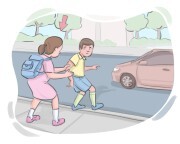
to watch over

to be in charge of someone or something and to protect them from any harm

garder, surveiller

garder, surveiller

Ex: The shepherd faithfully watches over the flock in the pasture. 

Le berger veille sur fidèlement le troupeau dans le pâturage.
to command
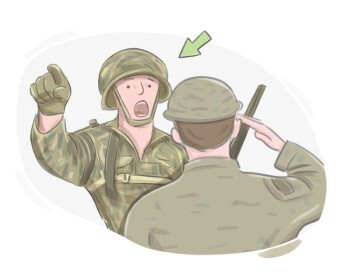
to command
[verbe]

to have authority over or be in charge of a unit in the army

commander, diriger

commander, diriger

Ex: With a flick of his wrist and a resounding voice, Commander Roberts commands his battalion like a maestro conducting an orchestra of valor. 

D'un mouvement du poignet et d'une voix retentissante, le commandant Roberts commande son bataillon comme un maestro dirigeant un orchestre de bravoure.

to supervise

to be in charge of someone or an activity and watch them to make sure everything is done properly

superviser

superviser

Ex: Teachers are responsible for supervising students during examinations to prevent cheating. 

Les enseignants sont responsables de superviser les élèves pendant les examens pour éviter la triche.

to look after

to take care of someone or something and attend to their needs, well-being, or safety

s’occuper de

s’occuper de

Ex: My cat looks after herself very well. 

Mon chat prend soin d'elle-même très bien.
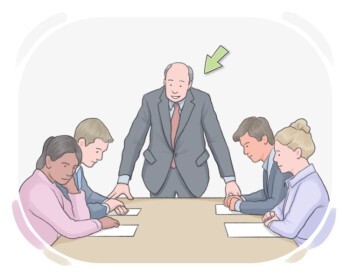
to manage
to manage
[verbe]

to be in charge of the work of a team, organization, department, etc.

diriger, gérer

diriger, gérer

Ex: She manages a small café in the city center. 

Elle gère un petit café dans le centre-ville.

to lead
to lead
[verbe]

to be the leader or in charge of something

diriger, conduire

diriger, conduire

Ex: The research team was led by a renowned scientist. 

L'équipe de recherche était dirigée par un scientifique renommé.

to head
to head
[verbe]

to lead or be in charge of an organization, team, etc.

être à la tête de

être à la tête de

Ex: Professor Rodriguez was chosen to head the research team. 

Le professeur Rodriguez a été choisi pour diriger l'équipe de recherche.

to run
to run
[verbe]

to own, manage, or organize something such as a business, campaign, a group of animals, etc.

diriger

diriger

Ex: He ran a successful bakery that was known for its delicious pastries. 

Il dirigeait une boulangerie prospère connue pour ses délicieuses pâtisseries.

to administer

to be responsible for a company, organization, etc. and manage its affairs, including financial matters

administrer

administrer

Ex: Nonprofit organizations often have dedicated executives who administer the funds and programs. 

Les organisations à but non lucratif ont souvent des dirigeants dévoués qui administrent les fonds et les programmes.

to [call] the (shots|tune)

to be in control of a particular situation and be the one who decides what needs to be done

mener la danse, avoir le dernier mot

mener la danse, avoir le dernier mot

Ex: He likes to call the tune, even when he knows nothing about the work. 

Il aime mener la danse, même quand il ne connaît rien au travail.

to chair
to chair
[verbe]

to lead a committee or meeting

présider

présider

Ex: The experienced professor will chair the academic committee, overseeing curriculum decisions. 

Le professeur expérimenté présidera le comité académique, supervisant les décisions concernant le programme.

to moderate

to be in charge of a debate or discussion or to chair an assembly such as a parliament meeting, council, etc.

modérer

modérer

Ex: The mayor moderated the town hall meeting to address concerns about the proposed development project. 

Le maire a modéré la réunion de la mairie pour aborder les préoccupations concernant le projet de développement proposé.

to preside
to preside
[verbe]

to act in an authoritative role in a ceremony, meeting, etc.

présider

présider

Ex: The CEO will preside over the board meeting and lead discussions on the company's strategic direction. 

Le PDG présidera la réunion du conseil d'administration et dirigera les discussions sur l'orientation stratégique de l'entreprise.

to wield
to wield
[verbe]

to have a lot of power, influence, etc. and be able to use it

exercer

exercer

Ex: In the world of politics, those who wield economic power often have a substantial impact on policy-making. 

Dans le monde de la politique, ceux qui exercent le pouvoir économique ont souvent un impact considérable sur l'élaboration des politiques.

to [take] charge

to assume control or responsibility for something or someone

s’occuper de

s’occuper de

Ex: He took charge of the project, leading the team to successful completion. 
to handle
to handle
[verbe]

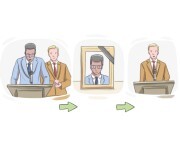
to have the responsibility for directing a company, business, etc.

gérer, prendre en charge
gérer, prendre en charge

Ex: He has been handling the business since his father’s retirement. 

Il gère l'entreprise depuis la retraite de son père.

to take over

to begin to be in charge of something, often previously managed by someone else

prendre le contrôle de

prendre le contrôle de

Ex: The supervisor is taking over the team's training program. 

Le superviseur prend en charge le programme de formation de l'équipe.

to arrogate

to take control of something without any legal basis

s’arroger

s’arroger

Ex: The committee accused him of trying to arrogate power that was not rightfully his. 

Le comité l'a accusé d'avoir tenté de s'arroger un pouvoir qui ne lui revenait pas de droit.

to assume
to assume
[verbe]

to take or begin to have power or responsibility

assumer, prendre

assumer, prendre

Ex: The new president will assume office next month. 

Le nouveau président assumera ses fonctions le mois prochain.

supervisory
supervisory
[Adjectif]

relating to or having the responsibility of directing and watching a person or an activity

de contrôle, de surveillance

de contrôle, de surveillance

executive
executive
[Adjectif]

using or having the power to decide on important matters, plans, etc. or to implement them

exécutif

exécutif

Ex: Her executive role involved overseeing the day-to-day operations of the company. 
to dictate
to dictate
[verbe]

to tell someone what to do or not to do, in an authoritative way

dicter

dicter

Ex: The supervisor dictates daily tasks to the team. 

Le superviseur dicte les tâches quotidiennes à l'équipe.

to boss around

to tell people constantly what to do or how to behave, in an arrogant way

donner des ordres à

donner des ordres à

Ex: My older brothers and sisters are always bossing me around 

Mes frères et sœurs plus âgés me donnent toujours des ordres.

to bid
to bid
[verbe]

to try to achieve something

être en compétition pour

être en compétition pour

Ex: He spent years bidding to earn a spot on the national soccer team. 

Il a passé des années à faire des efforts pour obtenir une place dans l'équipe nationale de football.

to decree
to decree
[verbe]

to make an official judgment, decision, or order

décréter

décréter

Ex: The mayor decrees new traffic regulations to improve safety in the city. 

Le maire décrete de nouvelles régulations de circulation pour améliorer la sécurité dans la ville.

to defy
to defy
[verbe]

to refuse to respect a person of authority or to observe a law, rule, etc.

désobéir à, braver,	défier

désobéir à, braver, défier

Ex: Citizens may choose to defy unjust laws as a form of protest against the government. 

Les citoyens peuvent choisir de défier les lois injustes comme forme de protestation contre le gouvernement.
to delegate

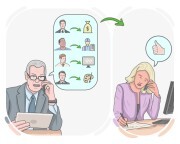
to give part of the power, authority, work, etc. to a representative

déléguer

déléguer

Ex: The CEO delegated responsibility for the new product launch to the vice president of marketing. 

Le PDG a délégué la responsabilité du lancement du nouveau produit au vice-président du marketing.

in the ascendant

gaining more popularity, power, or influence

en pleine ascension, gagne en influence

en pleine ascension, gagne en influence

Ex: Digital media companies are in the ascendant these days. 

Les entreprises de médias numériques sont en pleine ascension ces jours-ci.

in the driver's seat

having control over a particular situation and making the important decisions

diriger les opérations

diriger les opérations

in the saddle

being in a position of responsibility, power or authority

être aux commandes

être aux commandes

to bureaucratize

to run or govern an organization or state based on complicated administrative procedures

bureaucratiser

bureaucratiser

to [rule] the roost

to be in control and have absolute power in a group or in a situation

faire la loi, mener tout le monde à la baguette

faire la loi, mener tout le monde à la baguette

Ex: He may own the house, but his grandmother rules the roost. 

La maison est peut-être à lui, mais c'est sa grand-mère qui fait la loi.

to [pull] the strings

to have control over a person or thing, often in way that is not obvious

tirer les ficelles, contrôler en secret

tirer les ficelles, contrôler en secret

Ex: The political advisor was skilled at pulling the strings, ensuring that the candidate's public image remained carefully curated. 

Quelqu'un tire les ficelles dans ce deal.
to see to
to see to
[verbe]

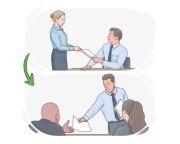
to attend to a specific task or responsibility

s’occuper de, se charger de

s’occuper de, se charger de

Ex: I'll see to the dishes after dinner. 

Je m'occuperai de la vaisselle après le dîner.

to [take] the lead

to become the person in charge or the main person guiding others

prendre les choses en main

prendre les choses en main

Ex: The senior engineer took the lead on the project. 
in charge of
in charge of
[préposition]

having control or responsibility for someone or something

responsable de

responsable de

Ex: He is in charge of overseeing the construction project. 

Il est responsable de superviser le projet de construction.

on top
on top
[Phrase]

in a winning situation or in control

dessus

dessus

to [take] care of {sb/sth}

to look after or manage someone or something, ensuring their needs are met

s'occuper de

s'occuper de

Ex: She takes care of her little brother after school. 
in control
in control
[Adjectif]

having the power or ability to make decisions or manage something

en charge de, chargé de

en charge de, chargé de

Ex: The pilot remained calm and in control despite the turbulence. 

Le pilote est resté calme et en contrôle malgré les turbulences.

LanGeek
Télécharger l'application LanGeek