
Ordförråd för IELTS Academic (Poäng 8-9) - Geologi
Här kommer du att lära dig några engelska ord relaterade till geologi som är nödvändiga för det akademiska IELTS-provet.
Recension
Flashcards
Stavning
Quiz


a large, rigid section of the Earth's lithosphere that moves, leading to geological activity like earthquakes and volcanic eruptions

platta, tektonisk platta
the scientific study of the Earth's lithosphere and the processes that shape its structure, including the movement of tectonic plates, earthquakes, and volcanic activity
tektonik, studiet av tektoniska plattor
Universitet över hela världen erbjuder specialiserade kurser och examina i tektonik, vilket lockar studenter som är passionerade av att förstå jordens geologiska dynamik.
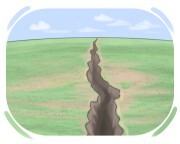
(in geology) a narrow break or crack that partially divides a rock or surface without completely separating it
spricka, klyfta
De tektoniska plattorna drogs isär, vilket orsakade att en ny spricka uppstod på jordens yta.
a geological process where one tectonic plate moves under another and sinks into the Earth's mantle
subduktion, nedsänkning
Japan upplever frekventa jordbävningar på grund av subduktionen av den Stillahavsplattan under den Filippinska havsplattan.
the gravitational balance between Earth's rigid lithosphere and the underlying, semi-fluid asthenosphere, influencing variations in surface elevation
isostasi, isostatisk jämvikt
Begreppet isostasi är avgörande för att förstå dynamiken i skorprörelser och sänkning i områden med sedimentära bassänger.
the Earth's rigid outer layer, made up of the crust and upper mantle, and divided into tectonic plates
litosfären, jordens stela yttre lager
Litiosfären är avgörande för att stödja jordens olika ekosystem och ger en grund för liv.
a layer of semi-fluid rock beneath the Earth's crust that allows tectonic plates to move
astenosfären, halvflytande berglager under jordskorpan
De duktila egenskaperna hos astenosfären gör att den kan absorbera spänning och töjning, vilket minskar sannolikheten för sprött brott.
a landscape formed from the dissolution of soluble rocks, characterized by sinkholes, caves, and underground drainage systems
karst, karstlandskap
De dinariska alperna i Europa är kända för sina karst-landskap, med klippiga kalkstensberg, djupa raviner och karstplatåer.
the geological process of mountain building, usually occurring due to the collision or convergence of tectonic plates
orogenes, bergbildning
Uralbergen, som skiljer Europa och Asien, bildades genom orogenes under kollisionen av kontinentalplattor.
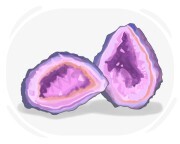
a hollow rock with a cavity inside, lined with crystals or mineral material, formed through natural processes and often valued for its aesthetic qualities
geod, kristallhåla
Geoder skärs och poleras ofta för att förbättra den visuella attraktionen hos kristallerna inuti, vilket förvandlar dem till dekorativa föremål.
a volcanic rock that often contains diamonds, formed during explosive eruptions from the Earth's mantle, and is of particular interest in diamond exploration and mining
kimberlit, kimberlitisk bergart
Geologer analyserar den mineraliska sammansättningen av kimberlit för att bedöma dess potential för diamanthalt.
the geological process involving the expansion and movement of glaciers, shaping landscapes through erosion, deposition, and the formation of distinctive glacial landforms
glaciation, istid
De karakteristiska U-formade dalarna i bergiga områden vittnar ofta om effekterna av glaciation.
a deposit of rocks, sediment, and glacial material left by a moving glacier, forming distinctive landforms along its edges or terminus
morän, glaciär avlagring
Morän-dragen i landskapet fungerade som navigationsmarkörer för tidiga upptäcktsresande i glaciära regioner.
a streamlined, elongated hill formed by glacial action, with a teardrop shape and the steeper end facing the direction of ice movement
drumlin, strömlinjeformad
Den strömlinjeformade profilen av drumlinen antydde en process av isformning och avsättning.
the scientific study of earthquakes and seismic waves, providing insights into Earth's interior, tectonic plate movement, and earthquake hazards
seismologi, studie av jordbävningar
Seismologi spelar en avgörande roll för att bestämma jordbävningars magnitud och djup, vilket hjälper till med tidiga varningssystem.
a large, basin-shaped volcanic crater formed by the collapse of a volcano after a massive eruption
kaldera, vulkanisk krater
Yellowstone caldera i USA är en av de största och mest kända calderorna globalt.
the physical and chemical changes occurring in sediments between their deposition and their consolidation into sedimentary rock
diagenes, diagenesprocessen
Diagenetiska processer uppstår ofta i det grunda underjordiska, inom några kilometer från jordens yta, där förhållandena är gynnsamma för mineralreaktioner och vätskeflöde.
