Cambridge IELTS 19 - Academic - Test 2 - Listening - Part 4 (2)

Here you can find the vocabulary from Test 2 - Listening - Part 4 (2) in the Cambridge IELTS 19 - Academic coursebook, to help you prepare for your IELTS exam.

review-disable

review

flashcard-disable

flashcard

spelling-disable

spelling

quiz-disable

quiz

start-learning
Cambridge IELTS 19 - Academic
mainly [adverb]

more than any other thing

Ex: The diet plan focuses mainly on incorporating whole foods and avoiding processed items .
to coat [verb]

(of a substance) to cover the surface something
Ex: A layer of frost coated the car windshield on the cold winter morning .
incredibly [adverb]

to a very great degree

Ex: She is incredibly talented at playing the piano .

individuals of the human race

Ex: Human beings are capable of great kindness and cruelty .

to cause the death of a significant portion of a population

Ex: The war has sadly wiped out families , leaving behind a trail of devastation .
in the event of [preposition]

if a particular situation occurs

Ex: We have a contingency plan in place in the event of severe weather .
asteroid [noun]

any of the rocky bodies orbiting the sun, ranging greatly in diameter, also found in large numbers between Jupiter and Mars
Ex: The asteroid impact that led to the extinction of the dinosaurs occurred approximately 66 million years ago .
extreme [adjective]

very high in intensity or degree

Ex: The region experienced extreme drought , leading to water shortages and crop failures .

to become dry or drier after the removal of moisture

Ex: After the rain , the flooded streets started to dry out under the warmth of the sun .

a state in which an organism's metabolism nearly stops, allowing it to survive extreme conditions
Ex: Some bacteria are capable of cryptobiosis when they face extreme dryness .

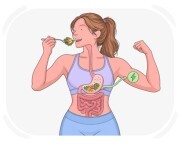
the chemical processes through which food is changed into energy for the body to use

Ex: The thyroid gland plays a crucial role in regulating metabolism by producing hormones that control metabolic rate .
level [noun]

a point or position on a scale of quantity, quality, extent, etc.
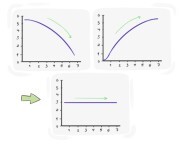
Ex: The company is offering a new level of customer service .

to stay in the same state or condition

Ex: Please remain seated until the airplane comes to a complete stop .

to bring something back or present it again after it has been removed or not used for a period of time
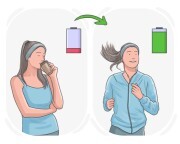
Ex:

to bring new life or energy to something

Ex: She listened to her favorite music to revive her spirits after a long day .

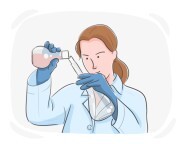
a test done to prove the truthfulness of a hypothesis
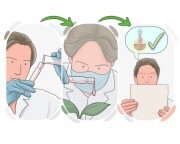
Ex: The results of the experiment supported the theory of relativity .

to learn of and confirm the facts about something through calculation or research

Ex: Last month , the investigators determined the cause of the fire in the building .
record [noun]

the best performance or result, or the highest or lowest level that has ever been reached, especially in sport

Ex: The weightlifter lifted an astonishing amount of weight , breaking the national record in his weight class .
erm [interjection]

used as a placeholder or filler in conversation, often to indicate a temporary pause or hesitation

Ex: So, erm, what do you think we should do next?

to transition or shift to a different topic or activity

Ex:
in terms of [preposition]

referring to or considering a specific aspect or factor
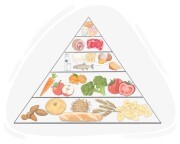
Ex: The project was successful in terms of meeting deadlines and objectives .
diet [noun]

the types of food or drink that people or animals usually consume

Ex:

to eat or drink something

Ex: As part of the celebration , the family gathered to consume a delicious feast .
in order to [preposition]

with the intention of achieving a specific goal or outcome
Ex: They worked overtime in order to finish the project on time .
to suck [verb]

to pull air, liquid, etc. into the mouth by using the muscles of the mouth and the lips

Ex: He sucked the juice from the orange , savoring its tangy flavor .
moss [noun]

a small, non-vascular plant that lacks true roots, stems, and leaves, typically forming dense green mats or cushions in damp or shady environments

Ex: Gardeners use moss to create lush , natural-looking landscapes in shaded areas .
seaweed [noun]

a type of plant that grows in or near the sea

Ex:

to hunt, capture, and eat other animals as a means of survival

Ex: The predatory cat preyed on a mouse that had ventured too far from its burrow .
gel [noun]

a substance that is similar to a solid but is made from a liquid that has thickened into a semi-solid form

Ex: The gel coating the tardigrades protects them in extreme environments .

the protection of the natural environment and resources from wasteful human activities

Ex:
status [noun]

the condition or situation of something or someone at a particular moment in time

Ex: The weather status changed from clear to stormy .

the fact or state of existing or being objectively real
Ex: His existence was a subject of intense speculation after he disappeared without a trace .

used to say that something such as a number or amount is not exact

Ex: The meeting is scheduled to start at 3 PM , give or take approximately 15 minutes .
mass [adjective]

involving or impacting a large number of things or people collectively

Ex: The internet allows for mass distribution of information to global audiences .

to give the impression of having the quality or characteristic described by the following word
Ex: Winning the championship came as a triumph for the underdog team .

to calculate or judge the quality, value, significance, or effectiveness of something or someone

Ex: The manager evaluates employees ' productivity during performance reviews .
union [noun]

a single political entity created by merging previously separate groups, states, or organizations
Ex: Scotland and England formed a political union in 1707 under the Act of Union .
endangered [adjective]

(of an animal, plant, etc.) being at risk of extinction

Ex:
due to [preposition]

as a result of a specific cause or reason

Ex: He missed the meeting due to a family emergency .

a part of the body that helps take in oxygen and remove carbon dioxide, allowing breathing to occur

Ex: Insects have respiratory organs called tracheae to exchange gases .
resilient [adjective]

able to recover quickly from difficult situations
Ex: Despite the challenges , the resilient student maintained a positive attitude and excelled academically .

to make sure that something will happen

Ex: The teacher is ensuring that students understand the new lesson .
underway [adjective]

currently happening

Ex: The renovation of the house is underway , with workers busy repairing and painting .
to enter [verb]

to begin or become involved in a particular situation, activity, state, or conflict

Ex: The country entered a period of economic growth .
to curl [verb]

to bend or position a part of body in a curved or coiled shape

Ex: The dancer gracefully curled her back into an elegant arch .
juice [noun]

the liquid or moisture found inside something

Ex: The plant juice was dripping from the leaves .
tun [noun]

a dry, round, lifeless-looking form that some tiny animals, like water bears, change into by drying out their bodies to survive very hard conditions

Ex: The creature stayed in the tun state for years .
Cambridge IELTS 19 - Academic
Test 1 - Listening - Part 1 Test 1 - Listening - Part 2 Test 1 - Listening - Part 3 (1) Test 1 - Listening - Part 3 (2)
Test 1 - Listening - Part 4 (1) Test 1 - Listening - Part 4 (2) Test 1 - Reading - Passage 1 (1) Test 1 - Reading - Passage 1 (2)
Test 1 - Reading - Passage 2 (1) Test 1 - Reading - Passage 2 (2) Test 1 - Reading - Passage 2 (3) Test 1 - Reading - Passage 3 (1)
Test 1 - Reading - Passage 3 (2) Test 1 - Reading - Passage 3 (3) Test 2 - Listening - Part 1 Test 2 - Listening - Part 2 (1)
Test 2 - Listening - Part 2 (2) Test 2 - Listening - Part 3 (1) Test 2 - Listening - Part 3 (2) Test 2 - Listening - Part 4 (1)
Test 2 - Listening - Part 4 (2) Test 2 - Reading - Passage 1 (1) Test 2 - Reading - Passage 1 (2) Test 2 - Reading - Passage 1 (3)
Test 2 - Reading - Passage 2 (1) Test 2 - Reading - Passage 2 (2) Test 2 - Reading - Passage 2 (3) Test 2 - Reading - Passage 3 (1)
Test 2 - Reading - Passage 3 (2) Test 2 - Reading - Passage 3 (3) Test 3 - Listening - Part 1 Test 3 - Listening - Part 2 (1)
Test 3 - Listening - Part 2 (2) Test 3 - Listening - Part 3 (1) Test 3 - Listening - Part 3 (2) Test 3 - Listening - Part 4 (1)
Test 3 - Listening - Part 4 (2) Test 3 - Reading - Passage 1 (1) Test 3 - Reading - Passage 1 (2) Test 3 - Reading - Passage 1 (3)
Test 3 - Reading - Passage 2 (1) Test 3 - Reading - Passage 2 (2) Test 3 - Reading - Passage 2 (3) Test 3 - Reading - Passage 3 (1)
Test 3 - Reading - Passage 3 (2) Test 3 - Reading - Passage 3 (3) Test 3 - Reading - Passage 3 (4) Test 4 - Listening - Part 1 (1)
Test 4 - Listening - Part 1 (2) Test 4 - Listening - Part 2 (1) Test 4 - Listening - Part 2 (2) Test 4 - Listening - Part 3 (1)
Test 4 - Listening - Part 3 (2) Test 4 - Listening - Part 4 (1) Test 4 - Listening - Part 4 (2) Test 4 - Listening - Part 4 (3)
Test 4 - Reading - Passage 1 (1) Test 4 - Reading - Passage 1 (2) Test 4 - Reading - Passage 1 (3) Test 4 - Reading - Passage 2 (1)
Test 4 - Reading - Passage 2 (2) Test 4 - Reading - Passage 2 (3) Test 4 - Reading - Passage 2 (4) Test 4 - Reading - Passage 3 (1)
Test 4 - Reading - Passage 3 (2) Test 4 - Reading - Passage 3 (3) Test 4 - Reading - Passage 3 (4)