
Verbos de Acción Verbal - Verbos para expresar opiniones
Aquí aprenderás algunos verbos en inglés que se refieren a expresar opiniones como "observar", "comentar" y "discrepar".
Revisión
Tarjetas de memoria
formas
Ortografía
Cuestionario


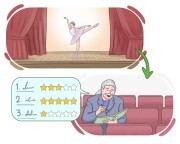
to share personal opinions about a book, movie, or media to inform and provide insights into its strengths and weaknesses

escribir críticas
to carefully examine something in a detailed manner
evaluar
Su trabajo ha sido ampliamente criticado y analizado por los académicos en el campo.
to express one's opinion about something or someone
comentar
to express one's opinion through a statement
comentar

to make a written or spoken remark
observar
to express one's opinion
opinar
En la reunión familiar, los parientes se reunieron alrededor de la mesa para opinar sobre varios temas, compartiendo sus perspectivas.

to hold the same opinion as another person about something
estar de acuerdo, concordar

to have or express a different opinion from someone else
estar en desacuerdo con

to believe something to be true or valid
aceptar, admitir

to agree to something, such as a suggestion, request, etc.
consentir, asentir
Como una forma de cortesía, los participantes a menudo asienten asintiendo con la cabeza o dando un acuerdo verbal durante las discusiones.

to express agreement with a particular opinion, statement, action, etc.
estar de acuerdo
Después de una discusión exhaustiva, el equipo pudo coincidir en la estrategia para abordar los desafíos que enfrentaban en el proyecto.
to agree to something such as a request, proposal, demand, etc.
acceder a
El comité accedió a la solicitud del empleado de un horario de trabajo flexible por razones personales.

to officially agree to a plan, proposal, etc.
aprobar

to formally approve a decision, action, etc., typically through an official process or legal means
ratificar
Los miembros del sindicato votaron abrumadoramente para ratificar el acuerdo de negociación colectiva propuesto con la empresa.

to refuse to accept a proposal, idea, person, etc.
rechazar

to say or show one's unwillingness to do something that someone has asked
rehusar
