
Bokabularyo para sa IELTS Academic (Score 8-9) - Kemistri
Dito, matututunan mo ang ilang mga salitang Ingles na may kaugnayan sa Kimika na kinakailangan para sa Academic IELTS exam.
Repasuhin
Flashcards
Pagbaybay
Pagsusulit


a substance that is dissolved in a solvent, resulting in a solution

solute, natunaw na sangkap
Sa tubig-alat, ang asin (NaCl) ang solute na natutunaw sa tubig, ang solvent.
a substance that takes part in and undergoes a chemical reaction, leading to the formation of new products
reaktibo
Sa potosintesis, ang carbon dioxide (CO₂) at tubig (H₂O) ang mga reactant na, sa presensya ng sikat ng araw, ay gumagawa ng glucose (C₆H₁₂O₆) at oxygen (O₂).
(chemistry) a substance that causes a chemical reaction to happen at a faster rate without undergoing any chemical change itself
katalista, aktibador
Ang mga platinum nanoparticle ay gumana bilang isang epektibong katalista para sa reaksyon, na makabuluhang nagpapababa ng activation energy na kailangan.
the acceleration or facilitation of a chemical reaction by a substance (catalyst) that remains unchanged at the end of the reaction
katalisis, pagpapabilis ng katalitiko
Ang catalysis ng enzymatic ay may mahalagang papel sa mga prosesong biyolohikal, kabilang ang synthesis at breakdown ng biomolecules sa mga living organisms.
a chemical bond where atoms share electrons to form a stable molecule
kovalenteng bono, pagbabahagi ng elektron na bono
Ang covalent bonds ay parang mga atomo na naghahati ng mga yakap ng electron para manatiling magkasama.
any of two or more compounds having the same molecular formula but different arrangements of atoms and, consequently, different properties
isomer, compound na isomer
Ang propanol at isopropanol ay mga isomer, na may parehong molecular formula ngunit magkaiba sa ayos ng kanilang mga atom.
a large molecule composed of repeating structural units, or monomers, covalently bonded together in a chain-like structure
polimer, malaking molekula
a molecule that can chemically bond with other molecules to form a polymer
monomer, molekula ng monomer
Ang ethylene ay isang monomer na nagpo-polymerize upang makabuo ng polyethylene, isang malawakang ginagamit na plastik.
a compound composed of hydrogen and carbon atoms, with the simplest form being alkanes, alkenes, or alkynes
hydrocarbon, kompuesto ng hydrogen at carbon
Ang methane (CH₄) ang pinakasimpleng hydrocarbon, na kabilang sa alkane group.
a chemical compound derived from the reaction between an alcohol and an organic acid, typically with the elimination of water
ester, kemikal na ester
Ang ethyl acetate, isang ester, ay karaniwang ginagamit bilang solvent sa mga pang-alis ng nail polish.
an organic compound with a carbonyl group (C=O) bonded to a hydrogen atom and another carbon atom, commonly found in essential oils and used in various chemical processes
aldehyde, carbonyl compound
Ang aldehyde ay isang aldehyde na may amoy prutas, madalas ginagamit sa synthesis ng mga kemikal.
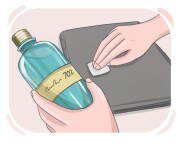
a compound with a hydroxyl group (-OH) attached to a carbon atom, widely used as solvents, fuels, and in pharmaceutical and chemical synthesis
alkohol, etanol
an organic compound with a carbonyl group (C=O) bonded to two carbon atoms, commonly found in solvents, pharmaceuticals, and flavorings
ketona, carbonyl compound
Ang acetone ay isang karaniwang ketone na malawakang ginagamit bilang solvent at pantanggal ng nail polish.
a chemical reaction where electrons are transferred between substances
oksidasyon-reduksyon, reaksyon ng oksidasyon-reduksyon
Ang pagkasunog ng kahoy ay isang oksidasyon-reduksyon na reaksyon kung saan ang kahoy ay sumasailalim sa oksidasyon, na gumagawa ng carbon dioxide at tubig.
the concentration of a solute in a solution, measured in moles per liter (mol/L or M)
molaridad, konsentrasyon ng molar
Ang solusyon na may molarity na 0.5 M ay nangangahulugan na mayroong 0.5 moles ng solute sa bawat litro ng solusyon.
a substance that, when dissolved in a solution, produces ions and enables the conduction of electric current
elektrolito, sustansyang elektrolitiko
Ang sodium chloride (NaCl) ay isang karaniwang electrolyte na nahahati sa sodium ions (Na⁺) at chloride ions (Cl⁻) sa solusyon.
a thermodynamic quantity representing the total heat content of a system, commonly denoted as H
entalpiya, nilalaman ng init
Sa isang exothermic reaction, ang pagbabago ng enthalpy (ΔH) ay negatibo, na nagpapahiwatig ng paglabas ng init sa kapaligiran.
a thermodynamic measure of the degree of disorder or randomness in a system, denoted by S
entropiya, kaguluhan sa termodinamika
Kapag ang yelo ay natutunaw sa tubig sa mas mataas na temperatura, tumataas ang entropy ng sistema.
a mixture where small particles of one substance are evenly dispersed in another substance, typically intermediate in size between solution and suspension particles
kolyoid, dispersyong koloidal
Ang hamog ay binubuo ng maliliit na patak ng tubig na nakakalat sa hangin, na bumubuo ng isang colloid.
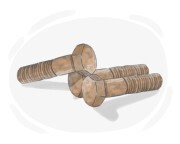
the gradual destruction of materials by chemical reaction, usually of metals
pagkakalawang
Ang mga tubo sa lumang bahay ay lubhang nasira ng kalawang, na nagresulta sa mga tagas sa buong sistema ng tubo.
any water-soluble compound that can turn litmus blue and reacts with an acid to form a salt and water
alkali, base
Ang sodium hydroxide ay isang malakas na alkali na karaniwang ginagamit sa paggawa ng sabon.
