
Vocabular pentru IELTS Academic (Scor 8-9) - Chimie
Aici, vei învăța câteva cuvinte în engleză legate de chimie care sunt necesare pentru examenul academic IELTS.
Revizuire
Fișe de studiu
Ortografie
Chestionar


a substance that is dissolved in a solvent, resulting in a solution

substanță dizolvată, solut
În apa sărată, sarea (NaCl) este solutul care se dizolvă în apă, solventul.
a substance that takes part in and undergoes a chemical reaction, leading to the formation of new products
reactant
În fotosinteză, dioxidul de carbon (CO₂) și apa (H₂O) sunt reactanții care, în prezența luminii solare, produc glucoză (C₆H₁₂O₆) și oxigen (O₂).
(chemistry) a substance that causes a chemical reaction to happen at a faster rate without undergoing any chemical change itself
catalizator, activator
Nanoparticulele de platină au acționat ca un catalizator eficient pentru reacție, reducând semnificativ energia de activare necesară.
the acceleration or facilitation of a chemical reaction by a substance (catalyst) that remains unchanged at the end of the reaction
cataliză, accelerație catalitică
Cataliza enzimatică joacă un rol cheie în procesele biologice, inclusiv sinteza și descompunerea biomoleculelor în organismele vii.
a chemical bond where atoms share electrons to form a stable molecule
legătură covalentă, legătură de electroni
Legăturile covalente sunt ca atomii care împărtășesc îmbrățișări electronice pentru a rămâne împreună.
any of two or more compounds having the same molecular formula but different arrangements of atoms and, consequently, different properties
izomer, compus izomer
Propanolul și izopropanolul sunt izomeri, având aceeași formulă moleculară, dar diferind în aranjarea atomilor lor.
a large molecule composed of repeating structural units, or monomers, covalently bonded together in a chain-like structure
polimer, macromoleculă
a molecule that can chemically bond with other molecules to form a polymer
monomer, moleculă monomeră
Etilena este un monomer care polimerizează pentru a forma polietilena, un plastic utilizat pe scară largă.
a compound composed of hydrogen and carbon atoms, with the simplest form being alkanes, alkenes, or alkynes
hidrocarbură, compus de hidrogen și carbon
Metanul (CH₄) este cel mai simplu hidrocarbură, aparținând grupului alcanilor.
a chemical compound derived from the reaction between an alcohol and an organic acid, typically with the elimination of water
ester, ester chimic
Acetatul de etil, un ester, este utilizat în mod obișnuit ca solvent în produsele de îndepărtare a ojiei.
an organic compound with a carbonyl group (C=O) bonded to a hydrogen atom and another carbon atom, commonly found in essential oils and used in various chemical processes
aldehidă, compus carbonilic
Aldehida este o aldehidă cu miros fructat, folosită frecvent în sinteza substanțelor chimice.
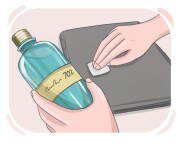
a compound with a hydroxyl group (-OH) attached to a carbon atom, widely used as solvents, fuels, and in pharmaceutical and chemical synthesis
alcool, etanol
an organic compound with a carbonyl group (C=O) bonded to two carbon atoms, commonly found in solvents, pharmaceuticals, and flavorings
chetonă, compus carbonilic
Acetona este o cetonă comună utilizată pe scară largă ca solvent și îndepărtător de ojă.
a chemical reaction where electrons are transferred between substances
oxidare-reducere, reacție de oxidare-reducere
Arderea lemnului este o reacție de oxidare-reducere în care lemnul suferă oxidare, producând dioxid de carbon și apă.
the concentration of a solute in a solution, measured in moles per liter (mol/L or M)
molaritate, concentrație molară
O soluție cu o molaritate de 0,5 M înseamnă că există 0,5 moli de substanță dizolvată în fiecare litru de soluție.
a substance that, when dissolved in a solution, produces ions and enables the conduction of electric current
electrolit, substanță electrolitică
Clorura de sodiu (NaCl) este un electrolit comun care se disociază în ioni de sodiu (Na⁺) și ioni de clorură (Cl⁻) în soluție.
a thermodynamic quantity representing the total heat content of a system, commonly denoted as H
entalpie, conținut de căldură
Într-o reacție exotermă, modificarea entalpiei (ΔH) este negativă, indicând o eliberare de căldură în mediul înconjurător.
a thermodynamic measure of the degree of disorder or randomness in a system, denoted by S
entropie, dezordine termodinamică
Când gheața se topește în apă la o temperatură mai ridicată, entropia sistemului crește.
a mixture where small particles of one substance are evenly dispersed in another substance, typically intermediate in size between solution and suspension particles
coloid, dispersie coloidală
Ceața este formată din mici picături de apă dispersate în aer, formând un coloid.
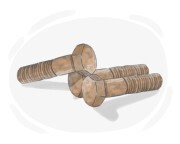
the gradual destruction of materials by chemical reaction, usually of metals
coroziune
Țevile din casa veche erau puternic deteriorate de coroziune, rezultând scurgeri în întregul sistem de canalizare.
any water-soluble compound that can turn litmus blue and reacts with an acid to form a salt and water
alcaliu, bază
Hidroxidul de sodiu este un alcali puternic folosit în mod obișnuit în fabricarea săpunului.
