
Agham ACT - Astronomiya at Agham Pang-aerospace
Pag-aralan ang ACT science vocabulary para sa astronomiya at aerospace science, kabilang ang mga planeta, bituin, gravity, orbit, spacecraft, space exploration, at uniberso.
Repasuhin
Flashcards
Pagbaybay
Pagsusulit


a scientist who studies or observes planets, stars, and other happenings in the universe

astronomo
Ang astronomer ay nakadiskubre ng bagong exoplanet gamit ang advanced na teknolohiya ng teleskopyo.

a scientist who studies the physical properties and phenomena of celestial objects and the universe as a whole
astropisiko
Ang astrophysicist ay nagsuri ng datos mula sa teleskopyo upang maunawaan ang pagbuo ng mga galaxy.
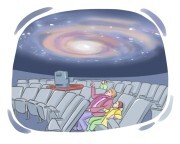
a building with a dome in which moving images of planets, starts, and constellations are projected for educational or entertainment purposes
planetarium, silid astronomiya
Ang field trip ng paaralan ay may kasamang pagbisita sa planetarium upang matuto tungkol sa solar system.
a building where scientists observe stars, meteors, the weather, etc. using equipment such as telescope
observatoryo
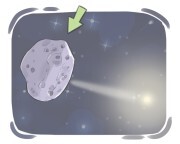
any of the rocky bodies orbiting the sun, ranging greatly in diameter, also found in large numbers between Jupiter and Mars
asteroid, batong celestial na katawan
Pinag-aaralan ng mga siyentipiko ang asteroid upang matuto tungkol sa maagang solar system at mga potensyal na banta sa Earth.
a piece of rock or metal from space that has hit the surface of the earth
meteorito, bato ng langit
Sinuri ng mga siyentipiko ang komposisyon ng meteorite na bumagsak sa disyerto noong nakaraang buwan.
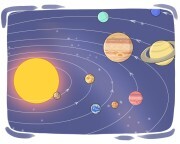
to move around a star, planet, or a large object in space
umikot, lumibot
an exploding star that as a result is emitting a very large amount of light, more than the sun
supernova
Ang isang supernova ay isang malakas na pagsabog na nangyayari sa pagtatapos ng buhay ng isang malaking bituin.

a specific group of stars that form a pattern and have a name related to their shape
konstelasyon, grupo ng mga bituin
Ang Orion ay isang kilalang konstelasyon na makikita sa kalangitan ng taglamig.

an object in space that is a mass of ice and dust and when it nears the sun it starts illuminating in the shape of a tail
kometa
Ang kometa ni Halley ay isa sa pinakasikat na kometa, nakikita mula sa Earth mga bawat 76 taon.
a small, dense, and faint stellar remnant that is left after a medium-sized star exhausts the nuclear fuel in its core and undergoes gravitational collapse
puting dwarf, puting dwarf na bituin
Ang isang puting dwarf ay ang huling yugto sa buhay ng isang bituin na tulad ng araw matapos itong maubos ang nuclear fuel nito.
a planet that is outside the solar system
exoplanet, planeta sa labas ng solar system
Ang mga astronomo ay nakadiskubre ng libu-libong exoplanet na umiikot sa mga bituin sa labas ng ating solar system.
a region in the solar system located between the orbits of Mars and Jupiter, populated by numerous small celestial bodies called asteroids
sinturon ng asteroid, bilog ng asteroid
Ang asteroid belt ay naglalaman ng milyon-milyong asteroid na may sukat mula sa maliliit na piraso ng bato hanggang sa mas malalaking katawan na may ilang daang kilometro ang lapad.
the process by which the surface of an object, such as a comet or an asteroid, erodes or vaporizes due to the effects of solar radiation and other environmental factors
ablation, pagkawala dahil sa radiation ng araw
the outer layer of the Sun's atmosphere, observable as a plasma halo during a solar eclipse
korona, panlabas na atmospera ng Araw
Sa panahon ng isang total solar eclipse, ang corona ng Araw ay nagiging visible bilang isang maliwanag na halo sa palibot ng buwan.
a sudden, brief burst of increased brightness observed from the sun's surface, usually accompanied by a burst of energy and radiation
siklab, liyab
related to or characteristic of planets or the solar system
pang-planeta, may kaugnayan sa mga planeta
Ang mga orbitang planetaryo ay naglalarawan sa mga landas na sinusundan ng mga planeta sa paligid ng araw.
the round top of a volcano
bunganga ng bulkan
Pinag-aralan ng siyentipiko ang pagbuo ng crater pagkatapos ng pagsabog ng bulkan.
a unit of mass used in astronomy, defined as the mass of the Sun
masang solar, yunit ng masang solar
relating to or originating from outside the Earth or its atmosphere
extraterrestrial, nagmula sa kalawakan
Ang buhay na extraterrestrial ay tumutukoy sa mga organismo na umiiral sa labas ng Earth.
the visible surface of a star, including the Sun, where energy is emitted as light and other forms of electromagnetic radiation
photospera, nakikitang ibabaw ng isang bituin
Ang photosphere ng Araw ay lumilitaw bilang isang maliwanag, kumikinang na disk kapag sinusunod gamit ang angkop na solar filters.
to overshadow another astrological body
mag-eclipse, magpatakip
Habang ang planeta ay gumagalaw sa linya ng paningin, nagsimula itong mag-eclipse sa bituin, na nagpapahina sa ningning nito.
situated or occurring between stars or within the space that exists between stars
interstellar, sa pagitan ng mga bituin
Ang paglalakbay interstellar ay nagsasangkot ng paglalakbay sa pagitan ng mga sistema ng bituin sa loob ng Milky Way galaxy o higit pa.
a glowing cloud of gas and dust in outer space, often the result of a star explosion or formation
nebula, ulap ng gas at alikabok
Ang nebula ng Orion ay isang tanyag na halimbawa ng isang stellar nursery.

a natural light display in the Earth's polar regions, caused by the collision of charged particles from the sun with atoms in the Earth's atmosphere
aurora, liwanag ng hilaga
Ang nakakagulat na aurora ay sumayaw sa kalangitan ng gabi, pininturahan ito ng makukulay na berdeng at lilang kulay.
a celestial body that orbits the Sun and has sufficient mass for its gravity to pull it into a nearly spherical shape
planetang unano, katawang pangkalawakang unano
related to or occurring in the sky or outer space
makalangit, pangkalangitan
Ang celestial na nabigasyon ay gumagamit ng posisyon ng mga bituin upang matukoy ang direksyon at lokasyon ng isang sasakyang-dagat.
an unmanned spacecraft sent into space to collect scientific information and transmit it back
probe, space probe
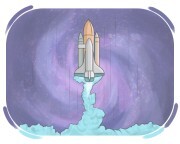
a vehicle designed to travel in space
sasakyang pangkalawakan, bapor pangkalawakan
Ang sasakyang pangkalawakan ay inilunsad upang galugarin ang Mars at mangolekta ng datos tungkol sa ibabaw at atmospera ng planeta.

to send an object, such as a satellite, missile, etc., into space
ilunsad, magpaputok
a designated area at a spaceport or rocket launch site where rockets or spacecraft are positioned and prepared for liftoff
pad ng paglulunsad, lugar ng paglulunsad
Sumakay ang mga astronaut sa spacecraft sa launch pad bago ang kanilang misyon sa International Space Station.
a vehicle designed to travel across and explore the surface of a planet, moon, or other celestial body
rover
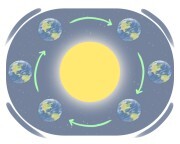
the orbital movement of a planet, moon, or satellite around another body
pag-ikot, pag-inog
the science and practice of designing, building, and operating aircraft, including airplanes and spacecraft
aeronautika, agham aeronautika
Ang mga inhinyero ng aeronautics ay nagtatrabaho upang mapabuti ang kahusayan ng gasolina sa mga engine ng sasakyang panghimpapawid.
a type of solar eclipse where the moon, passing between the earth and the sun, appears smaller than the sun, creating a ring of sunlight around the darkened moon
annular eclipse, solar eclipse na annular
Sa panahon ng isang annular eclipse, ang mga tagamasid sa landas ng eklipse ay nakakakita ng isang singsing ng sikat ng araw na pumapalibot sa Buwan, na lumilikha ng isang kamangha-manghang epekto ng "ring of fire".
a model of the celestial sphere, historically used to depict and study the positions of celestial objects, consisting of a series of hoops representing important circles in the sky
armillary sphere, esperang armilar
Ang armillary sphere ay ginamit ng mga astronomo sa sinaunang Greece upang ipakita ang mga galaw ng mga bituin at planeta.
a small, natural glassy object formed from terrestrial debris ejected during meteorite impacts, known for its smooth texture and found in strewn fields across the Earth's surface
tektite, salamin ng meteor
Madalas hanapin ng mga kolektor ang tektite dahil sa kanilang natatanging pinagmulan at kapansin-pansing hitsura.
