
Științe ACT - Astronomie și Științe Aerospațiale
Aici vei învăța câteva cuvinte în engleză legate de astronomie și știința aerospațială, cum ar fi "rover", "probe", "flare" etc. care te vor ajuta să treci cu bine de ACT-urile tale.
Revizuire
Fișe de studiu
Ortografie
Chestionar

a scientist who studies or observes planets, stars, and other happenings in the universe

astronom
Astronomul a descoperit o nouă exoplanetă folosind tehnologie avansată de telescop.

a scientist who studies the physical properties and phenomena of celestial objects and the universe as a whole
astrofizician
Astrofizicianul a analizat datele de la telescop pentru a înțelege formarea galaxiilor.
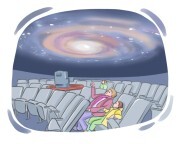
a building with a dome in which moving images of planets, starts, and constellations are projected for educational or entertainment purposes
planetariu, sala de astronomie
Excursia școlară a inclus o vizită la planetariu pentru a învăța despre sistemul solar.
a building where scientists observe stars, meteors, the weather, etc. using equipment such as telescope
observator
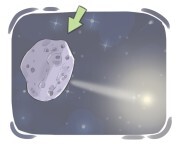
any of the rocky bodies orbiting the sun, ranging greatly in diameter, also found in large numbers between Jupiter and Mars
asteroid, corp ceresc stâncos
Oamenii de știință studiază asteroizii pentru a afla despre sistemul solar timpuriu și despre potențialele amenințări pentru Pământ.
a piece of rock or metal from space that has hit the surface of the earth
meteorit, aerolit
Oamenii de știință au analizat compoziția meteoritului care a căzut în deșert luna trecută.
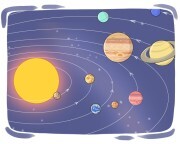
to move around a star, planet, or a large object in space
a orbita, a se învârti în jurul
Luna orbitează în jurul Pământului o dată la 27,3 zile.
an exploding star that as a result is emitting a very large amount of light, more than the sun
supernova
O supernovă este o explozie puternică care are loc la sfârșitul ciclului de viață al unei stele masive.
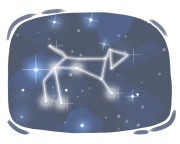
a specific group of stars that form a pattern and have a name related to their shape
constelație, grup de stele
Orion este o constelație bine cunoscută vizibilă pe cerul de iarnă.
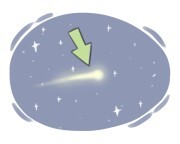
an object in space that is a mass of ice and dust and when it nears the sun it starts illuminating in the shape of a tail
cometă
Cometa Halley este una dintre cele mai faimoase comete, vizibilă de pe Pământ la fiecare aproximativ 76 de ani.
a small, dense, and faint stellar remnant that is left after a medium-sized star exhausts the nuclear fuel in its core and undergoes gravitational collapse
pitică albă, stea pitică albă
O pitică albă este etapa finală din ciclul de viață al unei stele asemănătoare soarelui după ce și-a epuizat combustibilul nuclear.
a planet that is outside the solar system
exoplanetă, planetă extrasolară
Astronomii au descoperit mii de exoplanete care orbitează stele din afara sistemului nostru solar.
a region in the solar system located between the orbits of Mars and Jupiter, populated by numerous small celestial bodies called asteroids
centura de asteroizi, inelul asteroizilor
Centura de asteroizi conține milioane de asteroizi care variază în mărime de la fragmente mici de rocă la corpuri mai mari de câteva sute de kilometri în diametru.
the process by which the surface of an object, such as a comet or an asteroid, erodes or vaporizes due to the effects of solar radiation and other environmental factors
ablație, eroziune prin ablație
the outer layer of the Sun's atmosphere, observable as a plasma halo during a solar eclipse
coroană, atmosfera exterioară a Soarelui
În timpul unei eclipse solare totale, corona Soarelui devine vizibilă ca un halo radiant în jurul lunii.
a sudden, brief burst of increased brightness observed from the sun's surface, usually accompanied by a burst of energy and radiation
erupție, strălucire
Fulgerul solar a emis o puternică explozie de radiații.
related to or characteristic of planets or the solar system
planetar, legat de planete
Orbitele planetare descriu căile pe care planetele le urmează în jurul soarelui.
the round top of a volcano
crater
Omul de știință a studiat formarea craterului după erupția vulcanică.
a unit of mass used in astronomy, defined as the mass of the Sun
masă solară, unitate de masă solară
relating to or originating from outside the Earth or its atmosphere
extraterestru, venit din spațiu
Viața extraterestră se referă la organismele care există în afara Pământului.
the visible surface of a star, including the Sun, where energy is emitted as light and other forms of electromagnetic radiation
fotosferă, suprafața vizibilă a unei stele
Fotosfera Soarelui apare ca un disc strălucitor și luminos atunci când este observată cu filtre solare adecvate.
to overshadow another astrological body
eclipsa, umbri
Pe măsură ce planeta se mișca în linia de vedere, a început să eclipseze steaua, diminuându-i strălucirea.
situated or occurring between stars or within the space that exists between stars
interstelar, între stele
Călătoria interstelară implică călătorii între sistemele stelare din galaxia Calea Lactee sau dincolo de ea.
a glowing cloud of gas and dust in outer space, often the result of a star explosion or formation
nebuloasă, nor de gaz și praf
Nebuloasa Orion este un exemplu celebru de pepinieră stelară.
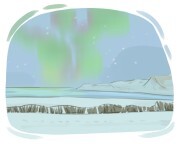
a natural light display in the Earth's polar regions, caused by the collision of charged particles from the sun with atoms in the Earth's atmosphere
auroră, auroră polară
Uimitoarea auroră a dansat pe cerul nopții, pictându-l cu nuanțe vibrante de verde și violet.
a celestial body that orbits the Sun and has sufficient mass for its gravity to pull it into a nearly spherical shape
planetă pitică, corp ceresc pitic
related to or occurring in the sky or outer space
ceresc, astral
Navigația celestă utilizează pozițiile stelelor pentru a determina direcția și locația unei nave.
an unmanned spacecraft or device sent to gather information from space and transmit it back
sondă, sondă spațială
Agenția spațială a lansat o sondă pentru a studia Marte.
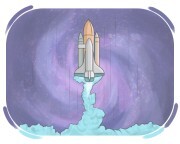
a vehicle designed to travel in space
navă spațială, vehicul spațial
Nava spațială a fost lansată pentru a explora Marte și a colecta date despre suprafața și atmosfera planetei.

to send an object, such as a satellite, missile, etc., into space
lansa, trage
NASA plănuiește să lanseze un nou satelit pe orbită luna viitoare.
a designated area at a spaceport or rocket launch site where rockets or spacecraft are positioned and prepared for liftoff
platformă de lansare, zonă de lansare
Astronauții au urcat la bordul navei spațiale pe platforma de lansare înainte de misiunea lor către Stația Spațială Internațională.
a robotic vehicle designed to move across the surface of a celestial body to conduct scientific experiments and gather data
rover, vehicul de explorare
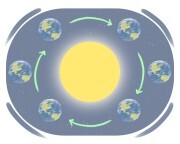
the orbital movement of a planet, moon, or satellite around another body
revoluție, rotație
Revoluția Pământului în jurul Soarelui durează aproximativ 365,25 de zile.
the science and practice of designing, building, and operating aircraft, including airplanes and spacecraft
aeronautică, știința aeronautică
Inginerii aeronautici lucrează pentru a îmbunătăți eficiența combustibilului în motoarele avioanelor.
a type of solar eclipse where the moon, passing between the earth and the sun, appears smaller than the sun, creating a ring of sunlight around the darkened moon
eclipsă solară inelară, eclipsă anulară
În timpul unei eclipse anulare, observatorii din calea eclipsei văd un inel de lumină solară înconjurând Luna, creând un efect spectaculos de "inel de foc".
a model of the celestial sphere, historically used to depict and study the positions of celestial objects, consisting of a series of hoops representing important circles in the sky
sferă armilară, armilar
Sfera armilară a fost folosită de astronomii din Grecia antică pentru a demonstra mișcările stelelor și planetelor.
a small, natural glassy object formed from terrestrial debris ejected during meteorite impacts, known for its smooth texture and found in strewn fields across the Earth's surface
tectit, sticlă meteoritică
Colectorii caută adesea tektite datorită originii lor unice și aspectului izbitor.
