
Wetenschappen ACT - Astronomie en Ruimtevaartwetenschap
Leer ACT-wetenschapsvocabulaire voor astronomie en lucht- en ruimtevaartwetenschap, inclusief planeten, sterren, zwaartekracht, banen, ruimtevaartuigen, ruimteverkenning en het universum.
Herzien
Flashcards
Spelling
Quiz


a scientist who studies or observes planets, stars, and other happenings in the universe

astronoom
Ze werd astronoom vanwege haar fascinatie voor de mysteries van de kosmos.

a scientist who studies the physical properties and phenomena of celestial objects and the universe as a whole
astrofysicus
De astrofysicus is gespecialiseerd in kosmologie en onderzoekt de oorsprong en evolutie van het universum.
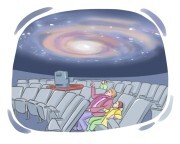
a building with a dome in which moving images of planets, starts, and constellations are projected for educational or entertainment purposes
planetarium, astronomieruimte
Het planetarium biedt nachtelijke hemelshows die zowel educatief als vermakelijk zijn.
a building where scientists observe stars, meteors, the weather, etc. using equipment such as telescope
observatorium
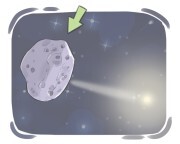
any of the rocky bodies orbiting the sun, ranging greatly in diameter, also found in large numbers between Jupiter and Mars
asteroïde, rotsachtig hemellichaam
De asteroïde-inslag die leidde tot het uitsterven van de dinosauriërs vond ongeveer 66 miljoen jaar geleden plaats.
a piece of rock or metal from space that has hit the surface of the earth
meteoriet, hemelsteen
De inslagkrater werd gevormd door een grote meteoriet die miljoenen jaren geleden de aarde trof.
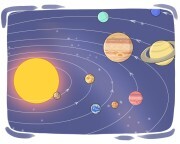
to move around a star, planet, or a large object in space
omcirkelen, in een baan bewegen
an exploding star that as a result is emitting a very large amount of light, more than the sun
supernova
Astronomen observeerden een ver sterrenstelsel waar recent een supernova had plaatsgevonden.
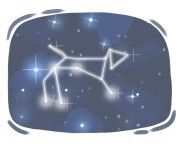
a specific group of stars that form a pattern and have a name related to their shape
sterrenbeeld, sterrengroep
De Grote Beer is een prominente sterrenbeeld bestaande uit zeven heldere sterren.
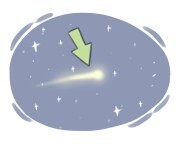
an object in space that is a mass of ice and dust and when it nears the sun it starts illuminating in the shape of a tail
komeet
De staart van een komeet vormt zich wanneer zonnestraling ijs en stof doet verdampen en wegstromen van de kern.
a small, dense, and faint stellar remnant that is left after a medium-sized star exhausts the nuclear fuel in its core and undergoes gravitational collapse
witte dwerg, witte dwergster
Witte dwergen hebben extreem hoge dichtheden, met een massa vergelijkbaar met die van de zon maar samengeperst in een kleiner volume.
a planet that is outside the solar system
exoplaneet, buitenzonnige planeet
De Kepler-ruimtetelescoop is van cruciaal belang geweest bij het identificeren van verre exoplaneten met behulp van de transitmethode.
a region in the solar system located between the orbits of Mars and Jupiter, populated by numerous small celestial bodies called asteroids
planetoïdengordel, planetoïdenring
Ruimtemissies zoals NASA's Dawn-ruimtevaartuig hebben asteroïden in de planetoïdengordel verkend om gegevens te verzamelen over hun structuur en samenstelling.
the process by which the surface of an object, such as a comet or an asteroid, erodes or vaporizes due to the effects of solar radiation and other environmental factors
ablatie, erosie door ablatie
the outer layer of the Sun's atmosphere, observable as a plasma halo during a solar eclipse
corona, buitenste atmosfeer van de Zon
Zonnemissies, zoals NASA's Parker Solar Probe, hebben tot doel de corona van dichtbij te verkennen en waardevolle gegevens te verzamelen.
a sudden, brief burst of increased brightness observed from the sun's surface, usually accompanied by a burst of energy and radiation
fakkel, uitbarsting
related to or characteristic of planets or the solar system
planetair, gerelateerd aan planeten
Planetaire geologie onderzoekt de oppervlakken en binnenkanten van planeten en manen.
the round top of a volcano
krater
De krater in Arizona is een beroemde geologische site die bezoekers van over de hele wereld aantrekt.
a unit of mass used in astronomy, defined as the mass of the Sun
zonmassa, eenheid van zonmassa
relating to or originating from outside the Earth or its atmosphere
buitenaards, afkomstig uit de ruimte
UFO-waarnemingen leiden vaak tot speculaties over buitenaardse bezoekers.
the visible surface of a star, including the Sun, where energy is emitted as light and other forms of electromagnetic radiation
fotosfeer, zichtbaar oppervlak van een ster
De temperatuur van de fotosfeer van een ster zoals Sirius kan meer dan 10.000 graden Celsius bereiken.
to overshadow another astrological body
verduisteren, overschaduwen
Het astronomische evenement zag Venus de zon verduisteren, wat resulteerde in een prachtige overgang die vanaf de aarde zichtbaar was.
situated or occurring between stars or within the space that exists between stars
interstellair, tussen de sterren
Interstellaire ruimtesondes, zoals Voyager 1 en Voyager 2, hebben gereisd buiten de grenzen van ons zonnestelsel.
a glowing cloud of gas and dust in outer space, often the result of a star explosion or formation
nevel, wolk van gas en stof
Nebulae zijn vaak de plaatsen waar nieuwe sterren en planeten worden geboren.
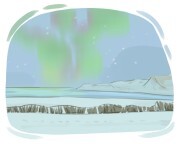
a natural light display in the Earth's polar regions, caused by the collision of charged particles from the sun with atoms in the Earth's atmosphere
aurora, poollicht
Veel mythen en legendes zijn geïnspireerd door de mystieke en etherische aard van de aurora-lichten.
a celestial body that orbits the Sun and has sufficient mass for its gravity to pull it into a nearly spherical shape
dwergplaneet, dwerghemellichaam
related to or occurring in the sky or outer space
hemels, astraal
Oude beschavingen bouwden vaak monumenten die uitgelijnd waren met hemelse gebeurtenissen, zoals zonnewendes en equinoxen.
an unmanned spacecraft sent into space to collect scientific information and transmit it back
sonde, ruimtesonde
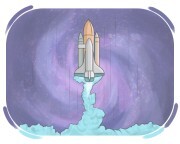
a vehicle designed to travel in space
ruimtevaartuig, ruimteschip
De documentaire toonde de ontwikkeling en lancering van een nieuw ruimtevaartuig ontworpen voor diepe ruimteverkenning.
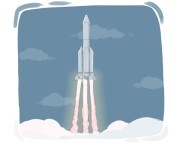
to send an object, such as a satellite, missile, etc., into space
lanceren, afvuren
a designated area at a spaceport or rocket launch site where rockets or spacecraft are positioned and prepared for liftoff
lanceerplatform, lanceerplaats
Toeschouwers verzamelden zich op het lanceerplatform om de historische lancering van de Marsrover bij te wonen.
a vehicle designed to travel across and explore the surface of a planet, moon, or other celestial body
rover
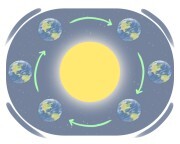
the orbital movement of a planet, moon, or satellite around another body
omloop, draaiing
the science and practice of designing, building, and operating aircraft, including airplanes and spacecraft
aeronautica, luchtvaartwetenschap
Universiteiten bieden gespecialiseerde programma's in aeronautica voor aspirant-luchtvaartingenieurs.
a type of solar eclipse where the moon, passing between the earth and the sun, appears smaller than the sun, creating a ring of sunlight around the darkened moon
ringvormige zonsverduistering, annulaire zonsverduistering
Het pad van een ringvormige zonsverduistering kan smaller zijn dan dat van een totale zonsverduistering, en de duur van de ringfase varieert afhankelijk van de relatieve afstanden tussen de Aarde, de Maan en de Zon.
a model of the celestial sphere, historically used to depict and study the positions of celestial objects, consisting of a series of hoops representing important circles in the sky
armillarium, armillaire sfeer
De armillairsfeer in de collectie van het museum beeldt nauwkeurig de posities van sterren en sterrenbeelden uit.
a small, natural glassy object formed from terrestrial debris ejected during meteorite impacts, known for its smooth texture and found in strewn fields across the Earth's surface
tektiet, meteorglas
Wetenschappers bestuderen tektieten om de dynamiek van inslagevenementen en hun effecten op het aardoppervlak te begrijpen.
