
Verbes d'Action Verbale - Verbes pour la critique et la désapprobation
Ici, vous apprendrez quelques verbes anglais se référant à la critique et à la désapprobation tels que "blâmer", "gronder" et "reprocher".
Réviser
Flashcards
formes
Orthographe
Quiz

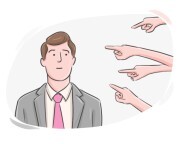
to say or feel that someone or something is responsible for a mistake or problem

accuser
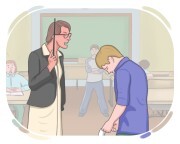
to express disapproval of someone or something by pointing out faults or weaknesses
critiquer

to express strong disapproval of someone or something, especially publicly
condamner, désapprouver
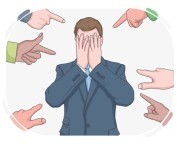
to criticize a book, film, performance, or other work very severely
éreinter, descendre

to keep treating someone unfairly or making unfair remarks about them
traiter constamment quelqu'un de manière injuste, se moquer ou critiquer injustement quelqu'un à répétition
Les enseignants conseillent souvent aux élèves de ne pas harceler leurs camarades de classe.

to keep criticizing or complaining to someone about their behavior, work, or actions
critiquer ou réprimander constamment quelqu'un, faire constamment des reproches à quelqu'un sur son comportement ou son travail
Mes parents me critiquent toujours parce que je ne nettoie pas ma chambre.

to speak negatively about someone or something in a way that makes them seem inferior or weak
dénigrer, critiquer
S'il vous plaît, ne dénigrez pas vos collègues; il est essentiel de maintenir un environnement de travail positif.
to publicly express one's disapproval of something or someone
dénoncer, condamner
La communauté internationale a dénoncé l'utilisation d'armes chimiques dans le conflit.
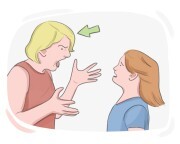
to criticize or punish someone harshly
critiquer ou punir sévèrement quelqu'un, sévir contre quelqu'un
Le patron est tombé dur sur l'employé pour être arrivé en retard au travail à plusieurs reprises.

to criticize in a severe and harsh manner
réprimander, gronder
Il a réprimandé les membres de l'équipe qui n'ont pas respecté les délais du projet le mois dernier.
to put blame on someone or something for a mistake or problem
reprocher, incriminer
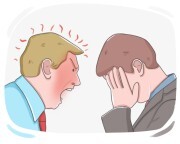
to criticize someone angrily and harshly
réprimander
Frustré par la situation, il s'est réprimandé pour ne pas avoir été plus prudent.
to severely criticize or scold someone for their actions or behaviors
réprimander
Le capitaine a réprimandé les joueurs pour leur manque de discipline pendant le tournoi.

to strongly criticize someone for their actions or words
réprimander
Le professeur a réprimandé l'élève pour avoir triché à l'examen la semaine dernière.

to intentionally make harmful statements to damage a person or thing's worth or reputation
dénigrer
L'opposant politique a eu recours à dénigrer le caractère du candidat plutôt que de se concentrer sur les différences politiques.
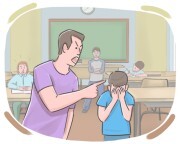
to severely criticize, often with the intention of correcting someone's behavior or actions
réprimander
Le manager a décidé de réprimander l'employé pour être arrivé systématiquement en retard au travail.

to say bad and untrue things about someone, typically to damage their reputation
calomnier, diffamer, dénigrer
Le groupe d'opposition diffame activement le gouvernement pendant la saison électorale.

to express mild disapproval, often in a gentle or corrective manner
réprimander
La mère a réprimandé son enfant pour ne pas avoir porté un manteau par un jour froid.
to strongly and harshly criticize someone or something
châtier
Le journaliste a critiqué sévèrement le gouvernement dans l'éditorial pour sa gestion de la crise.
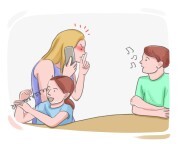
to blame someone for a mistake they made
reprocher
L'enseignant a doucement reproché aux élèves de ne pas avoir terminé leurs devoirs à temps.
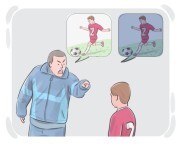
to criticize someone for doing or saying something that one believes to be wrong
réprimander
Le manager a réprimandé l'équipe pour son échec à respecter les délais.
to criticize someone for their actions or behavior, often implying a need for correction
réprimander, sermonner, blâmer
Le parent a réprimandé l'enfant pour ne pas avoir terminé les tâches ménagères.
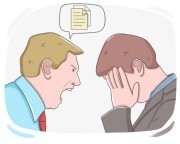
to criticize severely, often with strong language
critiquer sévèrement, éreinter
Le journaliste a critiqué sévèrement le politicien dans l'éditorial pour ses déclarations controversées.
