
Liste de Mots Niveau C2 - Histoire
Ici, vous apprendrez tous les mots essentiels pour parler de l'Histoire, spécialement rassemblés pour les apprenants de niveau C2.
Réviser
Flashcards
Orthographe
Quiz

a manuscript that was written on, erased, and written on again and again, while the previous text was still partially visible

palimpseste
Le manuscrit médiéval était un palimpseste, ses pages de vélin portant les traces de multiples textes qui avaient été effacés et réécrits au fil des siècles.
(in medieval times) a young boy serving as an attendant to a knight, beginning training for knighthood
écuyer, page
a system of writing using symbols or pictures, originally used by the ancient Egyptians
hiéroglyphes
La plaque d'or était gravée de hiéroglyphes qui racontaient une histoire de sécheresses et de prospérité.
a large medieval Mediterranean vessel, typically with a single deck, propelled by sails and oars, armed at bow and stern, and manned by up to 1,000 men, used for war and trade
galère, navire à rames
Les galères étaient essentielles au commerce méditerranéen, transportant des marchandises et des produits entre les villes côtières.
a period in Western Europe (1871-1914) marked by peace, optimism, and cultural growth
La Belle Époque était une période d'épanouissement culturel et d'optimisme en Europe, caractérisée par la prospérité économique
Paris était l'épicentre de la Belle Époque, avec ses grands boulevards, ses monuments emblématiques et sa scène culturelle vibrante attirant des artistes, des écrivains et des intellectuels du monde entier.
the defining spirit or mood of a particular period in history, reflecting the ideas and beliefs of the time
air du temps
Les Lumières étaient caractérisées par un zeitgeist de raison, de scepticisme et de curiosité intellectuelle, conduisant à des avancées dans la science, la philosophie et la pensée politique.
the lineage or ancestry of a person, tracing their familial relationships and connections through multiple generations
généalogie
Notre réunion de famille a comporté des discussions sur notre généalogie commune.
an object or part of an object surviving from the past, typically with historical or emotional value, often linked to a person, event, or era
vestige
Les archéologues étaient ravis de découvrir une relique qui a fourni un aperçu de la vie quotidienne de la civilisation ancienne.
the historical period before the Middle Ages, especially before the sixth century when Greeks and Romans were the most prosperous
antiquité
L'étude de l'Antiquité consiste à examiner des textes anciens, des artefacts et des vestiges archéologiques pour comprendre les cultures et les sociétés du passé.
a medieval military expedition by European Christians to reclaim or defend Christian territories in the Holy Land
croisade
Les croisades étaient sanctionnées par le Pape et caractérisées par une ferveur religieuse parmi les chrétiens européens.
the process by which colonies or territories gain independence from colonial rule
décolonisation, processus de décolonisation
La décolonisation de l'Inde en 1947 a marqué la fin de la domination britannique et la création de la République de l'Inde.
a person belonging to a people or group regarded as uncivilized, foreign, or outside the dominant culture
barbare
Les légendes dépeignent des barbares prenant d'assaut des villes fortifiées.
the king or emperor of Russia prior to 1917
tsar
Ivan le Terrible était l'un des tsars les plus célèbres de Russie, connu pour son règne autocratique et ses tactiques impitoyables contre ses ennemis.
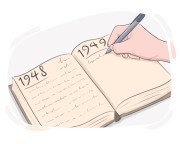
to record a series of historical events in a detailed way by a chronological order
faire la chronique de, rapporter en détails
Elle chronique le voyage des explorateurs à travers une recherche méticuleuse et une narration vivante.
the political structure during a period in the history of the UK between 1649 and 1660, called the interregnum, during which the country was ruled without a king or queen
Commonwealth
Le Commonwealth fonctionne sur les principes de la démocratie, des droits de l'homme et de l'état de droit, promouvant ces valeurs parmi ses États membres.
