
Listă de Cuvinte Nivel C2 - Istorie
Aici vei învăța toate cuvintele esențiale pentru a vorbi despre Istorie, adunate special pentru elevii de nivel C2.
Revizuire
Fișe de studiu
Ortografie
Chestionar

a manuscript that was written on, erased, and written on again and again, while the previous text was still partially visible

palimpsest, manuscris rescris
Ruloul antic era un palimpsest, cu straturi de text zgâriate și rescrise cu scriere nouă, dezvăluind licăriri ale conținutului său anterior.
(in medieval times) a young boy serving as an attendant to a knight, beginning training for knighthood
scutier, paj
a system of writing using symbols or pictures, originally used by the ancient Egyptians
hieroglifă, scriere hieroglifică
Placa de aur era inscrisă cu hieroglife care spuneau o poveste despre secete și prosperitate.
a large medieval Mediterranean vessel, typically with a single deck, propelled by sails and oars, armed at bow and stern, and manned by up to 1,000 men, used for war and trade
galeră, navă cu vâsle
Galelele au fost esențiale în comerțul mediteranean, transportând bunuri și mărfuri între orașele de coastă.
a period in Western Europe (1871-1914) marked by peace, optimism, and cultural growth
Belle Époque a fost o perioadă de înflorire culturală și optimism în Europa, caracterizată prin prosperitate economică
Belle Époque a fost o perioadă de înflorire culturală și optimism în Europa, caracterizată de prosperitate economică, inovație tehnologică și inovație artistică.
the defining spirit or mood of a particular period in history, reflecting the ideas and beliefs of the time
spiritul timpului, aura epocii
Anii 1960 au fost un deceniu definit de zeitgeistul schimbării sociale și al revoluției culturale, cu mișcări pentru drepturile civile, feminism și activismul anti-război care au modelat epoca.
the lineage or ancestry of a person, tracing their familial relationships and connections through multiple generations
genealogie
Am descoperit detalii fascinante despre strămoșii mei în timp ce cercetam genealogia mea.
an object or part of an object surviving from the past, typically with historical or emotional value, often linked to a person, event, or era
relicvă, rămășiță
Muzeul a expus o relicvă din Epoca Bronzului, atrăgând istorici din întreaga țară.
the historical period before the Middle Ages, especially before the sixth century when Greeks and Romans were the most prosperous
antichitatea, perioada antică
Antichitatea se referă la perioada din istorie dinaintea Evului Mediu, cuprinzând civilizațiile Greciei și Romei antice.
a medieval military expedition by European Christians to reclaim or defend Christian territories in the Holy Land
cruciadă
Prima Cruciadă avea ca scop capturarea Ierusalimului de sub controlul musulman la sfârșitul secolului al XI-lea.
the process by which colonies or territories gain independence from colonial rule
decolonizare, procesul de decolonizare
Decolonizarea Africii la mijlocul secolului XX a condus la apariția numeroase națiuni independente.
a person belonging to a people or group regarded as uncivilized, foreign, or outside the dominant culture
barbar, sălbatic
Legendele înfățișează barbari care năvălesc în orașe fortificate.
the king or emperor of Russia prior to 1917
țar, czar
Țarul era titlul folosit de conducătorii Rusiei înainte de Revoluția Rusă din 1917, semnificând autoritatea și suveranitatea lor absolută.
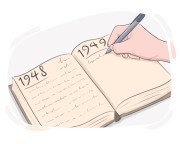
to record a series of historical events in a detailed way by a chronological order
cronica, înregistra
Istoricul cronica ascensiunea și declinul civilizațiilor antice în cartea sa cea mai recentă.
the political structure during a period in the history of the UK between 1649 and 1660, called the interregnum, during which the country was ruled without a king or queen
Commonwealth, Republică
Commonwealthul este o asociație de state independente, majoritatea fiind foste teritorii ale Imperiului Britanic, care cooperează în chestiuni de interes mutual.
