
Matematica e Valutazione ACT - Aritmetica e Statistica
Impara il vocabolario ACT per aritmetica e statistica, inclusi calcoli, medie, rapporti, percentuali, dati, probabilità e interpretazione delle informazioni numeriche.
Revisione
Flashcard
Ortografia
Quiz


any number without fractions or decimals, including positive numbers, negative numbers, and zero

intero
Moltiplicare due interi insieme darà sempre un intero.
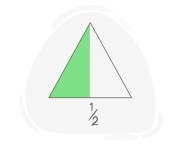
a number expressed as one quantity divided by another, especially one written with a numerator and denominator
frazione
(mathematics) a number less than one, called a fraction, that is represented as a period followed by the number of tenths, hundredths, etc.
decimale
Comprendere i decimali è essenziale quando si ha a che fare con percentuali e cifre finanziarie in contesti aziendali.
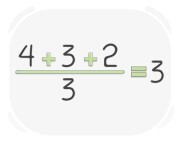
(mathematics) the average value of a set of quantities calculated by adding them, and dividing them by the total number of the quantities
medio
calculated by adding a set of numbers together and dividing this amount by the total number of amounts in that set
medio
a combination of a whole number and a proper fraction
numero misto, frazione mista
Quando si confrontano numeri misti, possiamo convertirli in frazioni improprie e poi confrontare le frazioni risultanti.
a number greater than 1 with only two devisors which can be itself or 1
numero primo
Il più grande numero primo conosciuto (al 2023) ha oltre 24 milioni di cifre.
a number that can be written as a fraction, where both the top and bottom are whole numbers, and the bottom is not zero
numero razionale
3/4 è un numero razionale perché può essere scritto come una frazione di due interi.
a number incapable of being expressed as a ratio of two integers
numero irrazionale
La radice quadrata di 2 è un numero irrazionale.
a number that has both a real part and a part involving a unit that, when squared, gives a negative result
numero complesso, complesso
Moltiplicare un numero complesso per il suo coniugato dà come risultato un numero reale.
any number that can be found on the number line, including both positive and negative numbers, zero, and fractions
numero reale, reale
Ogni punto sulla linea numerica corrisponde a un numero reale.
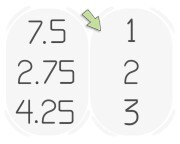
any positive number without fractions or decimals, including zero
numero intero, intero naturale
I numeri interi non includono numeri negativi o frazioni.
a value that, when multiplied by itself a specified number of times, results in the given number
radice, radicale
the difference between the highest and lowest values in a set of numbers
intervallo, gamma
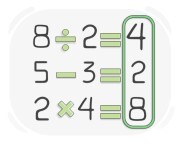
a correct answer to a problem in mathematics or a puzzle
soluzione
the result of multiplying two or more numbers or quantities together
prodotto, risultato della moltiplicazione
(mathematics) one of the numbers that another number can be divided by
fattore
(mathematics) an amount that is shown by a sign or letter
valore
a mathematical statement showing that one quantity or expression is greater or less than another
disuguaglianza, disequazione
(mathematics) a statement indicating the equality between two values
equazione
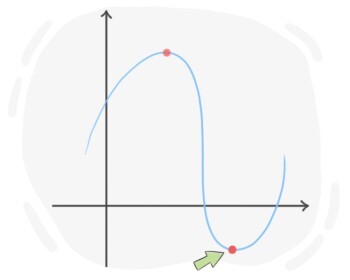
having the least or smallest amount possible
minimo
a mathematical expression where a number is multiplied by itself a certain number of times determined by a variable
esponenziale, funzione esponenziale
Quando si modella la diffusione di un virus, i ricercatori spesso usano esponenziali.
a sequence of numbers in which the difference between any two consecutive terms is constant
sequenza aritmetica, successione aritmetica
Le successioni aritmetiche sono fondamentali in matematica e hanno applicazioni in vari campi.
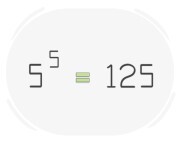
to multiply a value or number by itself
elevare al quadrato, quadrare
a fraction where the the top number is greater than or equal to the equal to the bottom number
frazione impropria
Per confrontare le frazioni improprie, puoi convertirle in forma decimale.
the result obtained by dividing one quantity or number by another, expressed as the outcome of a division operation
quoziente
Il quoziente di 50 e 10 è 5, che riflette il risultato della loro divisione.
the constant ratio between consecutive terms
ragione comune, rapporto comune
Quando si studiano le funzioni esponenziali in algebra, gli studenti imparano a identificare la ragione comune nelle sequenze geometriche.
a number that is a multiple of two or more given numbers
multiplo comune, comune multiplo
Il concetto di multiplo comune è essenziale per aggiungere e sottrarre frazioni.
a number that divides exactly into two or more given numbers without leaving a remainder
fattore comune, divisore comune
Trovare i fattori comuni è cruciale per ridurre le frazioni alla loro forma più semplice.
(mathematics) a shared multiple of the bottom numbers of two or more fractions
denominatore
the smallest positive integer that is a common multiple of the denominators of two or more fractions
minimo comune denominatore, denominatore comune più piccolo
Trovare il minimo comune denominatore è un passo cruciale per risolvere problemi che coinvolgono più frazioni.

a mathematical measure of how likely an event is to occur, expressed as a number between zero and one
probabilità
a statistical measure that represents the middle value of a data set when the values are arranged in ascending or descending order
mediana, valore mediano
Per la serie {20, 25, 30, 35, 40, 45}, la mediana è 32.5, calcolata come la media di 30 e 35.
the value that appears most frequently in a data set
moda, valore modale
having or involving two distinct modes, peaks, or most frequent values
bimodale, a due modi
Una curva bimodale sul grafico suggerisce la presenza di due tratti dominanti nella popolazione.

to guess the value, number, quantity, size, etc. of something without exact calculation
stimare, valutare
the number of times a particular event occurs within a specific period or among a set of observations
frequenza
(statistics) an arrangement of values of a variable showing how often each occurs, either observed or theoretical
distribuzione, ripartizione
a measure of how much the values in a set typically differ from the average
deviazione standard, scarto quadratico medio
Una deviazione standard di zero significa che tutti i valori sono identici.
the range within which the true value is expected to fall, accounting for potential inaccuracies in measurement or sampling
margine di errore, intervallo di errore
Comprendere il margine di errore aiuta a interpretare la precisione dei risultati statistici.
occurring in such a way that each possible outcome has a certain probability of occurring, but the specific outcome cannot be predicted with certainty
casuale, aleatorio
Per garantire risultati imparziali, i partecipanti allo studio sono stati assegnati ai gruppi di trattamento utilizzando un metodo di assegnazione casuale.
a straight line drawn through a set of data points on a graph to represent the general direction or pattern of the data
linea di tendenza, retta di tendenza
La linea di tendenza nei dati delle serie temporali indicava un modello stagionale nelle vendite.
a type of statistical chart consisting of dots that represent individual data points
diagramma a punti, grafico a punti
Abbiamo utilizzato un grafico a punti per confrontare le temperature giornaliere registrate in una settimana, permettendoci di vedere le variazioni a colpo d'occhio.
a mathematical representation that describes the relationship between two or more variables using a linear equation
modello lineare, modello di regressione lineare
È stato utilizzato un semplice modello lineare per stimare l'impatto della spesa pubblicitaria sul fatturato.
