
Științe Umaniste ACT - Istorie și Arheologie
Învață vocabularul ACT pentru științe umaniste la istorie și arheologie, inclusiv perioade istorice, civilizații, artefacte, descoperiri, dovezi și studiul societăților trecute.
Revizuire
Fișe de studiu
Ortografie
Chestionar

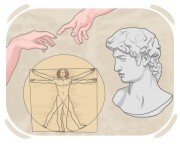
the period between the 14th and 16th centuries in Europe, marked by a rise of interest in Greek and Roman cultures, which is dominant in the art, philosophy, etc. of the times

Renaștere
Perioada Renașterii este cunoscută pentru realizările sale remarcabile în artă, știință și literatură.

an ancient region located in the eastern Mediterranean, primarily within modern-day Iraq, and parts of Iran, Syria, and Turkey
Mesopotamia, Mesopotamia
Pământul fertil al Mesopotamiei, situat între râurile Tigru și Eufrat, a susținut creșterea primelor societăți agricole.
a small, flat piece of clay that has been molded and hardened, typically used as a medium for writing or inscribing information in ancient civilizations
tabletă de lut, placă de lut
În Mesopotamia antică, tabletele de lut erau folosite pentru înregistrarea documentelor administrative, cum ar fi inventarele, contractele și chitanțele.
a person who writes copies of documents by hand
scrib, copist
Scribul a transcris cu grijă manuscrisele vechi, care se ștergeau, pentru a păstra conținutul lor pentru generațiile viitoare.
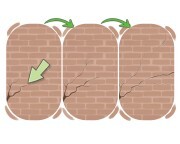
to exist or occur at an earlier time than something else
preceda, exista mai devreme
Fosilele de dinozauri preced oamenii moderni cu milioane de ani.
related to or inherited from one's ancestors
ancestral, ereditar
Ea a simțit o legătură profundă cu patria strămoșească.
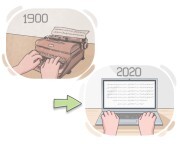
belonging to the current era
contemporan, actual
Tehnologiile precum smartphone-urile au devenit o parte integrantă a vieții cotidiene contemporane.
an underground burial place with tunnels and chambers for tombs or graves
catacombă
Catacombele de sub oraș au fost folosite timp de secole ca locuri de înmormântare.
a system of writing used in ancient Egypt, consisting of pictorial symbols or characters that represent objects, ideas, or sounds, and were commonly used for inscriptions on temple walls, tombs, and other monumental structures
hieroglifă, caracter hieroglific
the study of family lineages and the history of descent
genealogie
Studiul genealogiei oferă o modalitate de a explora rădăcinile cuiva și de a înțelege contextul cultural și istoric în care au trăit strămoșii noștri.
the historical period before the Middle Ages, especially before the sixth century when Greeks and Romans were the most prosperous
antichitatea, perioada antică
Antichitatea se referă la perioada din istorie dinaintea Evului Mediu, cuprinzând civilizațiile Greciei și Romei antice.
a period of time in history or someone's life, during which significant events happen
epocă, eră
Renașterea a fost o epocă a marilor realizări culturale și artistice în Europa.
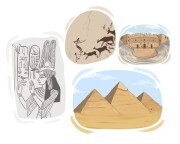
related or belonging to a period of history that is long gone
antic, străvechi
Ea a studiat civilizațiile antice precum egiptenii și grecii la ora ei de istorie.
a place or building that is historically important
monument
Turnul Eiffel este un faimos monument din Paris, care atrage milioane de turiști în fiecare an.
an object or part of an object surviving from the past, typically with historical or emotional value, often linked to a person, event, or era
relicvă, rămășiță
Muzeul a expus o relicvă din Epoca Bronzului, atrăgând istorici din întreaga țară.
to preserve a dead body by treating it with chemicals or natural substances to prevent decay
mumifica, îmbălsăma
Egiptenii antici mumificau faraonii lor pentru a-i pregăti pentru viața de apoi.
relating to the period of time before the widespread adoption of industrial processes and technologies
pre-industrial, înainte de era industrială
Speranța de viață era în general mai scurtă în societățile pre-industriale din cauza accesului limitat la îngrijirea medicală și la canalizare.
the origin or source of a particular thing
proveniență, origine
Proveniența tabloului a fost urmărită până în secolul al XVIII-lea.
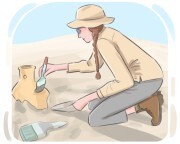
a person whose job is to study ancient societies using facts, objects, buildings, etc. remaining in excavation sites
arheolog
a method used by scientists to determine the age of organic materials by measuring the amount of carbon-14 they contain
datarea cu radiocarbon, datarea cu carbon-14
Oamenii de știință folosesc datarea cu radiocarbon pentru a estima vârsta artefactelor antice și a fosilelor.
a prehistoric period characterized by the development of the first stone tools, spanning from about 2.5 million years ago to around 10,000 years ago
paleolitic, epoca de piatră veche
Picturile rupestre găsite în Franța oferă o privire asupra vieții oamenilor din Paleolitic.
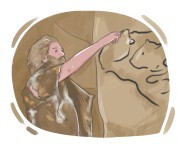
relating or belonging to the time before history was recorded
preistoric, antepopor
Arheologii au descoperit artefacte preistorice în peșteră.
to uncover or expose by digging, especially to reveal buried artifacts, structures, or remains
excava, dezgropa
Scafandrii au săpat o epavă, aducând la suprafață tunuri, ceramică și alte artefacte de pe fundul mării.
a man-made object, tool, weapon, etc. that was created in the past and holds historical or cultural significance
artefact, obiect fabricat
Artefactele fabricării timpurii a uneltelor, cum ar fi cuțitele de piatră și vârfurile de proiectile, arată ingeniozitatea și spiritul inventiv al oamenilor paleolitici.

a person who advocates or works to protect and maintain natural, historical, or cultural resources from decay, destruction, or neglect
conservator, protejator
Ca conservator, a lucrat neobosit pentru a restaura vechile repere ale orașului.
a scientist who studies fossils and ancient life forms to understand the history of life on earth
paleontolog
Paleontologul a descoperit o nouă specie de dinozaur în regiunea bogată în fosile.
a specialist who studies and develops systems for secure communication and information protection
criptograf, specialist în criptografie
Criptograful a conceput un nou algoritm de criptare pentru a îmbunătăți securitatea datelor.
a scientist who studies ancient life forms, their evolution, behaviors, habitats, and interactions with the environment through the analysis of fossils and other remnants of past life
paleobiolog, om de știință care studiază formele de viață antice
Ca paleobiolog, ea se specializează în reconstruirea ecosistemelor antice pe baza înregistrărilor fosile.
a scholar or researcher who specializes in the study of the Middle Ages
medievist, specialist în Evul Mediu
Renumitul medievalist a publicat un studiu revoluționar despre iluminarea manuscriselor medievale.
