
Ordförråd för IELTS (Grundläggande) - Språk och Grammatik
Här kommer du att lära dig några engelska ord om språk och grammatik, såsom "article", "determiner", "abbreviation" etc., som behövs för IELTS-provet.
Recension
Flashcards
Stavning
Quiz

the shortened form of a word, etc.

förkortning, abbreviatur
När du skriver en rapport, se till att definiera alla förkortningar första gången du använder dem.

(grammar) the voice in which the subject is the agent that does the action of the verb
aktiv form, aktiv diates
(grammar) a word or phrase that adds more information to another word in sense of time, manner, degree or cause
adverbial, adverbialbestämning

the symbol ' used in writing to show possession or omission of letters or numbers
apostrof, apostrof symbol
Ordet "klassen '99" använder en apostrof för att indikera utelämnandet av "19".

(grammar) any type of determiner that shows whether we are referring to a particular thing or a general example of something
artikel

a verb that is used with other verbs to indicate tense, voice, etc., such as do, have, and be
hjälpverb
Ett hjälpverb hjälper till att bilda olika tempus på engelska.
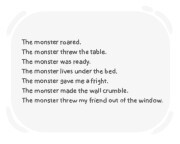
(grammar) a group of words that contains a subject and a verb and functions as a unit within a sentence
sats, klausul

a word or expression that connects words, phrases, or clauses
konjunktion, bindeord
a short form of a word or a group of words used instead of the full form
kontraktion, förkortad form
I vardagligt tal används förkortningar som "inte" och "gjorde inte" ofta.
(grammar) a word coming before a noun or noun phrase to specify its denotation
determinativ, artikel
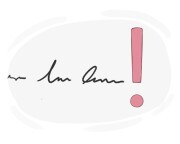
a punctuation symbol (!) placed after a word, phrase, or sentence to indicate strong feeling or emphasis
utropstecken, utropstecken
Varningsetiketten innehöll ett utropstecken för att indikera fara.
connected to the rules or the study of grammar
grammatisk, relaterad till grammatik
Lärare ger ofta feedback på elevers skrivande för att förbättra deras grammatiska färdighet.
(grammar) a verb or verb phrase that expresses an order to do something
imperativ verb, imperativ
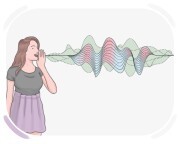
(phonetics) the rising and falling of the voice when speaking
intonation
(grammar) a verb without a direct object
intransitivt verb, verb utan direkt objekt
Intransitiva verb beskriver ofta handlingar som inte överförs till något eller någon annan.
(grammar) a verb that needs a direct object
transitivt verb, verb som behöver ett direkt objekt
Transitiva verb kan följas av ett substantiv, pronomen eller fras som tar emot verbets handling.
(grammar) any of the grammatical classes that words are categorized into, based on their usage in a sentence
(in grammar) the form of a verb used when the grammatical subject is affected by the action of the verb, rather than performing it
passiv form, passivum
Meningen "Kakan bakades av Mary" är ett exempel på passiv form.

the symbol (.) used to end a declarative sentence or mark an abbreviation
punkt, meningens sluttecken

(grammar) a letter or a set of letters that are added to the beginning of a word to alter its meaning and make a new word
prefix
Ordboken gav en lista över prefix och deras betydelser för att hjälpa till med ordbildning och förståelse.

(grammar) a letter or a set of letters that are added to the end of a word to alter its meaning and make a new word
suffix, ändelse
Eleverna övade på att lägga till olika suffix till rotord för att se hur deras betydelser förändrades.
(grammar) describing a word that indicates that the action of the verb affects the agent performing it
reflexiv, återvändande
(grammar) referring to a noun, clause or sentence that has come before
relativ
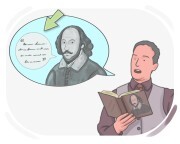
to say the exact sentence or group of words someone else used in a movie, book, etc.
citera, återge

(grammar) the name of a place, person, country, etc. with its first letter capitalized
egennamn, proprium
Läraren bad eleverna att identifiera egennamn i stycket för deras grammatikövning.
(grammar) a noun that refers to an object or a concept in a category but not to a specific one
allmänt substantiv, vanligt substantiv

either of the symbols " " or ' ' used before and after a word or words to indicate the beginning and the end of a title or quoted remark, or to mark a jargon
citattecken, anföringstecken
Han satte frasen inom citattecken för att visa att det var ett direkt citat.
(in grammar) a phrase or word that receives the action of a verb
objekt, direkt objekt
(grammar) a noun that denotes a general quality or an idea, rather than a physical object or real world event
abstrakt substantiv, abstraktum
| Ordförråd för IELTS (Grundläggande) | |||
|---|---|---|---|
| Familj och Relationer | Beskriva personlighet | Beskrivning av utseende | Former och Storlekar |
| Kläder och Mode | Djur | Mat | Hus |
| Hobbys | Shopping | Känslor | Sport |
| Jobb | Resa | Tid | Kropp |
| Väder | Språk och Grammatik | Färger | Transport |
