
Vocabular pentru IELTS (De Bază) - Limbă și Gramatică
Aici veți învăța câteva cuvinte în engleză despre limbă și gramatică, cum ar fi "article", "determiner", "abbreviation" etc., care sunt necesare pentru examenul IELTS.
Revizuire
Fișe de studiu
Ortografie
Chestionar

the shortened form of a word, etc.

abreviere, prescurtare
În scrierea formală, este important să scrieți termenul în întregime înainte de a folosi abrevierea sa.

(grammar) the voice in which the subject is the agent that does the action of the verb
diateza activă, vocea activă
(grammar) a word or phrase that adds more information to another word in sense of time, manner, degree or cause
adverbial, complement circumstanțial

the symbol ' used in writing to show possession or omission of letters or numbers
apostrof, simbolul apostrofului
Apostroful din "can't" indică omisiunea literei "o".

(grammar) any type of determiner that shows whether we are referring to a particular thing or a general example of something
articol

a verb that is used with other verbs to indicate tense, voice, etc., such as do, have, and be
verb auxiliar
Profesorul a explicat că verbele auxiliare precum 'a avea' și 'a voi' ajută la formarea diferitelor timpuri și aspecte.
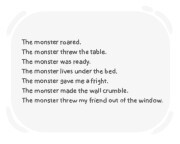
(grammar) a group of words that contains a subject and a verb and functions as a unit within a sentence
propoziție, clauză

a word or expression that connects words, phrases, or clauses
conjuncție
a short form of a word or a group of words used instead of the full form
contracție, formă contrasă
În vorbirea casuală, contracțiile cum ar fi "nu" și "nu a făcut" sunt frecvent utilizate.
(grammar) a word coming before a noun or noun phrase to specify its denotation
determinant, articol
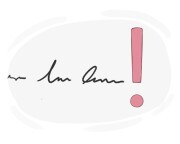
a punctuation symbol (!) placed after a word, phrase, or sentence to indicate strong feeling or emphasis
semn de exclamare, semn de exclamare
Mesajul lui s-a încheiat cu un singur semn de exclamare pentru accent.
connected to the rules or the study of grammar
gramatical, legat de gramatică
Scrierea cu acuratețe gramaticală este esențială pentru o comunicare eficientă și claritate.
(grammar) a verb or verb phrase that expresses an order to do something
verb imperativ, imperativ
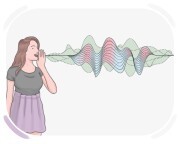
(phonetics) the rising and falling of the voice when speaking
intonatie
(grammar) a verb without a direct object
verb intranzitiv, verb fără obiect direct
Un verb intranzitiv este un verb care nu necesită un obiect direct pentru a-și completa sensul.
(grammar) a verb that needs a direct object
verb tranzitiv, verb care necesită un obiect direct
Un verb tranzitiv este un verb care necesită un obiect direct pentru a-și completa sensul.
(grammar) any of the grammatical classes that words are categorized into, based on their usage in a sentence
(in grammar) the form of a verb used when the grammatical subject is affected by the action of the verb, rather than performing it
diateză pasivă, formă pasivă
Diateza pasivă este adesea folosită atunci când autorul acțiunii este necunoscut sau neimportant.

the symbol (.) used to end a declarative sentence or mark an abbreviation
punct, punct final

(grammar) a letter or a set of letters that are added to the beginning of a word to alter its meaning and make a new word
prefix
În lecția de vocabular, s-au concentrat pe modul în care prefixele pot modifica semnificațiile cuvintelor de bază.

(grammar) a letter or a set of letters that are added to the end of a word to alter its meaning and make a new word
sufix, terminație
Înțelegerea modului în care sufixele modifică cuvintele este esențială pentru extinderea vocabularului și îmbunătățirea abilităților de scriere.
(grammar) describing a word that indicates that the action of the verb affects the agent performing it
reflexiv, întors
(grammar) referring to a noun, clause or sentence that has come before
relativ

to say the exact sentence or group of words someone else used in a movie, book, etc.
cita, reproduce

(grammar) the name of a place, person, country, etc. with its first letter capitalized
nume propriu, substantiv propriu
Nume propriu este un nume propriu pentru că denumește un oraș specific.
(grammar) a noun that refers to an object or a concept in a category but not to a specific one
nume comun, substantiv comun

either of the symbols " " or ' ' used before and after a word or words to indicate the beginning and the end of a title or quoted remark, or to mark a jargon
ghilimele, semnul citatului
Ea a folosit ghilimele pentru a încadra titlul articolului.
(in grammar) a phrase or word that receives the action of a verb
obiect, obiect direct
(grammar) a noun that denotes a general quality or an idea, rather than a physical object or real world event
substantiv abstract, nume abstract
