pattern

Woordenschat voor IELTS (Basis) - Taal en Grammatica

Hier leer je enkele Engelse woorden over taal en grammatica, zoals "article", "determiner", "abbreviation", etc., die nodig zijn voor het IELTS-examen.

Herzien

Flashcards

Spelling

Quiz

Begin met leren
Words for Basic IELTS
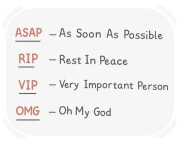
abbreviation
abbreviation
[zelfstandig naamwoord]

the shortened form of a word, etc.

afkorting, verkorting

afkorting, verkorting

Ex: The abbreviation 'CEO' stands for Chief Executive Officer. 
Sluiten
Inloggen
active voice
active voice
[zelfstandig naamwoord]

(grammar) the voice in which the subject is the agent that does the action of the verb

bedrijvende vorm, actieve vorm

bedrijvende vorm, actieve vorm

Sluiten
Inloggen
adverbial
adverbial
[zelfstandig naamwoord]

(grammar) a word or phrase that adds more information to another word in sense of time, manner, degree or cause

bijwoord, bijwoordelijke bepaling

bijwoord, bijwoordelijke bepaling

Sluiten
Inloggen
apostrophe
apostrophe
[zelfstandig naamwoord]

the symbol ' used in writing to show possession or omission of letters or numbers

apostrof, apostrof symbool

apostrof, apostrof symbool

Ex: The apostrophe in "can't" indicates the omission of the letter "o." 
Sluiten
Inloggen
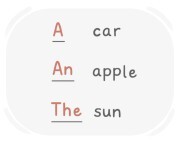
article
article
[zelfstandig naamwoord]

(grammar) any type of determiner that shows whether we are referring to a particular thing or a general example of something

lidwoord

lidwoord

Ex: The teacher explained that 'the' is a definite article used to refer to specific items. 
Sluiten
Inloggen
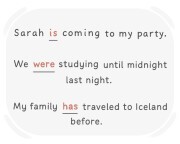
auxiliary verb
auxiliary verb
[zelfstandig naamwoord]

a verb that is used with other verbs to indicate tense, voice, etc., such as do, have, and be

hulpwerkwoord

hulpwerkwoord

Ex: The teacher explained that auxiliary verbs like 'have' and 'will' help to form different tenses and aspects. 
Sluiten
Inloggen
clause
clause
[zelfstandig naamwoord]

(grammar) a group of words that contains a subject and a verb and functions as a unit within a sentence

zinsdeel, clausule

zinsdeel, clausule

Ex: He highlighted the main clause in the sentence with a red marker. 
Sluiten
Inloggen
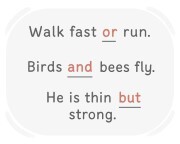
conjunction
conjunction
[zelfstandig naamwoord]

(grammar) a word such as and, because, but, and or that connects phrases, sentences, or words

voegwoord, verbindingswoord

voegwoord, verbindingswoord

Ex: In compound sentences, conjunctions are essential for linking ideas and creating coherence. 
Sluiten
Inloggen
contraction
contraction
[zelfstandig naamwoord]

a short form of a word or a group of words used instead of the full form

samentrekking, verkorte vorm

samentrekking, verkorte vorm

Ex: In casual speech, contractions like "don't" and "didn't" are frequently used. 
Sluiten
Inloggen
determiner
determiner
[zelfstandig naamwoord]

(grammar) a word coming before a noun or noun phrase to specify its denotation

bepaler, lidwoord

bepaler, lidwoord

Sluiten
Inloggen
exclamation mark
exclamation mark
[zelfstandig naamwoord]

a punctuation symbol (!) placed after a word, phrase, or sentence to indicate strong feeling or emphasis

uitroepteken, uitroepteken

uitroepteken, uitroepteken

Ex: Use an exclamation mark to show surprise or excitement. 
Sluiten
Inloggen
grammatical
grammatical
[bijvoeglijk naamwoord]

connected to the rules or the study of grammar

grammaticaal, gerelateerd aan grammatica

grammaticaal, gerelateerd aan grammatica

Ex: Writing with grammatical accuracy is essential for effective communication and clarity. 
Sluiten
Inloggen
imperative verb
imperative verb
[zelfstandig naamwoord]

(grammar) a verb or verb phrase that expresses an order to do something

imperatief werkwoord, imperatief

imperatief werkwoord, imperatief

Sluiten
Inloggen
intonation
intonation
[zelfstandig naamwoord]

(phonetics) the rising and falling of the voice when speaking

intonatie

intonatie

Ex: In phonetics, intonation refers to the pattern of rising and falling pitch in speech, which conveys meaning, emotion, and emphasis. 
Sluiten
Inloggen
intransitive verb
intransitive verb
[zelfstandig naamwoord]

(grammar) a verb without a direct object

onovergankelijk werkwoord, werkwoord zonder lijdend voorwerp

onovergankelijk werkwoord, werkwoord zonder lijdend voorwerp

Ex: An intransitive verb is a verb that does not require a direct object to complete its meaning. 
Sluiten
Inloggen
transitive verb
transitive verb
[zelfstandig naamwoord]

(grammar) a verb that needs a direct object

overgankelijk werkwoord, werkwoord dat een lijdend voorwerp nodig heeft

overgankelijk werkwoord, werkwoord dat een lijdend voorwerp nodig heeft

Ex: A transitive verb is a verb that requires a direct object to complete its meaning. 
Sluiten
Inloggen
part of speech
part of speech
[Zinsdeel]

(grammar) any of the grammatical classes that words are categorized into, based on their usage in a sentence

Ex: Nouns, verbs, and adjectives are all examples of a part of speech. 
Sluiten
Inloggen
passive voice
passive voice
[zelfstandig naamwoord]

(in grammar) the form of a verb used when the grammatical subject is affected by the action of the verb, rather than performing it

lijdende vorm, passieve vorm

lijdende vorm, passieve vorm

Ex: Passive voice is often used when the doer of the action is unknown or unimportant. 
Sluiten
Inloggen
period
period
[zelfstandig naamwoord]

the symbol (.) used to end a declarative sentence or mark an abbreviation

punt, zinspunt

punt, zinspunt

Ex: Don't forget to put a period at the end of the sentence. 
Sluiten
Inloggen
prefix
prefix
[zelfstandig naamwoord]

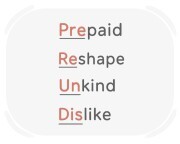
(grammar) a letter or a set of letters that are added to the beginning of a word to alter its meaning and make a new word

voorvoegsel

voorvoegsel

Ex: Understanding common prefixes, such as 'pre-' and 'dis-,' can help students decode unfamiliar words. 
Sluiten
Inloggen
suffix
suffix
[zelfstandig naamwoord]

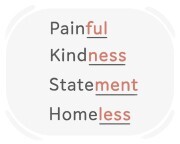
(grammar) a letter or a set of letters that are added to the end of a word to alter its meaning and make a new word

achtervoegsel, uitgang

achtervoegsel, uitgang

Ex: Adding the suffix '-ly' to 'quick' changes the word to 'quickly,' turning it into an adverb. 
Sluiten
Inloggen
reflexive
reflexive
[bijvoeglijk naamwoord]

(grammar) describing a word that indicates that the action of the verb affects the agent performing it

reflexief, wederkerend

reflexief, wederkerend

Sluiten
Inloggen
relative
relative
[bijvoeglijk naamwoord]

(grammar) referring to a noun, clause or sentence that has come before

relatief

relatief

Sluiten
Inloggen
to quote
to quote
[werkwoord]

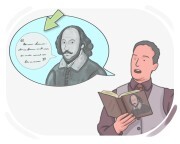
to say the exact sentence or group of words someone else used in a movie, book, etc.

citeren, weergeven

citeren, weergeven

Ex: During his presentation, he quoted a famous line from "The Godfather": "I'm gonna make him an offer he can't refuse." 
Sluiten
Inloggen
proper noun
proper noun
[zelfstandig naamwoord]

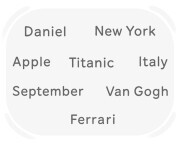
(grammar) the name of a place, person, country, etc. with its first letter capitalized

eigennaam, proprium

eigennaam, proprium

Ex: Paris is a proper noun because it names a specific city. 
Sluiten
Inloggen
common noun
common noun
[zelfstandig naamwoord]

(grammar) a noun that refers to an object or a concept in a category but not to a specific one

zelfstandig naamwoord, gemeenschappelijk naamwoord

zelfstandig naamwoord, gemeenschappelijk naamwoord

Sluiten
Inloggen
quotation mark
quotation mark
[zelfstandig naamwoord]

either of the symbols " " or ' ' used before and after a word or words to indicate the beginning and the end of a title or quoted remark, or to mark a jargon

aanhalingsteken, citaatteken

aanhalingsteken, citaatteken

Ex: She used quotation marks to enclose the title of the article. 
Sluiten
Inloggen
object
object
[zelfstandig naamwoord]

(in grammar) a phrase or word that receives the action of a verb

lijdend voorwerp, direct object

lijdend voorwerp, direct object

Ex: In the sentence "She reads a book," "a book" is the object. 
Sluiten
Inloggen
abstract noun
abstract noun
[zelfstandig naamwoord]

(grammar) a noun that denotes a general quality or an idea, rather than a physical object or real world event

abstract zelfstandig naamwoord, abstractum

abstract zelfstandig naamwoord, abstractum

Sluiten
Inloggen
accent
accent
[zelfstandig naamwoord]

an emphasis given to a particular syllable of a word, part of a sentence, or note in a set of musical notes

accent, nadruk

accent, nadruk

Sluiten
Inloggen
LanGeek
LanGeek app downloaden