Four Corners 2 - Unit 9 Lesson D

Here you will find the vocabulary from Unit 9 Lesson D in the Four Corners 2 coursebook, such as "return", "banker", "loan", etc.

review-disable

review

flashcard-disable

flashcard

spelling-disable

spelling

quiz-disable

quiz

start-learning
Four Corners 2

the way that two or more people or things are different from each other

Ex: Understanding cultural differences is essential when working in a global team .
kind [noun]

a group of people or things that have similar characteristics or share particular qualities

Ex: The festival attracts people of different kinds , all celebrating together .
banker [noun]

a person who possesses or has a high rank in a bank or any other financial institution

Ex: Bankers play a crucial role in facilitating economic growth by providing capital to businesses and individuals .
to study [verb]

to spend time to learn about certain subjects by reading books, going to school, etc.

Ex: They are studying for the science competition next month .

to go or come back to a person or place

Ex: The athlete plans to return to training after recovering from an injury .
to start [verb]

to begin something new and continue doing it, feeling it, etc.

Ex: I 'm starting to get hungry , let 's grab some food .
to teach [verb]

to give lessons to students in a university, college, school, etc.

Ex: I decided to leave my stressful job and teach painting at the community center .
village [noun]

a very small town located in the countryside

Ex: Life in the remote village was simple and closely connected to nature .
poor [adjective]

owning a very small amount of money or a very small number of things
Ex: The poor family lived in a small , rundown house .

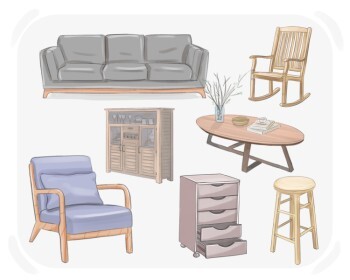
pieces of equipment such as tables, desks, beds, etc. that we put in a house or office so that it becomes suitable for living or working in

Ex: The furniture store has a wide section of sofas , tables , and chairs .
enough [adverb]

to a degree or extent that is sufficient or necessary
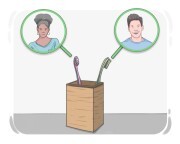
Ex: I hope you have eaten enough for lunch .
own [adjective]

used for showing that someone or something belongs to or is connected with a particular person or thing
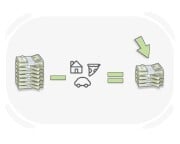
Ex: The company uses its own software for managing tasks .
profit [noun]

the sum of money that is gained after all expenses and taxes are paid

Ex: Last year ’s profit was reinvested into expanding the company .
to loan [verb]

to give someone something, such as an amount of money, with the understanding that it will be returned

Ex: He decided to loan his friend the needed tools for the home improvement project .
peace [noun]

a period or state where there is no war or violence

Ex: The treaty brought a long-awaited peace to the region .
customer [noun]

a person, organization, company, etc. that pays to get things from businesses or stores

Ex: The restaurant treated every customer like family .
success [noun]

the fact of reaching what one tried for or desired

Ex: Achieving success in one 's career requires setting clear goals and consistently working towards them .
conventional [adjective]

generally accepted and followed by many people

Ex: Sending thank-you cards after receiving gifts is considered conventional etiquette .
absolutely [adverb]

in a total or complete way

Ex: They absolutely believed in the cause .

a professional who studies and analyzes economic theories, trends, and data to provide insights into economic issues

Ex: Economists debate the effectiveness of government policies in stimulating economic growth .

an educational institution at the highest level, where we can study for a degree or do research

Ex: She received a scholarship to help fund her university education .

to not stop something, such as a task or activity, and keep doing it

Ex: She continued studying late into the night .