Verbs of Helping and Hurting - Verbs for Killing and Debilitating

Here you will learn some English verbs referring to killing and debilitating such as "slay", "behead", and "assassinate".

review-disable

review

flashcard-disable

flashcard

spelling-disable

spelling

quiz-disable

quiz

start-learning
Verbs of Helping and Hurting
to kill [verb]

to end the life of someone or something

Ex: The murderer used a weapon to kill his victim .
to slay [verb]

to intentionally cause someone's death with planning and purpose
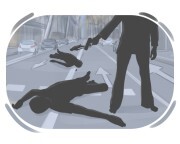
Ex: In the mystery novel , the detective worked to uncover the killer 's motive to slay the victim .

to kill a large number of people, often in a harsh and heartless manner

Ex: In the tragic event , a lone gunman attempted to slaughter innocent bystanders .

to murder a prominent figure in a sudden attack, usually for political purposes

Ex: In the historical account , a plot was uncovered to assassinate the king .

to brutally kill a large number of people
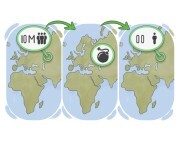
Ex: The historical account described how colonizers would massacre indigenous populations .

to kill large groups of people

Ex: The famine had the potential to decimate the already vulnerable communities .

to kill people in a brutal and cruel way
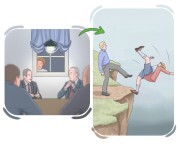
Ex: The serial killer butchered his victims with no remorse .

to eliminate someone, often perceived as a threat, by causing their death

Ex: The dictator 's regime was known for liquidating political dissidents .
to lynch [verb]

to kill someone without legal approval
Ex: The vigilante group sought to lynch those they deemed responsible for the crime .
to hunt [verb]

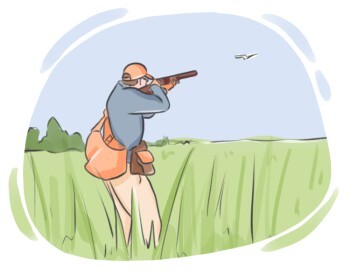
to pursue wild animals in order to kill or catch them, for sport or food

Ex: The hunter patiently waited for the perfect opportunity to hunt the elusive deer .

to hunt, capture, and eat other animals as a means of survival

Ex: The predatory cat preyed on a mouse that had ventured too far from its burrow .

to cut off someone's head

Ex: The executioner skillfully beheaded the condemned prisoner with a swift stroke .

to cut off the head of someone or something

Ex: The medieval knight sought to decapitate the dragon with a powerful swing .

to kill or injure someone through electric shock

Ex: The child was electrocuted after dropping a metal object into a power socket .

to deprive someone or something of food

Ex: The cruel ruler would often use food as a means of punishment , choosing to starve dissenters .
to gas [verb]

to attack or expose someone or something to gas or harmful fumes

Ex: The factory emissions were known to gas nearby neighborhoods , causing health concerns .
to choke [verb]

to block the throat, hinder breathing and cause suffocation

Ex: Unfortunately , the criminal chose to choke the victim , leaving them gasping for breath .

to block someone or something's access to air, making it difficult or impossible to breathe

Ex: The room was so airtight that the heat began to suffocate everyone inside .

to kill by choking the throat and blocking the air supply

Ex: The snake constricted its prey , attempting to strangle it before swallowing .

to stop someone or something from breathing by covering or blocking the air

Ex: The assassin attempted to smother the victim with a pillow .

to end someone's life by squeezing their throat, cutting off their air supply

Ex: The police apprehended the suspect before he could throttle his intended victim .

to die or struggle for breath due to a lack of oxygen

Ex: The intense heat in the attic caused them to stifle and gasp for air .

to cause someone to stop breathing by depriving them of oxygen

Ex: The fire produced thick smoke that could asphyxiate those trapped in the building .
to numb [verb]

to make a part of the body lose sensation or responsiveness
Ex: As I walked in the snow , the freezing temperatures were numbing my feet .

to cause a person, animal, or part of the body to lose the ability to move or function, usually due to injury or illness

Ex: The venom from the snakebite had the potential to paralyze the victim .

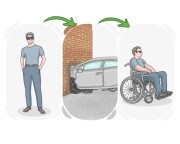
to inflict severe damage to someone's body so that they are unable to walk or move properly

Ex:
to blind [verb]

to make someone unable to see by causing damage to their eyes

Ex: An injury from flying debris could blind a person if proper safety measures were not taken .

to cause a temporary or permanent loss of hearing

Ex: The explosion nearby deafened everyone in the room .
to lame [verb]

to cause someone to lose the use of a limb, particularly a leg

Ex:

to make a part of the body or the whole of it numb, immobile, or inactive

Ex: Prolonged exposure to extreme cold can torpefy certain body parts .