Cambridge IELTS 16 - Academic - Test 4 - Listening - Part 4

Here you can find the vocabulary from Test 4 - Listening - Part 4 in the Cambridge IELTS 16 - Academic coursebook, to help you prepare for your IELTS exam.

review-disable

review

flashcard-disable

flashcard

spelling-disable

spelling

quiz-disable

quiz

start-learning
Cambridge IELTS 16 - Academic
to cover [verb]

(of a material or substance) to extend or apply evenly across an area or object
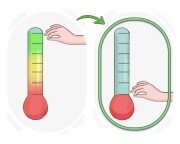
Ex: The vines cover beautifully over the old stone wall , creating a lush green facade .

to reduce the amount, size, or number of something

Ex: Facing a tight schedule , she had to cut down the length of her presentation .

to reside in a specific place

Ex: The indigenous people have inhabited this land for centuries .

to make something stable, secure, or permanent in a specific place or position
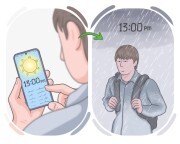
Ex: They established the new clinic as a trusted healthcare provider in the area .
unreliable [adjective]

not deserving of trust or confidence

Ex: He is considered unreliable by his colleagues .

the parts of the body that are soft and flexible, such as muscles, fat, skin, and organs, not bones or hard structures

Ex:
case [noun]

an example of a certain kind of situation
Ex: This is a rare case of a disease that usually affects children .

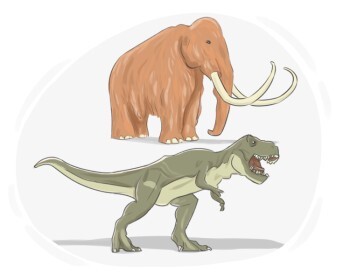
a situation in which a particular animal or plant no longer exists

to have a connection with a particular person or thing

Ex: The painting 's title , " Sunset Serenity , " refers to the artist 's emotional state during its creation .
sailor [noun]

a person who is a member of a ship's crew
Ex: She signed up to be a sailor on a cruise ship for the summer .
spice [noun]

a type of dried plant with a pleasant smell used to add taste or color to the food
Ex: The dish lacked spice , so I added some turmeric and curry .
convenient [adjective]

favorable or well-suited for a specific purpose or situation

Ex: It was convenient that the train arrived just as I reached the station .

to gather something in large amounts to keep for future use, sale, or for a particular occasion
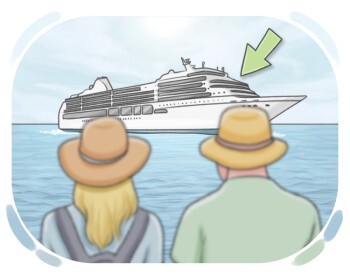
Ex: Investors stocked up on promising stocks hoping their value would increase .
voyage [noun]

a long journey taken on a ship or spacecraft

Ex: They planned a voyage to Antarctica to study the continent ’s unique wildlife and climate .

to go and reside in a place as a permanent home

Ex: They were excited to settle into their new home after months of searching for the perfect place .

to establish a fresh entity, such as a company, system, or organization

Ex: They decided to set up a foundation for environmental conservation .
colony [noun]

any territory under the full or partial control of another more powerful nation, often occupied by settlers from that nation

a person or animal that resides in a particular place

Ex: The forest is home to a variety of inhabitants , including deer , foxes , and numerous bird species .
record [noun]

an item that provides lasting evidence or information about past events, actions, or conditions

Ex:

to cause something to remain in its original state without any significant change

Ex: The library 's climate control system helps preserve rare books from damage .
specimen [noun]

a representative or characteristic sample that is examined or analyzed to gain insights or understanding of a particular group or category

Ex: A blood specimen was taken for testing at the clinic .

to no longer be able be found or located, often leading to frustration

Ex: She has already disappeared into the crowd at the busy market .
example [noun]

a sample, showing what the rest of the data is typically like
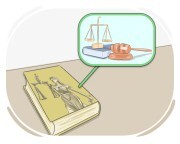
Ex: In the financial report , they presented multiple case studies , with Company A 's performance being a prime example of success .
subject [noun]

someone or something that is being described, discussed, or dealt with

Ex: She found the subject of quantum mechanics challenging but intriguing .
account [noun]

a detailed record or narrative description of events that have occurred

Ex: The witness ’s account of the incident helped the investigation .
clumsy [adjective]

doing things or moving in a way that lacks control and care, usually causing accidents
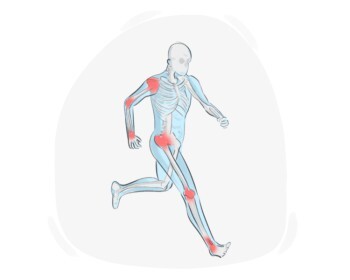
Ex: Her clumsy attempts at dancing drew laughter from the crowd .
joint [noun]

a place in the body where two bones meet, enabling one of them to bend or move around

Ex:

to make use of something for a particular purpose
Ex: He employed his negotiation skills to finalize the deal successfully .
uneven [adjective]

not level, smooth, or uniform in shape or texture

Ex: The old wooden table had an uneven surface with visible cracks .
analysis [noun]

a methodical examination of the whole structure of something and the relation between its components
Ex: Her analysis of the literary work highlighted the underlying themes and symbols .
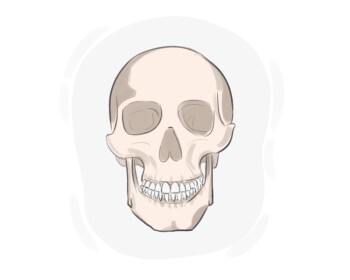
skull [noun]

the bony structure that surrounds and provides protection for a person's or animal's brain

Ex: The human skull has several openings , including the eye sockets and nasal cavity .

to confirm a statement or claim by providing evidence

Ex: The research findings bear out the effectiveness of the new treatment .

referring to or concerning a particular topic, subject, or context

Ex: In relation to your inquiry about the project timeline , we anticipate completion by next month .

a part of a living organism that is made up of cells and is designed to perform a specific function
Ex: The leaf 's structure helps it absorb sunlight for photosynthesis .

to a degree that is higher than usual

Ex: She found the last chapter of the book particularly moving .
developed [adjective]

created, built, or improved to a more advanced state

Ex: He showcased his developed painting skills in the art exhibition .

to discover the exact position or place of something or someone
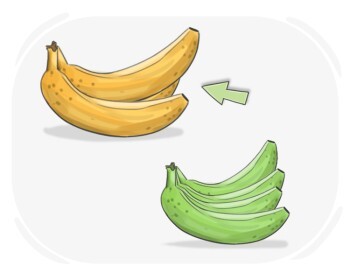
Ex: They recently located the source of the strange noise coming from the basement .
ripe [adjective]

(of fruit or crop) fully developed and ready for consumption

Ex: The ripe strawberries were bursting with juicy sweetness .
thick [adjective]

(of plants) existing and growing densely close together with little space in between, creating a lush and impenetrable area

Ex: It was difficult to see the path through the thick bushes that had overgrown the trail .

trees and plants in general, particularly those of a specific habitat or area

Ex: In the spring , the hillsides are covered in vibrant green vegetation as wildflowers bloom , creating a picturesque landscape .
originally [adverb]

at the initial state, purpose, or condition of something before any changes occurred
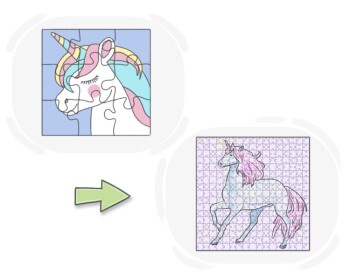
Ex: This subway line originally ended at 34th Street before extending downtown .
complicated [adjective]

involving many different parts or elements that make something difficult to understand or deal with

Ex: The algorithm used in the program was complicated , with multiple nested functions .
threat [noun]

something that poses danger or the possibility of harm
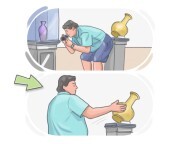
Ex: The police quickly responded to the bomb threat called in at the downtown office building .

in a way that is done consciously and intentionally
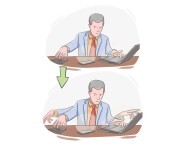
Ex: She deliberately left the door unlocked to let him in .
rapidly [adverb]

in a way that is very quick and often unexpected

Ex: The athlete ran rapidly to break the record .

to invade or overwhelm with a large number, surpassing defenses

Ex: The locusts threatened to overrun the agricultural fields , causing widespread crop damage .
to upset [verb]

to disturb or interrupt the normal function or order of something
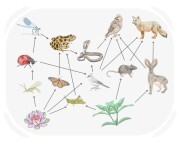
Ex: An unexpected argument upset the harmony of the family dinner .
ecology [noun]

the relation between plants and animals to each other and their environment

Ex: Conservation efforts are crucial in maintaining the ecology of endangered species .
particular [adjective]

going beyond what is typical or expected

Ex: His particular interest in classical music made him an expert on the subject .

to eat or drink something

Ex: As part of the celebration , the family gathered to consume a delicious feast .
devastating [adjective]

causing severe damage, destruction, or emotional distress

Ex: The devastating consequences of climate change are becoming increasingly evident around the world .

a group of organisms of the same species inhabiting a given area

non-native [adjective]

(of plants or animals) not originally from the region or environment where they are found, often introduced from other areas
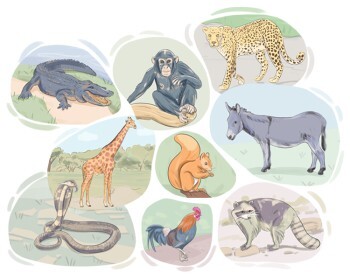
Ex: The forest is struggling with the spread of non-native plants , which outcompete the native flora .
species [noun]

a group that animals, plants, etc. of the same type which are capable of producing healthy offspring with each other are divided into

Ex: The red wolf is a species of wolf that is native to the southeastern United States .