
Droit et Réglementation - Droit pénal et jugement
Réviser
Flashcards
formes
Orthographe
Quiz

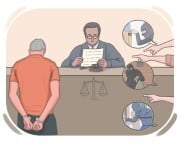
an accusation against a person who is on trial

accusation
L'accusation contre lui était grave, impliquant une quantité importante de preuves.
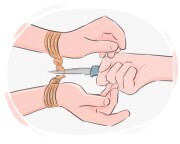
to free or release someone from legal or official confinement
libérer, relâcher
Après avoir purgé leur peine complète, les autorités pénitentiaires ont libéré le détenu et l'ont escorté vers la liberté.

(of a law court) to make an official decision
trouver
Le tribunal a trouvé le défendeur non coupable des accusations en raison d'un manque de preuves.
to declare someone guilty or make a decision against someone in a court case
se prononcer contre
Le jury a trouvé contre l'entreprise dans le procès.
to declare someone right or innocent in a court of law case
se prononcer en faveur de
Le jury a trouvé en faveur du défendeur dans le litige.
a judgment or decision reached by a court regarding matters of fact or law
verdict, conclusion
Le jury a rendu un jugement unanime.
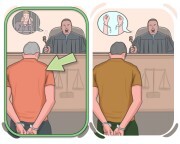
responsible for an illegal act or wrongdoing
coupable
Être reconnu coupable de fraude a entraîné de graves conséquences pour l'homme d'affaires.
having no legal right or claim
illégitime, injustifié
Le tribunal a rejeté sa demande injustifiée.
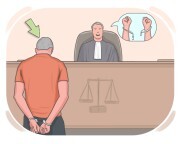
not having committed a wrongdoing or offense
innocent
Le témoin innocent a assisté à l'accident et a fourni un témoignage crucial à la police.
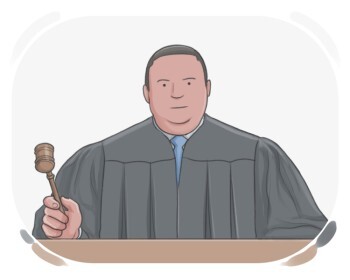
the official in charge of a court who decides on legal matters
juge
Elle a été nommée juge fédérale par le président.

the decision of a judge or law court
jugement
Le défendeur a accepté le jugement et a décidé de ne pas faire appel.
belonging or appropriate for a court, a judge, or the administration of justice
judiciaire
Le contrôle judiciaire est un processus par lequel les tribunaux examinent la constitutionnalité des lois et des actions gouvernementales.
the power or authority of a court of law or an organization to make legal decisions and judgements
juridiction, compétence
La police locale n'a pas juridiction sur les crimes commis sur les propriétés fédérales.
the process of administering justice or carrying out legal judgments
l'administration de la justice, l'appareil judiciaire
Des réformes ont été introduites pour améliorer le système judiciaire.
(law) a decision supported or made by a jury that most of the people, but not all agree with
verdict rendu à la majorité
Verdict majoritaire a été accepté dans le procès pénal.
to discharge a criminal from the legal consequences of a conviction or violation
pardonner à
Elle a été soulagée lorsque le président a choisi de gracier son mari.
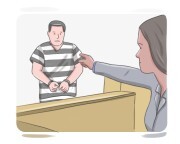
to try to charge someone officially with a crime in a court as the lawyer of the accuser
intenter une action
On lui a demandé de poursuivre l'affaire, amenant le défendeur à être jugé pour fraude.
the process of bringing someone to court in an attempt to prove their guilt
poursuites, poursuites judiciaires
Poursuite a été compliquée par un manque de preuves claires.
to officially declare or state something as true, especially in a legal or authoritative manner
décréter, statuer
Le comité a décidé que la proposition était acceptable et qu'elle allait procéder.
a decision made by someone with official power, particularly a judge
décision
La décision du juge a favorisé le plaignant, lui accordant des dommages et intérêts pour l'accident.

to put a person on trial or investigate a case in a trial
juger
L'affaire a été jugée dans un tribunal de première instance avant d'être portée en appel.
an official decision made by the jury in a court after the legal proceedings
verdict
Le juge a lu le verdict à haute voix dans la salle d'audience bondée.

an amount of money that must be paid in order for someone who is accused of a crime to be released until their trial
caution
L'accusé n'a pas pu payer le montant de la caution et est resté en détention jusqu'à la date du procès.
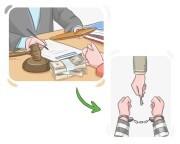
to pay money to the court to release someone from custody until their trial
cautionner, payer la caution pour
Le manager de la célébrité s'est précipité pour la faire libérer sous caution après son arrestation tard dans la nuit.
the questioning of a witness by the opposing lawyer in court
contre-interrogatoire, interrogatoire contradictoire
Elle était nerveuse pendant le contre-interrogatoire.
to question a witness in court by the opposing lawyer to test their testimony
contre-interroger, interroger en contrepartie
Il était nerveux lorsque le procureur a commencé à le contre-interroger.

to represent a person who is on trial
défendre
Pendant le procès, l'avocate a travaillé sans relâche pour défendre son client contre les accusations.
the person on trial and their legal team representing them in court
la défense, la partie défenderesse
Le jury a écouté attentivement les déclarations de la défense.
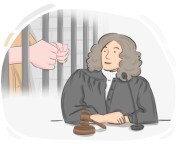
to announce officially that someone is guilty of a crime in a court of law
reconnaître coupable
Le tribunal devrait condamner le suspect sur la base des preuves présentées.
a formal declaration by which someone is found guilty of a crime in a court of law
condamnation
Après la condamnation, il a été condamné à dix ans de prison.
(law) the permission for a prisoner to leave prison before the end of their imprisonment sentence, on the condition of good conduct
liberté conditionnelle
La commission de liberté conditionnelle examine chaque cas individuellement pour déterminer si un détenu remplit les critères pour une libération anticipée.
a process in court where one person or group sues or takes a case against another
action en justice, procédure judiciaire
Elle a envisagé une action en justice après l'accident.

to force a foreigner to leave a country, usually because they have broken the law
expulser
Pendant la Seconde Guerre mondiale, les États-Unis ont expulsé des centaines d'immigrants vers l'Allemagne, l'Italie et le Japon.
(particularly of a law court) to state that a previous decision is correct
maintenir, soutenir
La cour d'appel a confirmé la condamnation, déclarant que le procès s'était déroulé équitablement.
