pattern

Ley y Regulación - Derecho penal y adjudicación

Revisión

Tarjetas de memoria

formas

Ortografía

Cuestionario

Empezar a aprender
Words Related to Law and Regulation
charge
charge
[Sustantivo]

an accusation against a person who is on trial

acusación

acusación

Ex: The charges were filed after a thorough investigation revealed substantial evidence .

Los cargos se presentaron después de que una investigación exhaustiva revelara pruebas sustanciales.

to discharge

to free or release someone from legal or official confinement

liberar, absolver

liberar, absolver

Ex: The correctional facility discharged the juvenile offender upon completion of their rehabilitation program .

El centro correccional liberó al delincuente juvenil tras completar su programa de rehabilitación.

to find
to find
[Verbo]

(of a law court) to make an official decision

hallar, declarar

hallar, declarar

Ex: The judge found the defendant guilty of theft and sentenced him to prison.

El juez encontró al acusado culpable de robo y lo sentenció a prisión.

to find against

to declare someone guilty or make a decision against someone in a court case

fallar en contra

fallar en contra

Ex: The court consistently found against the plaintiff .

El tribunal consistentemente falló en contra del demandante.

to find for

to declare someone right or innocent in a court of law case

fallar a favor de

fallar a favor de

Ex: Lawyers celebrated when the court found for their client .

Los abogados celebraron cuando el tribunal falló a favor de su cliente.

finding
finding
[Sustantivo]

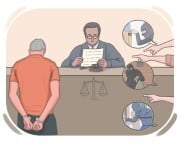
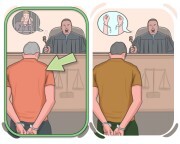
a judgment or decision reached by a court regarding matters of fact or law

fallo, veredicto
fallo, veredicto

Ex: The appellate court reviewed the lower court 's finding.

El tribunal de apelación revisó la decisión del tribunal inferior.

guilty
guilty
[Adjetivo]

responsible for an illegal act or wrongdoing

culpable

culpable

Ex: The jury found the defendant guilty of the crime based on the evidence presented .

El jurado encontró al acusado culpable del crimen basándose en las pruebas presentadas.

wrongful
wrongful
[Adjetivo]

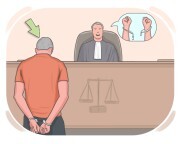
having no legal right or claim

ilegítimo, injustificado
ilegítimo, injustificado

Ex: The judge dismissed the case as a wrongful claim .

El juez desestimó el caso como una demanda injusta.

innocent
innocent
[Adjetivo]

not having committed a wrongdoing or offense

inocente
inocente

Ex: The innocent driver was not at fault for the car accident caused by the other driver 's negligence .

El conductor inocente no tuvo la culpa del accidente de coche causado por la negligencia del otro conductor.

judge
judge
[Sustantivo]

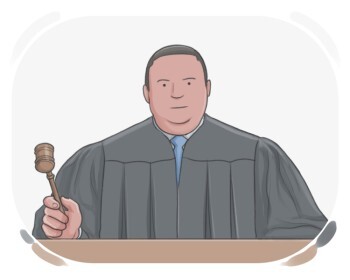
the official in charge of a court who decides on legal matters

juez

juez

Ex: She retired after serving as a judge for over thirty years .

Se retiró después de servir como juez durante más de treinta años.

judgment
judgment
[Sustantivo]

the decision of a judge or law court

fallo

fallo

Ex: After reviewing the evidence , the judge issued a judgment of not guilty .

Tras revisar las pruebas, el juez emitió un juicio de no culpable.

judicial
judicial
[Adjetivo]

belonging or appropriate for a court, a judge, or the administration of justice

judicial

judicial

Ex: Lawyers play a crucial role in presenting arguments and evidence before the judicial authorities .

Los abogados desempeñan un papel crucial al presentar argumentos y pruebas ante las autoridades judiciales.

jurisdiction
jurisdiction
[Sustantivo]

the power or authority of a court of law or an organization to make legal decisions and judgements

jurisdicción

jurisdicción

Ex: The Supreme Court clarified its jurisdiction in interpreting constitutional issues .

El Tribunal Supremo aclaró su jurisdicción en la interpretación de cuestiones constitucionales.

justiciary
justiciary
[Sustantivo]

the process of administering justice or carrying out legal judgments

la administración de justicia, el aparato judicial

la administración de justicia, el aparato judicial

Ex: Delays in the justiciary can affect public trust in the legal system .

Los retrasos en la justiciary pueden afectar la confianza pública en el sistema legal.

majority verdict
majority verdict
[Sustantivo]

(law) a decision supported or made by a jury that most of the people, but not all agree with

veredicto mayoritario

veredicto mayoritario

Ex: The judge instructed the jury on how to deliver a majority verdict.

El juez instruyó al jurado sobre cómo emitir un veredicto mayoritario.

to pardon
to pardon
[Verbo]

to discharge a criminal from the legal consequences of a conviction or violation

indultar

indultar

Ex: The clemency petition resulted in the decision to pardon the non-violent offenders .

La petición de clemencia resultó en la decisión de indultar a los delincuentes no violentos.

to prosecute

to try to charge someone officially with a crime in a court as the lawyer of the accuser

procesar

procesar

Ex: He hired an expert to help prosecute the case , ensuring every legal angle was covered .

Contrató a un experto para ayudar a procesar el caso, asegurándose de que todos los ángulos legales estuvieran cubiertos.

prosecution
prosecution
[Sustantivo]

the process of bringing someone to court in an attempt to prove their guilt

enjuiciamiento

enjuiciamiento

Ex: He faced a rigorous prosecution, which included multiple trials .

Enfrentó un procesamiento riguroso, que incluyó múltiples juicios.

to rule
to rule
[Verbo]

to officially declare or state something as true, especially in a legal or authoritative manner

decretar, dictaminar

decretar, dictaminar

Ex: The board ruled that the application met all the necessary requirements.

La junta dictaminó que la solicitud cumplía con todos los requisitos necesarios.

ruling
ruling
[Sustantivo]

a decision made by someone with official power, particularly a judge

resolución

resolución

Ex: The school board 's ruling to implement a new dress code policy sparked controversy among parents and students .

La decisión de la junta escolar de implementar una nueva política de código de vestimenta generó controversia entre padres y estudiantes.

to try
to try
[Verbo]

to put a person on trial or investigate a case in a trial

juzgar
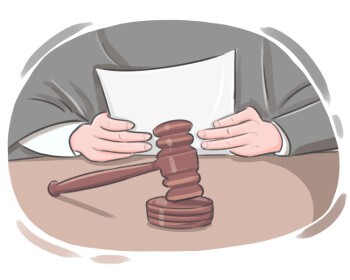
juzgar

Ex: The suspect will be tried for murder next month.

El sospechoso será juzgado por asesinato el próximo mes.

verdict
verdict
[Sustantivo]

an official decision made by the jury in a court after the legal proceedings

veredicto

veredicto

Ex: The media reported on the landmark verdict that set a new precedent in criminal law .

Los medios informaron sobre el veredicto histórico que sentó un nuevo precedente en el derecho penal.

bail
bail
[Sustantivo]

an amount of money that must be paid in order for someone who is accused of a crime to be released until their trial

fianza
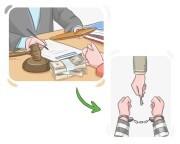
fianza

Ex: The suspect's family rallied together to raise money for his bail bond.

La familia del sospechoso se unió para recaudar dinero para su fianza libertad bajo fianza.

to bail out

to pay money to the court to release someone from custody until their trial

pagar la fianza, sacar bajo fianza

pagar la fianza, sacar bajo fianza

Ex: The unexpected arrest forced them to bail out their sibling , turning a family dinner into a rescue mission .

El arresto inesperado los obligó a pagar la fianza de su hermano, convirtiendo una cena familiar en una misión de rescate.

cross-examination
cross-examination
[Sustantivo]

the questioning of a witness by the opposing lawyer in court

contrainterrogatorio, interrogatorio cruzado

contrainterrogatorio, interrogatorio cruzado

Ex: Judges pay close attention to cross-examination in trials .

Los jueces prestan mucha atención al contrainterrogatorio en los juicios.

to cross examine

to question a witness in court by the opposing lawyer to test their testimony

contrainterrogar, interrogar en contraparte

contrainterrogar, interrogar en contraparte

Ex: Judges allow lawyers to cross-examine witnesses carefully.

Los jueces permiten a los abogados interrogar cruzadamente a los testigos con cuidado.

to defend
to defend
[Verbo]

to represent a person who is on trial

defender

defender

Ex: The public defender was assigned to defend the client who could not afford private counsel .

El defensor público fue asignado para defender al cliente que no podía pagar un abogado privado.

defense
defense
[Sustantivo]

the person on trial and their legal team representing them in court

la defensa, la parte defensora
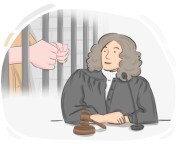
la defensa, la parte defensora

Ex: The defense presented an alternative interpretation of the facts .

La defensa presentó una interpretación alternativa de los hechos.

to convict
to convict
[Verbo]

to announce officially that someone is guilty of a crime in a court of law

condenar

condenar

Ex: Over the years , the legal system has occasionally convicted high-profile figures for various offenses .

A lo largo de los años, el sistema legal ha condenado ocasionalmente a figuras prominentes por diversos delitos.

conviction
conviction
[Sustantivo]

a formal declaration by which someone is found guilty of a crime in a court of law

condena

condena

Ex: She was shocked by his conviction, as he had always maintained his innocence .

Ella quedó impactada por su condena, ya que siempre había mantenido su inocencia.

parole
parole
[Sustantivo]

(law) the permission for a prisoner to leave prison before the end of their imprisonment sentence, on the condition of good conduct

libertad condicional, libertad bajo palabra

libertad condicional, libertad bajo palabra

Ex: Parole offers offenders the opportunity for rehabilitation and reintegration into society under supervision, with the goal of reducing recidivism.

La libertad condicional ofrece a los delincuentes la oportunidad de rehabilitación y reintegración en la sociedad bajo supervisión, con el objetivo de reducir la reincidencia.

legal action
legal action
[Sustantivo]

a process in court where one person or group sues or takes a case against another

acción legal, proceso judicial

acción legal, proceso judicial

to deport
to deport
[Verbo]

to force a foreigner to leave a country, usually because they have broken the law

deportar

deportar

Ex: Border patrol agents are currently deporting a group of migrants apprehended near the southern border .

Los agentes de la patrulla fronteriza están deportando actualmente a un grupo de migrantes detenidos cerca de la frontera sur.

to uphold
to uphold
[Verbo]

(particularly of a law court) to state that a previous decision is correct

conservar

conservar

Ex: The disciplinary panel upheld the suspension after reviewing all the evidence and testimonies .

El panel disciplinario confirmó la suspensión después de revisar todas las pruebas y testimonios.

LanGeek
Descargar la aplicación LanGeek