

pattern

Le livre Headway - Avancé - Unité 2

Ici, vous trouverez le vocabulaire de l'Unité 2 du manuel Headway Advanced, comme "noter rapidement", "mot à la mode", "sans voix", etc.

Réviser

Flashcards

formes

Orthographe

Quiz

Commencer à apprendre
Headway - Advanced
to take in
to take in
[verbe]

to comprehend something

comprendre, assimiler

comprendre, assimiler

Ex: The students struggled to take the extensive course material in.

Les étudiants ont eu du mal à comprendre le vaste matériel de cours.

to go over
to go over
[verbe]

to thoroughly review, examine, or check something

examiner, voir, passer en revue

examiner, voir, passer en revue

Ex: We need to go over the details of the project to make sure nothing is missed .

Nous devons passer en revue les détails du projet pour nous assurer que rien n'est oublié.

to jot down

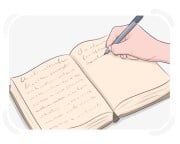
to make a note of something in a hurried and informal style

noter

noter

Ex: I 'll quickly jot down the address before I forget it .

Je vais rapidement noter l'adresse avant de l'oublier.

to come through

to stay alive or recover after an unpleasant event such as a serious illness

s’en sortir

s’en sortir

Ex: He was in a very bad accident but came through it with no lasting injuries .

Il a été dans un très grave accident mais s'en est sorti sans blessures durables.

to come to
to come to
[verbe]

to suddenly become aware of something that one did not notice before, or that one had forgotten about

se rendre compte, réaliser

se rendre compte, réaliser

Ex: I was struggling with a problem , but a solution suddenly came to me out of nowhere .

Je me débattais avec un problème, mais une solution m'est soudainement venue à l'esprit de nulle part.

to do in
to do in
[verbe]

to murder someone

supprimer, liquider

supprimer, liquider

Ex: The detective worked tirelessly to prevent the mob from carrying out their plan to do in a key witness.

Le détective a travaillé sans relâche pour empêcher la mafia de mener à bien son plan pour liquider un témoin clé.

word
word
[nom]

a promise or assurance

parole, promesse

parole, promesse

Ex: When he gave his word, I knew I could count on him to keep his promise .

Quand il a donné sa parole, j'ai su que je pouvais compter sur lui pour tenir sa promesse.

(by|through) (the|) word of mouth

by telling others rather than writing or showing it to them

Ex: The success of the restaurant spread by word of mouth, thanks to satisfied customers.
(right|) from the word go

from the very beginning of a particular situation, activity, or process

Ex: I knew from the word go that this job was going to be challenging.
to [get] a word in edgeways

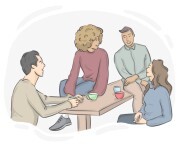
to finally have a chance to state one's opinions about something after or in the middle of someone else's continuous speech

Ex: I’ve been waiting for my turn to speak, but I haven’t been able to get a word in edgeways.
to [get] a word in edgewise

to manage to state one's opinions regarding something after or in the middle of someone else's prolonged speech

Ex: At the crowded networking event, I tried to share my experiences with others, but it felt impossible to get a word in edgewise with the constant buzz of conversation.
in other words

used to provide an alternative or clearer way of expressing the same idea

en d'autres termes, autrement dit

en d'autres termes, autrement dit

Ex: The assignment requires creativity ; in other words, you need to think outside the box .

Le devoir exige de la créativité ; en d'autres termes, vous devez penser différemment.

(last|final) word
last word
[Phrase]

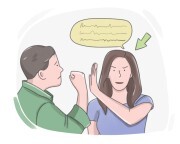
the ultimate and conclusive statement or decision about a subject

Ex: Despite the heated argument, my friend wanted to have the last word on our disagreement, asserting her perspective as final.
to {not} [have] a good word to say (for|about) {sth}

to have a very negative opinion about someone or something and to be unable to say anything positive or complimentary about them

Ex: He doesn’t have a good word to say about his old job; he always complains about it.
to [put] in a (good|) word for {sb}

to talk highly of someone as a way of helping them get an advantage, such as succeeding in a job interview

Ex: When applying for the scholarship, her teacher was more than willing to put in a word for her exceptional dedication to academics.
to [say|give] the word {~noun}

to order someone to do something for one

Ex: The dedicated assistant is at her executive's beck and call, always ready to fulfill their wishes the moment they give the word.
for words
for words
[Phrase]

beyond description, usually in a negative sense

Ex: The mess in the kitchen after the party left her absolutely for words.
word for word

as it was originally spoken or written, without any changes or omissions

Ex: The teacher asked us to write the passage word for word in our notebooks.
(man|woman|person) of few words

someone who avoids talking much and manages to convey their message in the most concise way possible

Ex: The CEO is a man of few words, always focused and to the point.
lost for words

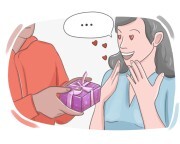
temporarily unable to think of what to say or how to express oneself, often due to shock, surprise, or intense emotion

Ex: The stunning performance of the young pianist left the audience lost for words, and they erupted into applause.
to [eat] {one's} words

to take back something one has said previously

Ex: You doubted I could lose 20 pounds - I think it's time for you to eat your words!
to [breathe|say] a word about {sth}

to tell other people what is supposed to stay secret

Ex: The children were instructed by their parents not to say a word about the surprise vacation they were going on.
buzzword

a word or phrase that becomes popular or fashionable in a particular field or context, often used to impress or persuade others rather than for its actual meaning or value

mot à la mode, terme à la mode

mot à la mode, terme à la mode

Ex: Artificial intelligence has become a buzzword in the tech industry .

L'intelligence artificielle est devenue un buzzword dans l'industrie technologique.

to [mince] {one's} words

to choose words carefully so as to avoid offense or give an impression different from the truth

Ex: The counselor knew how to deliver difficult advice without mincing her words, helping clients understand and address their issues.
to {not} (even|) [know] the meaning of the word

to lack knowledge or understanding of a particular concept or term

Ex: He didn’t even know the meaning of the word when I asked him to explain it.
LanGeek
Télécharger l'application LanGeek