
Vocabulaire pour l'IELTS Academic (Score 5) - Physique
Ici, vous apprendrez quelques mots anglais liés à la Physique qui sont nécessaires pour l'examen académique IELTS de base.
Réviser
Flashcards
Orthographe
Quiz


an extremely small elementary particle with a negative electric charge

électron
a small positively charged particle present in atoms
proton
Les protons et les neutrons forment ensemble le noyau d'un atome.
a small particle with no charge present in atoms
neutron, particule neutre
L'uranium-235 possède 92 protons et 143 neutrons.
the smallest possible amount of a particular quantity that cannot be divided any further
quantum, quantité minimale indivisible
L'intrication quantique est un phénomène où les particules deviennent interconnectées de telle manière que l'état d'une particule affecte instantanément l'état d'une autre, quelle que soit la distance qui les sépare.
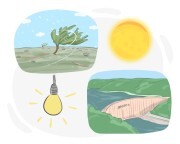
(physics) a source of power that is required to do any work that may exist in potential, kinetic, thermal and other forms
énergie
(physics) a push or pull that can change an object's motion, direction, or shape
force
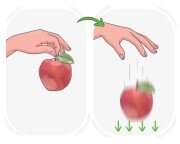
the force by which objects with mass attract one another, especially the force that draws objects toward the Earth
gravité
(physics) an oscillating movement by which energy is transferred without the transport of matter, such as light and sound
onde
(physics) the state of being under pressure as a result of getting stretched
tension, pression
(physics) the amount of force exerted per area that is measured in pascal, newton per square meter, etc.
pression
the ability to go back to the original form after being stretched
élasticité
La peau perd de son élasticité avec l'âge, ce qui entraîne des rides.
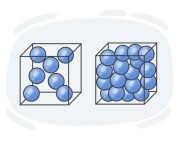
(physics) the mass of a substance or object per unit of volume
densité
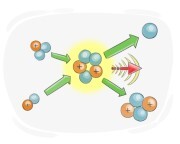
a nuclear reaction in which light atomic nuclei combine to form a heavier nucleus and release energy
fusion
a theory that explains the relationship between motion, space, and time
relativité
La célèbre équation E=mc² provient de la relativité restreinte.
the energy difference that drives current, typically measured in volts
potentiel, tension
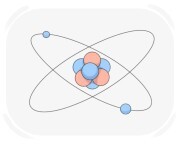
an extremely small unit of matter or radiation treated as a discrete entity in physics
particule
a phenomenon of attracting and repulsing forces that a moving electrical charge produces
magnétisme, force magnétique
Le scientifique a démontré le magnétisme en faisant coller des trombones à une bobine avec du courant électrique.
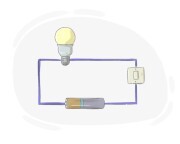
a flow of electricity resulted from the movement of electrically charged particles in a direction
courant
total potential energy provided by a power source
tension, voltage
