pattern

IELTS Academic के लिए शब्दावली (स्कोर 5) - भौतिकी

यहां, आप भौतिकी से संबंधित कुछ अंग्रेजी शब्द सीखेंगे जो बेसिक अकादमिक आईईएलटीएस परीक्षा के लिए आवश्यक हैं।

समीक्षा करें

फ्लैशकार्ड्स

वर्तनी

प्रश्नोत्तरी

शुरू करें
Vocabulary for IELTS Academic (Band 5)
electron
electron
[संज्ञा]

an extremely small elementary particle with a negative electric charge

इलेक्ट्रॉन,  विद्युताणु

इलेक्ट्रॉन, विद्युताणु

Ex: Electric current in a metal involves the movement of electrons. 
बंद करें
साइन इन
proton
proton
[संज्ञा]

a small positively charged particle present in atoms

प्रोटॉन

प्रोटॉन

Ex: Particle accelerators smash protons together to study fundamental forces. 

कण त्वरक मूलभूत बलों का अध्ययन करने के लिए प्रोटॉन को एक साथ टकराते हैं।

बंद करें
साइन इन
neutron
neutron
[संज्ञा]

a small particle with no charge present in atoms

न्यूट्रॉन, तटस्थ कण

न्यूट्रॉन, तटस्थ कण

Ex: Isotopes differ only in their number of neutrons (e.g., carbon-12 vs. carbon-14). 

आइसोटोप केवल अपने न्यूट्रॉन की संख्या में भिन्न होते हैं (उदाहरण के लिए, कार्बन-12 बनाम कार्बन-14).

बंद करें
साइन इन
quantum
quantum
[संज्ञा]

the smallest possible amount of a particular quantity that cannot be divided any further

क्वांटम, सबसे छोटी संभव मात्रा जिसे और विभाजित नहीं किया जा सकता

क्वांटम, सबसे छोटी संभव मात्रा जिसे और विभाजित नहीं किया जा सकता

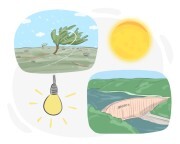
Ex: Quantum tunneling allows particles to pass through energy barriers that would be impassable according to classical mechanics. 

क्वांटम टनलिंग कणों को ऊर्जा बाधाओं को पार करने की अनुमति देता है जो शास्त्रीय यांत्रिकी के अनुसार अवरोध्य होगी।
बंद करें
साइन इन
energy
energy
[संज्ञा]

(physics) a source of power that is required to do any work that may exist in potential, kinetic, thermal and other forms

ऊर्जा, शक्ति

ऊर्जा, शक्ति

Ex: Kinetic energy is highest when an object is at its maximum speed. 
बंद करें
साइन इन
force
force
[संज्ञा]

(physics) a push or pull that can change an object's motion, direction, or shape

बल,  शक्ति

बल, शक्ति

Ex: The rocket lifted off due to the massive force from its engines. 
बंद करें
साइन इन
gravity
gravity
[संज्ञा]

the force by which objects with mass attract one another, especially the force that draws objects toward the Earth

गुरुत्वाकर्षण

गुरुत्वाकर्षण

Ex: Gravity keeps the planets in orbit around the Sun. 
बंद करें
साइन इन
wave
wave
[संज्ञा]

(physics) an oscillating movement by which energy is transferred without the transport of matter, such as light and sound

तरंग, कंपन

तरंग, कंपन

Ex: Scientists study how waves interact with different materials. 
बंद करें
साइन इन
tension
tension
[संज्ञा]

(physics) the state of being under pressure as a result of getting stretched

तनाव, दबाव

तनाव, दबाव

Ex: The tension in the cable supporting the elevator must exceed the maximum load. 
बंद करें
साइन इन
pressure
pressure
[संज्ञा]

(physics) the amount of force exerted per area that is measured in pascal, newton per square meter, etc.

दबाव, भौतिक दबाव

दबाव, भौतिक दबाव

Ex: At sea level, atmospheric pressure is ~101,325 Pa. 
बंद करें
साइन इन
elasticity
elasticity
[संज्ञा]

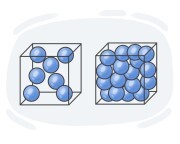
the ability to go back to the original form after being stretched

लचीलापन

लचीलापन

Ex: This fabric's elasticity makes it ideal for sportswear. 

इस कपड़े की लचक इसे स्पोर्ट्सवियर के लिए आदर्श बनाती है।
बंद करें
साइन इन
density
density
[संज्ञा]

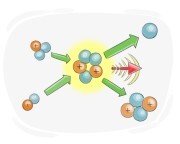
(physics) the mass of a substance or object per unit of volume

घनत्व
घनत्व

Ex: Daniel measured the object's mass and volume to determine its density. 
बंद करें
साइन इन
fusion
fusion
[संज्ञा]

a nuclear reaction in which light atomic nuclei combine to form a heavier nucleus and release energy

नाभिकीय संलयन, संलयन

नाभिकीय संलयन, संलयन

Ex: The experiment produced fusion reactions for only a brief period. 
बंद करें
साइन इन
relativity
relativity
[संज्ञा]

a theory that explains the relationship between motion, space, and time

सापेक्षता

सापेक्षता

Ex: Time dilation in relativity means astronauts age slightly slower. 

सापेक्षता का अर्थ है कि समय विस्तारण में अंतरिक्ष यात्री थोड़ा धीमी गति से बूढ़े होते हैं।

बंद करें
साइन इन
potential
potential
[संज्ञा]

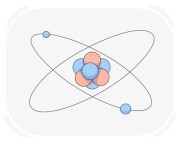
the energy difference that drives current, typically measured in volts

विभव, वोल्टेज
विभव, वोल्टेज

Ex: The potential in the power line dropped significantly due to a fault in the system. 
बंद करें
साइन इन
particle
particle
[संज्ञा]

an extremely small unit of matter or radiation treated as a discrete entity in physics

कण

कण

Ex: The collision produced several high-energy particles. 
बंद करें
साइन इन
magnetism
magnetism
[संज्ञा]

a phenomenon of attracting and repulsing forces that a moving electrical charge produces

चुंबकत्व, चुंबकीय बल

चुंबकत्व, चुंबकीय बल

Ex: MRI machines use powerful magnetism to create detailed body scans. 

एमआरआई मशीनें विस्तृत शरीर स्कैन बनाने के लिए शक्तिशाली चुंबकत्व का उपयोग करती हैं।
बंद करें
साइन इन
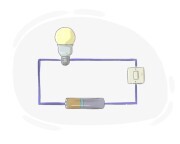
current
current
[संज्ञा]

a flow of electricity resulted from the movement of electrically charged particles in a direction

धारा, विद्युत धारा

धारा, विद्युत धारा

Ex: The alternator produces a current by moving charged particles within its magnetic field. 
बंद करें
साइन इन
voltage
voltage
[संज्ञा]

total potential energy provided by a power source

वोल्टेज, विद्युत दाब

वोल्टेज, विद्युत दाब

Ex: Industrial machines require 480V to operate. 

औद्योगिक मशीनों को काम करने के लिए 480 वोल्ट की आवश्यकता होती है।

बंद करें
साइन इन
LanGeek
LanGeek ऐप डाउनलोड करें
