
Vocabulaire pour l'IELTS General (Score 6-7) - Animaux
Ici, vous apprendrez quelques mots anglais liés aux animaux qui sont nécessaires pour l'examen IELTS General Training.
Réviser
Flashcards
Orthographe
Quiz
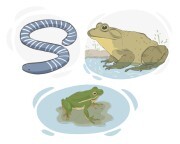
any cold-blooded animal with the ability to live both on land and in water, such as toads, frogs, etc.

amphibien
Les salamandres sont des amphibiens qui ont un corps mince et une longue queue, souvent trouvés près des habitats d'eau douce.
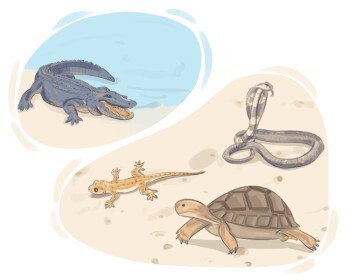
a class of animals to which crocodiles, lizards, etc. belong, characterized by having cold blood and scaly skin
reptile
Les crocodiles sont l'une des espèces de reptiles les plus dangereuses à l'état sauvage.
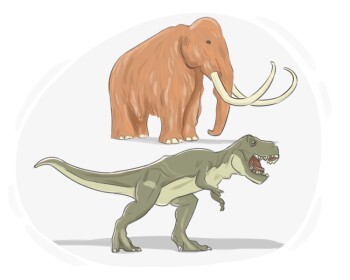
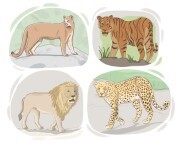
any animal that lives by hunting and eating other animals
prédateur
La savane africaine abrite une diversité de prédateurs, notamment des lions, des guépards et des hyènes.
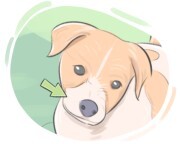
the long and protruding facial part of an animal which comprises its nose and mouth, especially in a mammal
museau
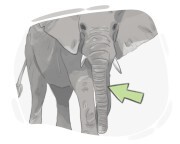
the nose of an elephant that is in the shape of a long hose
trompe
Avec une touche douce, la mère éléphant a utilisé sa trompe pour pousser son petit plus près de la sécurité du troupeau.
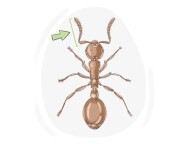
one of a pair of jointed sensory appendages on the head of insects, crustaceans, or similar organisms, often used to detect touch, taste, or movement
antenne
Les crabes utilisent leurs antennes pour détecter leur environnement.
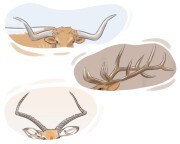
a hard, pointed, often curved structure found on the head of some animals, such as cows, goats, and sheep, made of keratin or bone, used for defense, display, or digging
corne
Les cornes du bélier étaient impressionnantes et enroulées étroitement autour de sa tête.
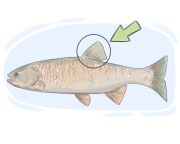
a thin flat membrane of the body of many sea creatures, used for swimming and keeping balance
nageoire
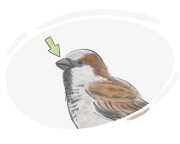
the hard or pointed part of a bird's mouth
bec
Le bec pointu de l'aigle l'a aidé à déchirer sa proie.
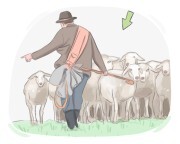
a group of animals, such as cows, sheep, etc. that are from the same species, which move and feed together
troupeau
Un grand troupeau d'éléphants a traversé la savane.
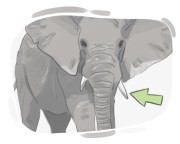
each of the curved pointy teeth of some animals such as elephants, boars, etc., especially one that stands out from the closed mouth
défense
Le braconnier se faufila à travers les broussailles, les yeux fixés avidement sur les défenses précieuses de l'éléphant.
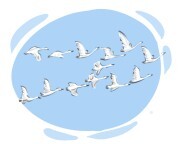
a group of birds of the same type, flying and feeding together
vol
Alors que le soleil se couchait, la troupe de flamants roses se rassembla au bord de l'eau, leur plumage vibrant projetant une teinte rose sur le marais.
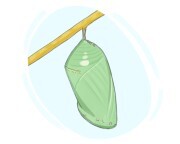
a young form of an insect or an animal that has come out of the egg but has not yet developed into an adult
larve
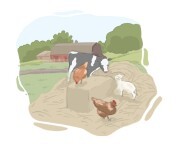
animals that are kept on a farm, such as cows, pigs, or sheep
bétail
Les agriculteurs vendent souvent leur bétail au marché pour en tirer profit.
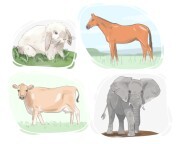
any animal that only feeds on plants
herbivore
Les éléphants sont de grands herbivores qui consomment d'énormes quantités de végétation.
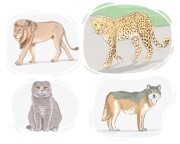
an animal that feeds on the flesh of other animals
carnivore
Les loups sont des carnivores sociaux qui chassent en meute.
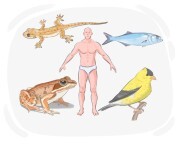
a large group of animals characterized by the possession of a backbone or spinal column, including mammals, birds, reptiles, amphibians, and fishes
vertébré, animal vertébré
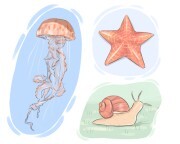
species that do not possess or cannot develop a spinal column, such as an arthropod, mollusk, etc.
invertébré
Les crabes et les homards sont des invertébrés marins avec des exosquelettes durs.
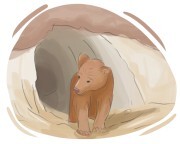
the hidden place where a wild predatory animal lives
antre, tanière
Les renards creusent des tanières dans le sol ou réutilisent des terriers existants pour élever leurs petits et se réfugier des prédateurs.
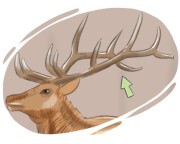
any of the pair of branched horns that grow annually on the head of an adult animal, typically a male one, from the deer family
bois, ramure
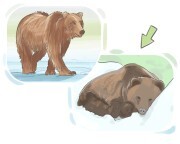
a dormant state in animals, characterized by lowered body temperature and metabolic activity, often during winter to conserve energy
hibernation, sommeil hivernal
Pendant l'hibernation, la température corporelle de l'écureuil terrestre baisse considérablement et son taux métabolique diminue pour économiser de l'énergie.
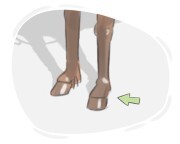
the horny and hard part at the end of a limb of a mammal, such as a horse
sabot
Les sabots du cheval produisaient un son rythmé alors qu'il trottinait le long du chemin.

having an abundant covering or coat of soft, dense hair or fur
poilu, à poils
Elle adorait se blottir avec sa couverture pelucheuse les nuits froides.
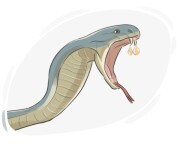
possessing or producing a toxin that is injected or delivered into another organism through a bite, sting, or other means
venimeux
Le lézard a exhibé sa langue venimeuse aux couleurs vives comme un avertissement aux prédateurs potentiels.
(of animals or birds) moving from one place to another, often with the changing seasons
migrateur
Les papillons monarques suivent un chemin migratoire à travers l'Amérique du Nord.
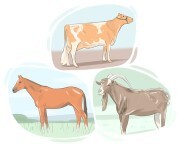
describing an animal that has a stomach with four compartments and chews cud as part of its digestion process
songeur, méditatif
La vache, un animal ruminant, passe une grande partie de sa journée à ruminer.
related to the sea and the different life forms that exist there
marin
Les habitats marins, comme les récifs coralliens et les forêts de varech, abritent une grande variété de vie aquatique.
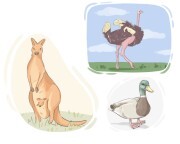
having two legs
bipède, à deux pattes
Les oiseaux sont un groupe diversifié d'animaux bipèdes, avec des adaptations pour le vol.
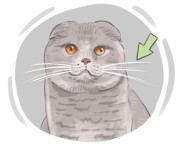
any of the long, stiff hairs that grow on the face of a cat, mouse, etc.
moustaches
Les vibrisses aident les chats à naviguer et à sentir leur environnement dans l'obscurité.
