
Linguistik - Syntax
Di sini Anda akan mempelajari beberapa kata dalam bahasa Inggris yang terkait dengan sintaks seperti "kata fungsi", "interogatif", dan "netral".
Tinjauan
Kartu flash
Ejaan
Kuis

a sequence or chain of linguistic units, such as words or morphemes, that are linked together to form a larger structure

rantai, urutan
the relationship between words or constituents in a sentence that determines their roles and functions within the sentence
relasi gramatikal, hubungan gramatikal
a type of word that serves a grammatical or structural role in a sentence rather than carrying lexical meaning
kata fungsi, kata tata bahasa
a word, phrase, or clause that is mentioned prior to a pronoun or anaphoric expression and to which the pronoun or anaphor refers
anteseden, pendahulu
Sebuah anteseden yang jelas mencegah kebingungan dalam penulisan.
the grammatical relationship linking an anaphoric expression, such as a pronoun or reflexive, to its antecedent
pengikatan, ikatan
a syntactic relationship between two clauses where the subject of one clause determines the interpretation or reference of an element in the other clause
kontrol, penguasaan
a linguistic relationship where two or more linguistic expressions within a discourse refer to the same entity in the world
koreferensi, hubungan koreferensi
a syntactic phenomenon in English where the auxiliary verb "do" is used to form questions, negatives, and emphatic statements in certain contexts
dukungan do, fenomena sintaksis do
a syntactic phenomenon in which a verb assigns accusative case to a noun phrase that is syntactically an object but semantically related to a higher clause
penandaan kasus pengecualian, penugasan kasus pengecualian
a syntactic process in which a constituent is moved from its canonical position to a non-canonical position in a sentence for the purpose of improving readability or emphasizing certain elements
ekstraposisi, perpindahan konstituen sintaksis
a syntactic phenomenon where non-finite verbs or verb phrases are omitted in coordinated clauses, with only the shared elements being expressed, resulting in a shortened or elliptical sentence structure
gapping, elipsis sintaksis
a linguistic phenomenon where multiple verbs are consecutively combined in a single clause without explicit marking or coordination, resulting in a complex verb phrase
penumpukan verba, penggabungan verba berturut-turut
an empty or unpronounced position within a sentence or phrase, typically representing a missing word or element that is implied or understood from the context
celah, kekosongan
a sentence structure where a verb is missing, but the meaning can still be understood based on the context, creating a sense of omission or gap in the sentence
pseudogapping, struktur kalimat dengan penghilangan kata kerja
a syntactic process in which a verb or predicate raises its subject to a higher syntactic position, often resulting in a mismatch between the surface structure and the underlying syntactic structure
peninggian, pengangkatan
a syntactic phenomenon where multiple constituents to the right of a shared verb are "raised" or elided, except for the rightmost one, creating a parallel structure
pengangkatan node kanan, peninggian node kanan
the movement or reordering of constituents within a sentence, often for reasons of emphasis, focus, or stylistic variation
pergeseran, penyusunan ulang
(in syntax) a process of omitting some words or phrases of a clause which are repetitive and could be understood from the context
penghilangan, penghapusan
the linguistic process of placing a specific word or phrase at the beginning of a sentence to highlight and give emphasis to the topic being discussed
topikalisasi, penekanan melalui topikalisasi
a syntactic phenomenon in which the object of a verb appears to move to the subject position in a sentence, often resulting in a complex and challenging grammatical structure
gerakan sulit, fenomena sintaksis yang kompleks
a grammatical aspect that indicates the beginning or initiation of an action or state
aspek inkoatif, aspek ingressif
(grammar) the use of a word or phrase that refers to or has the same meaning as a later word
katafora, penggunaan kata atau frasa yang merujuk atau memiliki arti yang sama dengan kata berikutnya
(in the grammar of some languages) a group of nouns, pronouns, or adjectives changing in the same way to indicate case, number, and gender
deklinasi, perubahan bentuk kata benda
Dalam bahasa Latin, kata benda dan kata sifat mengalami berbagai perubahan bentuk yang disebut deklinasi berdasarkan perannya dalam kalimat.
the property of a verb or an event that indicates whether it is viewed as having a definite endpoint or culmination, distinguishing between activities and accomplishments or achievements
telisitas, sifat telik
a word, phrase, or sentence inserted into a text to provide additional explanation, which can be removed without affecting the main sentence, enclosed in curved brackets, commas, or dashes
tanda kurung, sisipan
Kalimat itu terbaca dengan lancar bahkan tanpa tanda kurung.
(grammar) a function word that is used to form a question
kata tanya, kata interogatif
Membentuk kata tanya dengan benar penting untuk komunikasi yang efektif.
(grammar) the use of two adjacent noun phrases having the same referent that have the same syntactical role in a sentence
aposisi, penempatan berdampingan
Memahami aposisi sangat penting untuk mengurai kalimat kompleks, karena membantu dalam mengidentifikasi hubungan antara berbagai bagian kalimat.
a grammatical process where two or more words, phrases, or clauses of equal importance are joined together using conjunctions like "and" or "or" to express a relationship between them
koordinasi
(grammar) the form of a word that indicates whether one, two, or more things or people are being referred to
jumlah, jumlah gramatikal
a grammatical category that groups words as masculine, feminine, neuter, or another class
gender, jenis kelamin gramatikal
(grammar) each of the three classes of pronouns that refers to who is speaking, who is being spoken to, or others that are not present during the conversation
orang, tokoh
(grammar) a grammatical category used to refer to the speaker or writer of a statement or discourse
orang pertama, orang pertama (tata bahasa)
Kata kerja orang pertama setuju dengan pembicara dalam jumlah dan waktu.
a grammatical structure or form of a word that refers to more than one
bentuk jamak
a grammatical or social gender typically associated with male persons or male-classified objects
maskulin, jenis kelamin maskulin
Kata benda "padre" adalah maskulin dalam bahasa Spanyol.
(grammar) a gender of words that are neither masculine nor feminine
netral, gender netral
Ahli bahasa membahas konsep netral dalam gender gramatikal.
a gender category primarily associated with female persons or entities, including some objects classified as female
feminin, jenis kelamin perempuan
Dalam bahasa Spanyol, "mesa" diklasifikasikan sebagai feminin.
(grammar) any of the grammatical classes that words are categorized into, based on their usage in a sentence
a category of words that has a limited number of members and does not readily accept new additions, including pronouns, conjunctions, prepositions, and certain adverbs
kata kelas tertutup, kata kategori tertutup
a category of words that can expand and accept new members, including nouns, verbs, adjectives, and adverbs
kata kelas terbuka, istilah kelas terbuka
(grammar) the situation where words in a phrase have the same gender, person, or number
kesepakatan, persetujuan
a linguistic category that indicates the relationship of a noun or pronoun to other words in a sentence, typically reflecting its role as a subject, object, or modifier
kasus gramatikal, kasus
a word or phrase that connects a subordinate clause to a main clause, indicating a relationship of dependence or subordination between the two clauses
konjungsi subordinatif, kata penghubung bawahan

a word or expression that connects words, phrases, or clauses
konjungsi, kata sambung
a word or phrase that connects two or more elements of equal grammatical importance, such as words, phrases, or clauses, within a sentence
konjungsi koordinatif, kata penghubung setara
a pair of conjunctions that work together to connect two or more elements of equal importance in a sentence, such as "both...and," "either...or," and "neither...nor"
konjungsi korelatif, pasangan konjungsi korelatif
the grammatical rule that a verb must agree in number and person with its subject, meaning that a singular subject takes a singular verb and a plural subject takes a plural verb
kesesuaian subjek-kata kerja, persetujuan subjek-kata kerja
the placement of an element, typically a word or phrase, between other elements in a sentence, disrupting the typical linear order of constituents
penyisipan, interposisi
a word used to introduce a question or a relative clause, typically including words like "who," "what," "where," "when," "why," and "how"
kata tanya, kata penghubung
a linguistic category that serves a grammatical or structural function in a sentence
kategori fungsional
a word that joins two parts of a sentence, like the main clause and a subordinate clause, indicating how they relate to each other
pelengkap, kata penghubung
a word or phrase that is used to emphasize or strengthen the meaning of another word or phrase in a sentence
penguat, peningkat
a linguistic phenomenon that involves expressing a single grammatical meaning using multiple words or a phrase instead of a single word
perifrasis, ungkapan berbelit-belit
(grammar) a phrase or word used suddenly to express a particular emotion
interjeksi, kata seru
Ahli bahasa membahas berbagai fungsi interjeksi dalam bahasa.
a word or phrase that adds extra information to a sentence but is not required for its core structure or meaning
pelengkap keterangan, tambahan
"Pada hari Senin" dalam "Kami akan bertemu pada hari Senin" berfungsi sebagai tambahan.
an adverbial element that provides additional information or commentary on the main clause or sentence, expressing the speaker's attitude, viewpoint, or evaluation
terpisah, keterangan komentar
a word or phrase that provides additional information or description about a noun, clarifying its characteristics, qualities, or attributes within a sentence
pengubah kata benda, modifier nominal
(grammar) a pair of words in the same grammatical category that are joined by a conjunction, usually 'and' or 'or', with a fixed order
binomial, pasangan binomial
(grammar) a group of verb forms that indicate if the action or state is conceived as a statement, question, command or in another way
modus, cara
a grammatical form or category that indicates the time of an action or state
kala, tensis
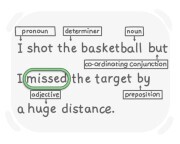
a word or group of words that expresses an action, state, occurrence, or experience
verba, kata kerja
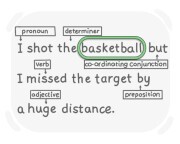
a word that is used to name a person, thing, event, state, etc.
kata benda, nomina
Dia kesulitan memahami konsep kata benda majemuk.

(grammar) a word that can replace a noun or noun phrase, such as she, it, they, etc.
kata ganti, kata yang dapat menggantikan kata benda atau frasa kata benda
Menggunakan kata ganti yang benar penting untuk kejelasan dalam menulis dan berbicara.
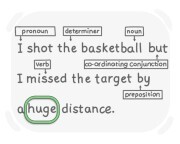
a type of word that describes a noun
kata sifat, kata deskriptif
Guru bahasa Inggris saya memberi saya daftar kata sifat untuk dihafal.
(grammar) a word coming before a noun or noun phrase to specify its denotation
determiner, artikel
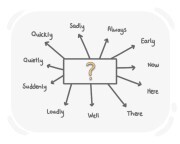
a word that gives more information about a verb, adjective, or another adverb
kata keterangan, kata yang memberikan informasi lebih lanjut tentang kata kerja
Satu kesalahan umum dalam bahasa Inggris adalah mengacaukan kata sifat dengan kata keterangan.
a word or a morpheme that combines with a noun phrase or a pronoun to express its syntactic relationship to other parts of a sentence
adposisi, preposisi atau postposisi
a grammatical error or deviation from accepted language norms that occurs in speech or writing
solecisme, kesalahan tata bahasa
a type of language in which pronouns can be omitted or dropped from sentences without causing ambiguity or loss of grammaticality
bahasa pro-drop, bahasa penghilang kata ganti
a language in which sentence structure is influenced by the topic of discourse, emphasizing information rather than grammatical subjects or verbs
bahasa topik-menonjol, bahasa berpusat pada topik
(grammar) a word or phrase that refers to a preceding word or phrase
anafora, pengulangan
Dalam pidato politik, anafora bisa menjadi alat yang kuat untuk menekankan poin-poin kunci dan menggalang dukungan.
