
Muzyka - Części Utworów Muzycznych
Tutaj nauczysz się niektórych angielskich słów związanych z różnymi częściami utworów muzycznych, takich jak "akompaniament", "crescendo" i "preludium".
Przegląd
Fiszki
Pisownia
Test

a slow and constant increase in the loudness of a musical piece

crescendo, stopniowe narastanie
Występ chóru obejmował dramatyczne crescendo, które wypełniło salę koncertową.
the speed that a piece of music is or should be played at
tempo, rytm
Piosenka miała stałe tempo, które ułatwiało tańczenie.
the musical support provided by one or more instruments or voices to enhance or complement a soloist or main melody
akompaniament, wsparcie muzyczne
Podczas recitalu ekspresyjne akompaniament wiolonczelisty zapewnił solidną podstawę dla wirtuozowskiego występu skrzypka.
a sequence of musical notes or chords that marks the conclusion of a phrase, section, or entire composition
kadencja, kadencja muzyczna
Kompozytor użył zwodniczej kadencji, aby zaskoczyć słuchacza.
the final passage of an extended musical composition
koda, finał
Pianista zręcznie poruszał się po skomplikowanej kodzie, pokazując swoje techniczne mistrzostwo i głębokie zrozumienie utworu.
a melody sung or played above the main melody, typically in a higher register
melodia śpiewana lub grana powyżej głównej melodii, zazwyczaj w wyższym rejestrze
Flecista wykonał delikatny dyskant, który przeplatał się z główną melodią, tworząc dźwiękowy gobelin w zespole kameralnym.
a theme that appears in a literary or musical piece several times and is associated with a particular person, idea or object
leitmotiv, motyw przewodni
a contrasting section in a song that typically spans eight bars, serving as a bridge between verses and choruses
most muzyczny, middle eight
one of the main parts that a long musical work is divided into, having its own structure
ruch
Symfonia składała się z czterech części, z których każda prezentowała różne tematy i nastroje.
a short section of a musical performance such as a fugue, opera, suite, etc. that introduces the main theme or subject
preludium
the specific music played or sung by a particular voice or instrument in multiple parts
partia, głos
a portion of a composition distinguished by its own melody, rhythm, or harmony
część, sekcja
Druga sekcja koncertu jest napisana w tonacji molowej.
a recurring melody, rhythm, chord progression, or motif in a musical composition that serves as a unifying element
temat, leitmotiv
Pianista wykonał wariacje na znany temat Chopina, pokazując swoją wirtuozerię i kreatywność, pozostając wiernym oryginalnej melodii.
a section or part of a musical composition that is sung
wokal, partia wokalna
Kompozytor dodał nową partię wokalną do utworu na finałowy występ.
a version of a musical theme with alterations in rhythm, tempo, melody, etc. in a way that the original theme is recognizable
wariacja
a solo section at the end of a musical piece for the performer to show their skill and creativity
kadencja
Podczas kadenzy skrzypaczka oczarowała publiczność swoją skomplikowaną improwizacją, pokazując swoją wirtuozerię.
a musical part that is integral to a piece of music and cannot be omitted
obbligato, część obowiązkowa
Obbligato klarnetu wzniosło się ponad smyczki, przywołując tęsknotę i pragnienie wyrażone w melodii kompozytora.
the overall structure or organization of a musical composition
forma, struktura
Forma sonatowa składa się z części ekspozycji, przetworzenia i repryzy, stanowiąc ramę dla klasycznych kompozycji.
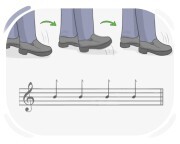
a piece of music's or a poem's main rhythm
rytm, bit
Zaraźliwy rytm piosenki sprawia, że nie sposób nie tupać nogą w rytm muzyki.
a short section of a musical work
pasaż, fragment
Miała trudności z zagraniem szybkiego pasażu w koncercie.
