pattern

Lista de Palavras Nível B2 - Pesquisa Científica

Aqui você aprenderá algumas palavras em inglês sobre pesquisa científica, como "descritivo", "classificar", "citar", etc., preparadas para alunos de nível B2.

Revisar

Flashcards

formas

Ortografia

Quiz

Começar a aprender
CEFR B2 Vocabulary
analytical
analytical
[adjetivo]

describing a method for understanding things through the use of logic and detailed thinking
analítico

analítico

Ex: An analytical essay critically examines a topic by presenting evidence and logical arguments. 

Analítico examina criticamente um tópico apresentando evidências e argumentos lógicos.
Fechar
Entrar
comparative
comparative
[adjetivo]

involving the examination of similarities and differences between two or more things

comparativo,  comparativa
comparativo, comparativa

Ex: The book offers a comparative overview of ancient legal systems. 
Fechar
Entrar
descriptive
descriptive
[adjetivo]

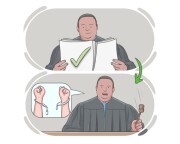
providing detailed information about how something looks, feels, sounds, or behaves

descritivo,  detalhado

descritivo, detalhado

Ex: The descriptive labels on the products helped customers make informed choices. 

Os rótulos descritivos nos produtos ajudaram os clientes a fazer escolhas informadas.
Fechar
Entrar
to cite
to cite
[verbo]

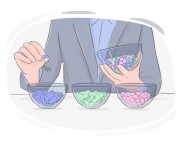
to mention something as an example, reason, or evidence in support of a statement or argument

citar, mencionar
citar, mencionar

Ex: Critics often cite this case as an example of poor management. 
Fechar
Entrar
to classify

to arrange people or things into groups according to shared characteristics or qualities

Ex: Daniel found it difficult to classify the unusual plant. 
Fechar
Entrar
to compile
to compile
[verbo]

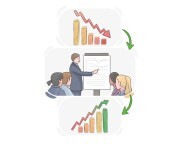
to collect and organize information or material for a particular purpose

compilar,  reunir
compilar, reunir

Ex: We are compiling names and contact details for the mailing list. 
Fechar
Entrar
to conduct
to conduct
[verbo]

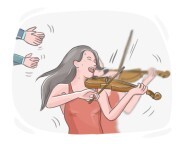
to direct or participate in the management, organization, or execution of something

dirigir, conduzir
dirigir, conduzir

Ex: As the event coordinator, she will conduct the planning and execution of the conference. 
Fechar
Entrar
to demonstrate

to show clearly that something is true or exists by providing proof or evidence

demonstrar, provar

demonstrar, provar

Ex: They demonstrated their commitment to the project by completing it on time. 
Fechar
Entrar
to derive
to derive
[verbo]

to figure out or establish something through logical analysis or reasoning

deduzir, estabelecer
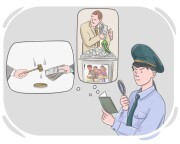
deduzir, estabelecer

Ex: Economists derive economic models to explain market behavior and predict future trends. 
Fechar
Entrar
to detect
to detect
[verbo]

to notice or discover something that is difficult to find

detectar, descobrir

detectar, descobrir

Ex: Dogs have a remarkable ability to detect certain scents, aiding in search and rescue missions. 
Fechar
Entrar
to document

to support an argument, claim, etc. by providing facts and evidence

documentar, comprovar
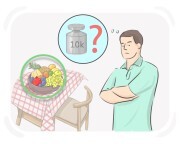
documentar, comprovar

Ex: The lawyer meticulously documented witness statements and forensic evidence to support her client's innocence. 
Fechar
Entrar
to estimate

to guess the value, number, quantity, size, etc. of something without exact calculation

estimar, avaliar

estimar, avaliar

Ex: He estimated the distance to be around five miles. 
Fechar
Entrar
to evaluate

to judge the quality, importance, value, or effectiveness of someone or something

avaliar,  apreciar

avaliar, apreciar

Ex: Daniel carefully evaluated his options before accepting the offer. 
Fechar
Entrar
to imply
to imply
[verbo]

to suggest that one thing is the logical consequence of the other

insinuar, implicar

insinuar, implicar

Ex: His consistent tardiness implies a lack of respect for others' time. 
Fechar
Entrar
to interpret

to explain what something means

interpretar, explicar

interpretar, explicar

Ex: The guide interpreted the symbols carved into the stone. 
Fechar
Entrar
to observe
to observe
[verbo]

to carefully watch something in order gain knowledge or understanding about the subject

observar, examinar

observar, examinar

Ex: Right now, researchers are observing the effects of the new medication on patients. 
Fechar
Entrar
to outline
to outline
[verbo]

to give a brief description of something excluding the details

esboçar, descrever brevemente

esboçar, descrever brevemente

Ex: The speaker outlined the main points of the presentation on the whiteboard for clarity. 
Fechar
Entrar
to survey
to survey
[verbo]

to collect information about a subject from a group of people by asking them questions

pesquisar, levantar

pesquisar, levantar

Ex: The researchers surveyed hundreds of college students. 
Fechar
Entrar
case study
case study
[substantivo]

a recorded analysis of a person, group, event or situation over a length of time

estudo de caso, caso de estudo

estudo de caso, caso de estudo

Ex: The environmentalist conducted a case study on the effects of deforestation on local wildlife populations. 

O ambientalista realizou um estudo de caso sobre os efeitos do desmatamento nas populações locais de vida selvagem.

Fechar
Entrar
chart
chart
[substantivo]

an information sheet in the form of a graph, diagram, or table that is easy to understand

gráfico, tabela
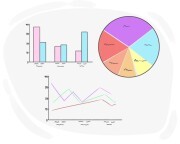
gráfico, tabela

Ex: The chart clearly showed the trends in consumer preferences over the past year. 
Fechar
Entrar
diagram
diagram
[substantivo]

a simplified drawing or plan used to show the parts, structure, operation, or relationships of something

diagrama

diagrama

Ex: The report contains a diagram showing the structure of the organization. 
Fechar
Entrar
document
document
[substantivo]

a computer file, book, piece of paper etc. that is used as evidence or a source of information

documento, arquivo

documento, arquivo

Ex: The legal team reviewed the document before presenting it as evidence in court. 
Fechar
Entrar
evaluation
evaluation
[substantivo]

a judgment on the quantity and quality of something after careful consideration

avaliação

avaliação

Ex: The teacher's evaluation of the students' essays focused on both content and writing style. 
Fechar
Entrar
hypothesis
hypothesis
[substantivo]

a proposed explanation for a situation or set of facts that has not yet been proved

hipótese,  suposição

hipótese, suposição

Ex: He proposed a hypothesis to explain the unusual pattern. 
Fechar
Entrar
experiment
experiment
[substantivo]

a test done to prove the truthfulness of a hypothesis

experimento
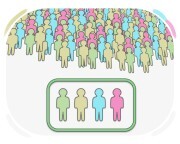
experimento

Ex: The results of the experiment supported the theory of relativity. 
Fechar
Entrar
sample
sample
[substantivo]

a randomly selected part of a larger group, put to study in order to gain knowledge or to draw conclusions about the larger group

amostra, exemplo

amostra, exemplo

Ex: The political poll was conducted using a sample of registered voters to predict election outcomes. 
Fechar
Entrar
variable
variable
[substantivo]

something that is subject to change and can affect the result of a situation

variável, fator variável

variável, fator variável

Ex: Cost is an important variable when choosing a new car. 
Fechar
Entrar
instrument
instrument
[substantivo]

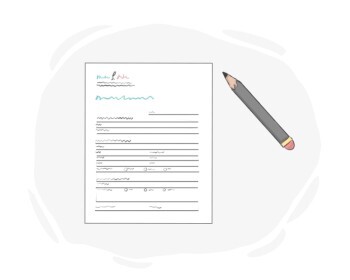
a device or tool that requires specific knowledge on how to be used

instrumento, aparelho
instrumento, aparelho

Ex: The technician calibrated the instrument to ensure it provided precise measurements. 
Fechar
Entrar
questionnaire
questionnaire
[substantivo]

a written or online set of questions used to collect information from people

questionário,  inquérito

questionário, inquérito

Ex: The school asked parents to fill out a short questionnaire about transportation. 
Fechar
Entrar
reference
reference
[substantivo]

a short note in a book giving information about the source of its subject

referência, nota de referência

referência, nota de referência

Ex: Each reference in the bibliography provides details about where the information was obtained. 
Fechar
Entrar
trial
trial
[substantivo]

a process conducted in order to decide on how effective, safe, etc. someone or something is

ensaio

ensaio

Ex: The trial was designed to evaluate the new drug's effectiveness. 
Fechar
Entrar
trial and error

the process of testing a method, an idea, etc. in several ways to achieve the desired outcome

Ex: The team improved the design by trial and error. 
Fechar
Entrar
finding
finding
[substantivo]

a piece of information discovered as a result of a research

descoberta, achado

descoberta, achado

Ex: His finding on the chemical reaction led to a breakthrough in the experiment. 
Fechar
Entrar
law
law
[substantivo]

a scientific principle or rule that describes something scientific or natural always being the same or occurring in the same way, given specific conditions are met

lei, princípio científico

lei, princípio científico

Ex: Boyle's law describes the relationship between pressure and volume in a gas. 
Fechar
Entrar
model
model
[substantivo]

a description of a process or system that is simplified to demonstrate how it works under specific circumstances, especially in mathematics

modelo, esquema
modelo, esquema

Ex: The mathematical model predicted the growth of the population based on current trends. 
Fechar
Entrar
principle
principle
[substantivo]

a fundamental rule that is considered to be true and can serve as a basis for further reasoning or behavior

princípio

princípio

Ex: The scientific method is based on the principle of empirical evidence. 
Fechar
Entrar
procedure
procedure
[substantivo]

a particular set of actions conducted in a certain way

procedimento, método

procedimento, método

Ex: He learned the procedure for conducting the financial audit according to company guidelines. 
Fechar
Entrar
proof
proof
[substantivo]

evidence that establishes or strongly demonstrates that something is true or exists

prova,  evidência

prova, evidência

Ex: You may need to show proof of identity at the front desk. 
Fechar
Entrar
LanGeek
Baixar o aplicativo LanGeek