
Vocabular pentru IELTS Academic (Scor 8-9) - Război
Aici, vei învăța câteva cuvinte în engleză legate de război care sunt necesare pentru examenul academic IELTS.
Revizuire
Fișe de studiu
forme
Ortografie
Chestionar


a massive group of warships organized for military or strategic purposes

armada, flotă de război
Marina a trimis o armadă pentru a patrula apele disputate.
a professional soldier hired to serve in a foreign army, often motivated by payment rather than ideological or national allegiance
mercenar, soldat al norocului
Armata a angajat mercenari pentru a-și consolida forțele în timpul conflictului din regiune.
a temporary stoppage or truce in hostilities between parties engaged in a war or conflict
armistițiu, încheierea ostilităților
După ani de lupte sângeroase, a fost în sfârșit semnat un armistițiu și câmpul de luptă a căzut în tăcere.
a defensive barrier erected during wartime to obstruct enemy movement and provide protection for defending forces
baricadă
Soldații au construit în grabă baricade folosind saci de nisip pentru a-și consolida pozițiile împotriva trupelor inamice care înaintau.
a military unit composed of a varying number of companies or platoons, typically commanded by a lieutenant colonel
batalion, unitate militară
Batalionul a coordonat cu alte unități pentru exercițiul la scară largă.
a military unit, subdivision of a company, typically with a headquarters and two or more squads, usually led by a lieutenant
pluton, secție
Batalionul este format din mai multe plutoane.
the covert gathering of information for political, military, or economic purposes, often conducted by intelligence agencies
spionaj
Spionul s-a angajat în activități de spionaj pentru a descoperi planuri militare sensibile ale națiunii opuse.
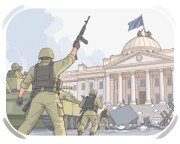
a sudden illegal seizure of government power, often involving military force
lovitură de stat, puci
a member of an unofficial armed group that uses irregular tactics, such as surprise attacks, against regular military or government forces
guerilist, luptător de gherilă
a fierce and intense attack, often with the goal of overwhelming the opponent
asalt, ofensivă
Armata a lansat un atac neîncetat împotriva pozițiilor inamice, împingându-i înapoi și câștigând teren.
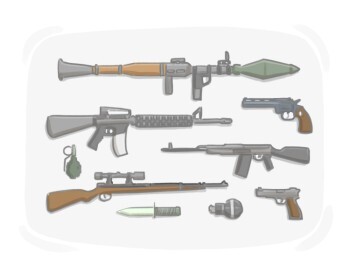
the military equipment and weaponry used by a country or military force
armament
Țara a investit masiv în modernizarea armamentului său, achiziționând sisteme avansate de apărare antirachetă și avioane de luptă.
big heavy guns that are attached on top of moving wheels or tracks
artilerie
Barajul de artilerie a zguduit pământul în timp ce obuzele plouau asupra pozițiilor inamice.
a place where weapons and ammunition are made, stored, or maintained
arsenal
a military strategy or capability designed to dissuade an adversary from aggression
deterent, factor de descurajare
Armele nucleare servesc ca descurajare împotriva potențialelor atacuri nucleare.
bullets, shells, or other projectiles used in firearms
muniție, cartușe
Soldații și-au verificat muniția înainte de bătălie.
a large weapon that was used in ancient times to throw stones or other objects with great force
catapultă, balistă
Inginerii au lucrat la îmbunătățirea contragreutății și a mecanismelor de praștie de pe catapultele de asediu pentru a obține raze de acțiune mai puternice.
a portable rocket launcher designed for use against tanks and armored vehicles
lansator de rachete portabil, bazooka
Trupa de infanterie transporta o bazooka pentru a contracara potențialele amenințări blindate de pe câmpul de luptă.
to thrust or strike with a long-pointed weapon
înfige, străpunge
Cavalerul a înțepat cu îndemânare adversarul său în timpul competiției de jousting.
fragments from an explosion, causing damage to surroundings
sfărâmături, șrapnel
Explozia a trimis șrapnele zburând în toate direcțiile, provocând răniri civililor din apropiere.
an early firearm with a long barrel, used by infantry from the 16th to 18th centuries
muschet, pușcă cu fitil
Muscheta era o armă standard de infanterie în timpul Războiului de Independență al Statelor Unite.
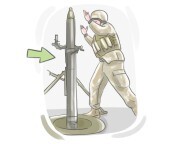
a short-barreled, muzzle-loaded artillery piece that fires explosive shells at high angles for close-range support
mortier, lansator de grenade
Soldații au instalat un mortier pentru a oferi sprijin de foc unităților de infanterie care înaintează.
a public fight involving a group of people, typically causing a disturbance or public disorder
bătaie, încleştare
Poliția a fost chemată pe loc pentru a desființa o încleștare între două grupuri rivale în centrul orașului.
an attack by aircraft, typically involving the dropping of bombs, on a location or a series of locations
raid aerian, bombardament aerian
Sirenele de raid aerian au urlat în timp ce cetățenii se grăbeau să caute adăpost în timpul bombardamentului.
an extremely brutal act, especially in war
atrocitate, barbarie
După încheierea războiului, mai mulți lideri au fost trimiși în judecată pentru atrocitățile pe care le-au săvârșit.
an area in hostile territory captured and secured as a foothold for further troops and supplies
cap de pod, capăt de pod
Armata a stabilit un cap de pod pe malul îndepărtat al râului.
an individual who is forced to flee from a dangerous place or region
evacuat, refugiat
Evacuații au fost transportați în adăposturi temporare după ce casele lor au fost distruse de uragan.
a military stronghold where soldiers are stationed for defense
garnizoană, fortăreață
Castelul a servit drept garnizoană pentru soldații regelui.
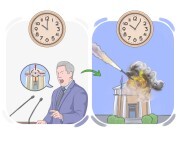
to carry out a sudden and intense military attack
a efectua un atac militar brusc și intens, a face un blitz
Comandanții militari au decis să blitz pozițiile inamicului, sperând să-i prindă nepregătiți.
to plunder, typically during times of war or civil unrest
jefui, prăda
Armata invadatoare a fost condamnată pentru acțiunile sale când a început să jefuiască satele, lăsând distrugere în urma sa.
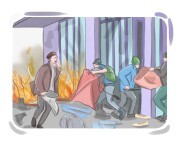
to steal goods from a place or person, especially during times of war, chaos, or civil disorder
jefui, prăda
În timpul invaziei, armata a decis să jefuiască resursele inamicului.
to attack ground targets, such as enemy troops or installations, with gunfire from low-flying aircraft
mitralia, bombarda
Pe măsură ce forțele terestre înaintau, sprijinul aerian a fost chemat să mitralieze trupele inamice, perturbându-le formația.
to maneuver around the side of an enemy force, position, or defensive line in order to gain a tactical advantage
flanca, ocoli
Generalul a conceput un plan pentru a ocoli inamicul, trimitând un contingent de trupe să atace din spate.
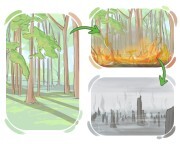
to destroy someone or something completely
anihila, distruge complet
Strategia armatei a fost de a anihila forțele inamice și de a asigura victoria.
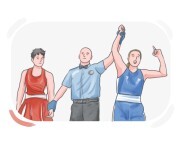
to defeat someone completely and decisively
învinge, anihila
Puternica armată a căutat să învingă forțele opuse și să asigure dominația asupra regiunii.
| Vocabular pentru IELTS Academic (Scor 8-9) | |||
|---|---|---|---|
| Război | Măsurare | Emoții | Călătorie și Migrație |
| Vreme | Poluare | Dezastre | Animale |
| Mâncare și Băuturi | Adverbe de mod | ||
