
Slovní zásoba pro IELTS Academic (Skóre 8-9) - Válka
Zde se naučíte některá anglická slova související s válkou, která jsou nezbytná pro akademickou zkoušku IELTS.
Revize
Kartičky
tvary
Pravopis
Kvíz


a massive group of warships organized for military or strategic purposes

armada, válečná flotila
Španělská armada vyplula v roce 1588, aby napadla Anglii.
a professional soldier hired to serve in a foreign army, often motivated by payment rather than ideological or national allegiance
žoldák, voják štěstěny
Žoldáci byli často najímáni v koloniálních konfliktech, aby doplnili pravidelné vojsko.
a temporary stoppage or truce in hostilities between parties engaged in a war or conflict
příměří, zastavení palby
Válčící národy podepsaly příměří, souhlasily s měsíčním příměřím, aby umožnily dodávky humanitární pomoci a výměnu vězňů.
a defensive barrier erected during wartime to obstruct enemy movement and provide protection for defending forces
barikáda
Vojáci využili opuštěná vozidla a trosky k improvizaci barikád, čímž omezili nepřátelskou schopnost manévrovat.
a military unit composed of a varying number of companies or platoons, typically commanded by a lieutenant colonel
prapor, vojenská jednotka
Každý prapor měl během operace svou vlastní odlišnou sadu odpovědností.
a military unit, subdivision of a company, typically with a headquarters and two or more squads, usually led by a lieutenant
četa, oddíl
Během cvičení četa procvičovala koordinované manévry.
the covert gathering of information for political, military, or economic purposes, often conducted by intelligence agencies
špionáž
Kyberšpionáž se stala významnou hrozbou, kdy hackeři infiltrují sítě, aby ukradli důvěrné informace a narušili operace.
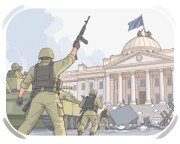
a sudden illegal seizure of government power, often involving military force
státní převrat, puč
a member of an unofficial armed group that uses irregular tactics, such as surprise attacks, against regular military or government forces
a fierce and intense attack, often with the goal of overwhelming the opponent
nápor, ofenzíva
V závěrečných fázích války zahájily spojené síly koordinovaný námořní a letecký útok, což vedlo k nepřátelské kapitulaci.
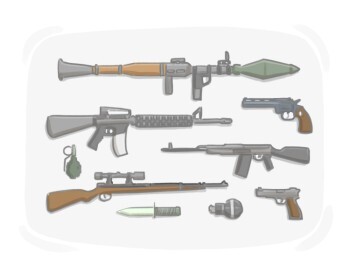
the military equipment and weaponry used by a country or military force
výzbroj
Výrobce zbraní představil své nejnovější inovace v oblasti výzbroje, čímž přilákal zájem různých vojenských odvětví po celém světě.
big heavy guns that are attached on top of moving wheels or tracks
dělostřelectvo
Muzeum vystavovalo různé typy historických dělostřeleckých kusů používaných v různých konfliktech v průběhu historie.
a place where weapons and ammunition are made, stored, or maintained
arsenál
a military strategy or capability designed to dissuade an adversary from aggression
odstrašující prostředek, odstrašující faktor
Opatření kybernetické bezpečnosti slouží jako odstrašující prostředek proti kybernetickým útokům na kritickou infrastrukturu.
bullets, shells, or other projectiles used in firearms
munice, náboje
Munice byla skladována v zesílených bunkrech.
a large weapon that was used in ancient times to throw stones or other objects with great force
katapult, balista
Středověcí obléhací inženýři navrhovali stále větší katapulty schopné vrhat masivní projektily, aby zbořili opevněné věže.
a portable rocket launcher designed for use against tanks and armored vehicles
přenosný raketomet, bazuka
Vojenské muzeum vystavovalo historické bazooky spolu s dalšími ikonickými zbraněmi z různých období.
to thrust or strike with a long-pointed weapon
probodnout, propíchnout
V historických záznamech byly jezdecké jednotky známé svou schopností efektivně kopírovat protivníky v rychlých, koordinovaných útocích.
fragments from an explosion, causing damage to surroundings
střepiny, šrapnel
Vojenský chirurg během operace odstranil střepiny z střepin z nohy zraněného vojáka.
an early firearm with a long barrel, used by infantry from the 16th to 18th centuries
mušketa, doutnáková puška
Zavedení muškety vedlo k úpadku brnění, protože kulky snadno pronikly tradičním brněním.
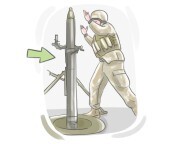
a short-barreled, muzzle-loaded artillery piece that fires explosive shells at high angles for close-range support
minomet, granátomet
Četa spoléhala na podporu minometu, aby potlačila nepřátelskou palbu a usnadnila svůj postup během útoku.
a public fight involving a group of people, typically causing a disturbance or public disorder
rvačka, potyčka
Úřady zavedly přísnější bezpečnostní opatření, aby zabránily rvačkám během veřejných shromáždění a akcí.
an attack by aircraft, typically involving the dropping of bombs, on a location or a series of locations
letecký útok, bombardování
Vojenská základna provedla cvičení leteckého náletu, aby zajistila připravenost na možné útoky.
an extremely brutal act, especially in war
krutost, barbarství
Historická kniha podrobně popsala mnoho zvěrstev spáchaných během války, každý příběh byl srdcervoucnější než ten předchozí.
an area in hostile territory captured and secured as a foothold for further troops and supplies
předmostí, mostní hlava
Zabezpečení předmostí umožnilo armádě postupovat do vnitrozemí.
an individual who is forced to flee from a dangerous place or region
evakuovaný, uprchlík
Vláda nasadila vrtulníky k přepravě evakuovaných z katastrofické oblasti do bezpečí.
a military stronghold where soldiers are stationed for defense
posádka, pevnost
Inženýři modernizovali posádku moderní obranou.
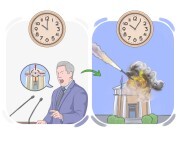
to carry out a sudden and intense military attack
provést náhlý a intenzivní vojenský útok, provést blitz
Letectvo provedlo strategický plán na blitz klíčových nepřátelských zařízení, čímž narušilo jejich velení a kontrolu.
to plunder, typically during times of war or civil unrest
drancovat, plenit
Invazní síly systematicky drancovaly strategická místa, narušily místní ekonomiku.
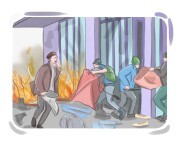
to steal goods from a place or person, especially during times of war, chaos, or civil disorder
plenit, drancovat
Loni piráti nečekaně vyloupili flotilu obchodních lodí v regionu.
to attack ground targets, such as enemy troops or installations, with gunfire from low-flying aircraft
ostřelovat, bombardovat
Pilot obratně ostřeloval nepřátelský konvoj, vytvořil chaos a zabránil mu dosáhnout cíle.
to maneuver around the side of an enemy force, position, or defensive line in order to gain a tactical advantage
obcházet z boku, obklíčit
Ohebné jezdecké jednotky byly nasazeny, aby obešly pomaleji se pohybující obrněné divize a udeřily na zranitelná místa.
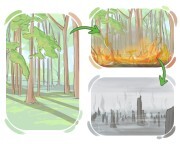
to destroy someone or something completely
zničit, úplně zničit
Silná exploze hrozila zničením celé budovy.

to defeat someone completely and decisively
porazit, zničit
Rytíři vyrazili na ušlechtilé dobrodružství, aby porazili draka, který terorizoval okolní vesnice.
| Slovní zásoba pro IELTS Academic (Skóre 8-9) | |||
|---|---|---|---|
| Válka | Měření | Emoce | Cestování a Migrace |
| Počasí | Znečištění | Katastrofy | Zvířata |
| Jídlo a Nápoje | Příslovce způsobu | ||
